
March 2026 pānui
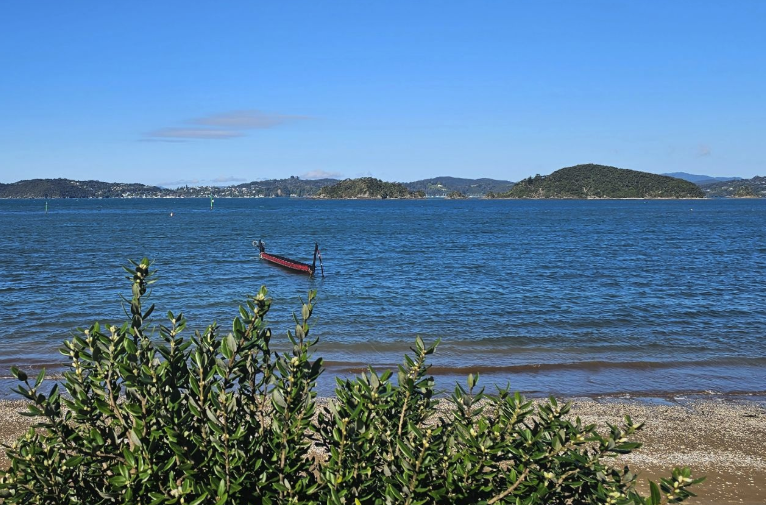
He waka eke noa.
We are all in this canoe together.
As communities across Aotearoa responded to extreme weather last month, we are reminded how fragile many housing situations already are. Flooding and storm damage do not just create vulnerability - they expose it. For women in precarious or poor-quality housing, severe weather can be the tipping point into homelessness, with women, children and whānau at heightened risk of displacement.
At the same time, planned law changes introducing expanded “move-on” orders will give police new powers to direct people aged 14 and over to leave specified public areas for up to 24 hours. These changes have drawn strong criticism from frontline providers concerned about further marginalising people already without safe housing.
As political debate intensifies in this election year, we must ask whether housing stability for women and whānau will move beyond short-term fixes and enforcement measures toward meaningful, lasting solutions.
He waka eke noa.
In times of storm and uncertainty, this whakataukī reminds us that we are all in this together - we rise together, fall together, and keep working forward together.
Nāku noa,
Kathie Irwin and Victoria Crockford
Kaihautū and Project Director
Coalition to End Women’s Homelessness
WAKA HUIA

Kathie Irwin’s personal Waka Huia.
Community of Practice – applications of The Papatūānuku Paradigm
Update from Dr Kathie Irwin, CEWH Kaihautū
On Monday 9 February, CEWH started working with Te Whare Tiaki Wāhine Refuge, Porirua, as a second site to explore Community of Practice applications of the Papatūānuku Paradigm.
Our first step was to wānanga what the approach might look like in this organisation. The suggestion was to code the Whare Tiaki Model of Practice and then compare that with The Papatūānuku Paradigm. We completed the second step, charting their model of practice, on Wednesday 11 February.
In the third step, I will overlay the Te Whare Tiaki Wāhine Refuge model of practice over the Papatūānuku Paradigm. She will then compare and contrast fit and stretch.
The fourth step is to take the kaupapa kaimahi through a training programme based in mātauranga Māori to test for kaupapa fit.
Te Whare Tiaki Wāhine Refuge launched a Community Hub in early December 2025. They plan to offer a range of training and education programmes to help wāhine create new options for themselves moving forward. We will deliver the first half of the course - “Rangatiratanga for Life: Becoming the CEO of Yourself” - on 31 March. The second half, in which people develop their own kaupapa Māori–based personal strategic plan, will be delivered on 16 April.
Following course delivery, the kaimahi will be invited to evaluate the course and offer their views on whether they think the course might be useful for the wāhine in their care. The use of the course has been gifted to Te Whare Tiaki Wāhine Refuge by Kathie Irwin and Associates for this project.
Find out more about the Papatūānuku Paradigm here
Video resource in development for the Papatūānuku Paradigm
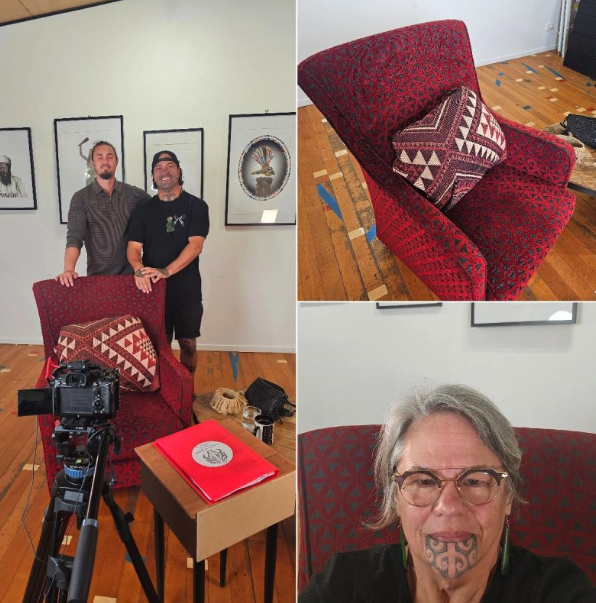
Last month, filming began for a new teaching resource to support the Papatūānuku Paradigm - Te Ao Māori approach to gender analysis. This free, downloadable video series will be available soon, along with a study guide showing how to use the resource in practice. This will support organisations to run their own in-house wānanga or workshops using the resource.
Designed by Dr. Kathie Irwin, the Papatūānuku Paradigm is a toolkit to support and strengthen the work of CEWH and the wider sector in addressing the complex issue of women’s homelessness. The resources will offer practical teaching material and guidance for wānanga and organisational learning.
Filming took place at The Hori gallery in Ōtaki, where Kathie spent the day working alongside talented artists Hohepa Thompson and Isaac Te Reina.
The experience of being back in front of the camera was meaningful and focused for Kathie. She reflected on the ease of working with the team, describing the process as both technically highly proficient and grounded in kaupapa Māori sensitivity.
Kathie described the responsibility of storytelling in this work:
“[I was] keenly aware that in the role of storyteller today I was a kaitiaki, guardian, of very old storylines in our history as a nation,” Kathie said.
We look forward to sharing these resources with you in due course.
Kei te rongo koe? Are you listening? by VOYCE - Whakarongo Mai: webinar recording and resources now available
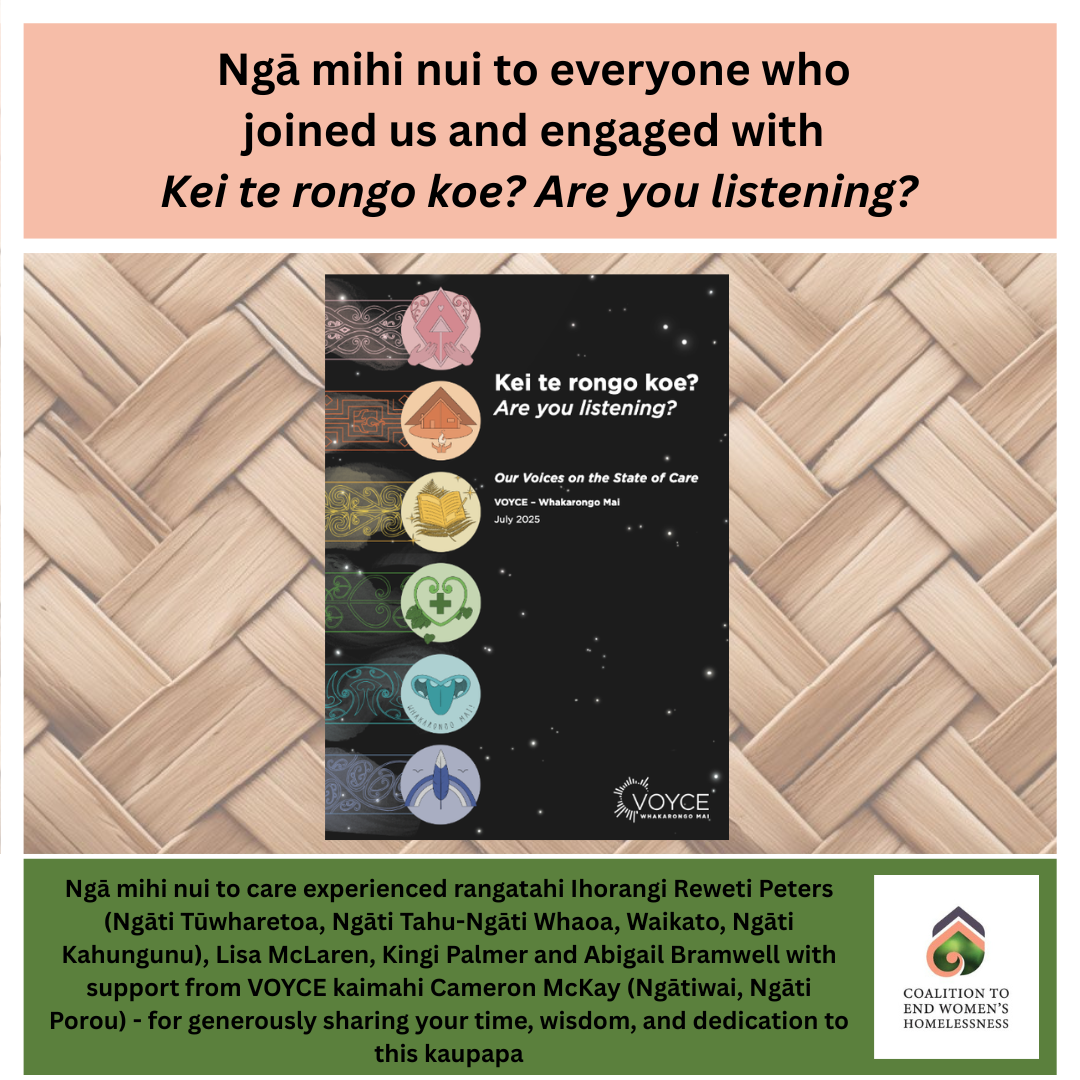
Last week, CEWH hosted a Lunchtime Learning webinar which explored the State of Care Report 2025 Kei te rongo koe? Are you listening? by VOYCE - Whakarongo Mai.
Resources from the webinar are available here.
We encourage you to share these resources with friends, whānau, colleagues, and peers.
Ngā mihi nui to care experienced rangatahi Ihorangi Reweti Peters (Ngāti Tūwharetoa, Ngāti Tahu-Ngāti Whaoa, Waikato, Ngāti Kahungunu), Lisa McLaren, Kingi Palmer and Abigail Bramwell with support from VOYCE kaimahi Cameron McKay (Ngātiwai, Ngāti Porou) - for generously sharing your time, wisdom, and dedication to this kaupapa, and to CEWH Project Director Victoria Crockford for guiding the kōrero with such aroha and care.
These speakers shared the methodology, findings and what is needed to ensure that tamariki and rangatahi in state care feel supported and cared for - a right of every child and young person.
Kathie Irwin’s Waitangi Commemoration Keynote - “He taonga Te Tiriti. Let’s honour it.”
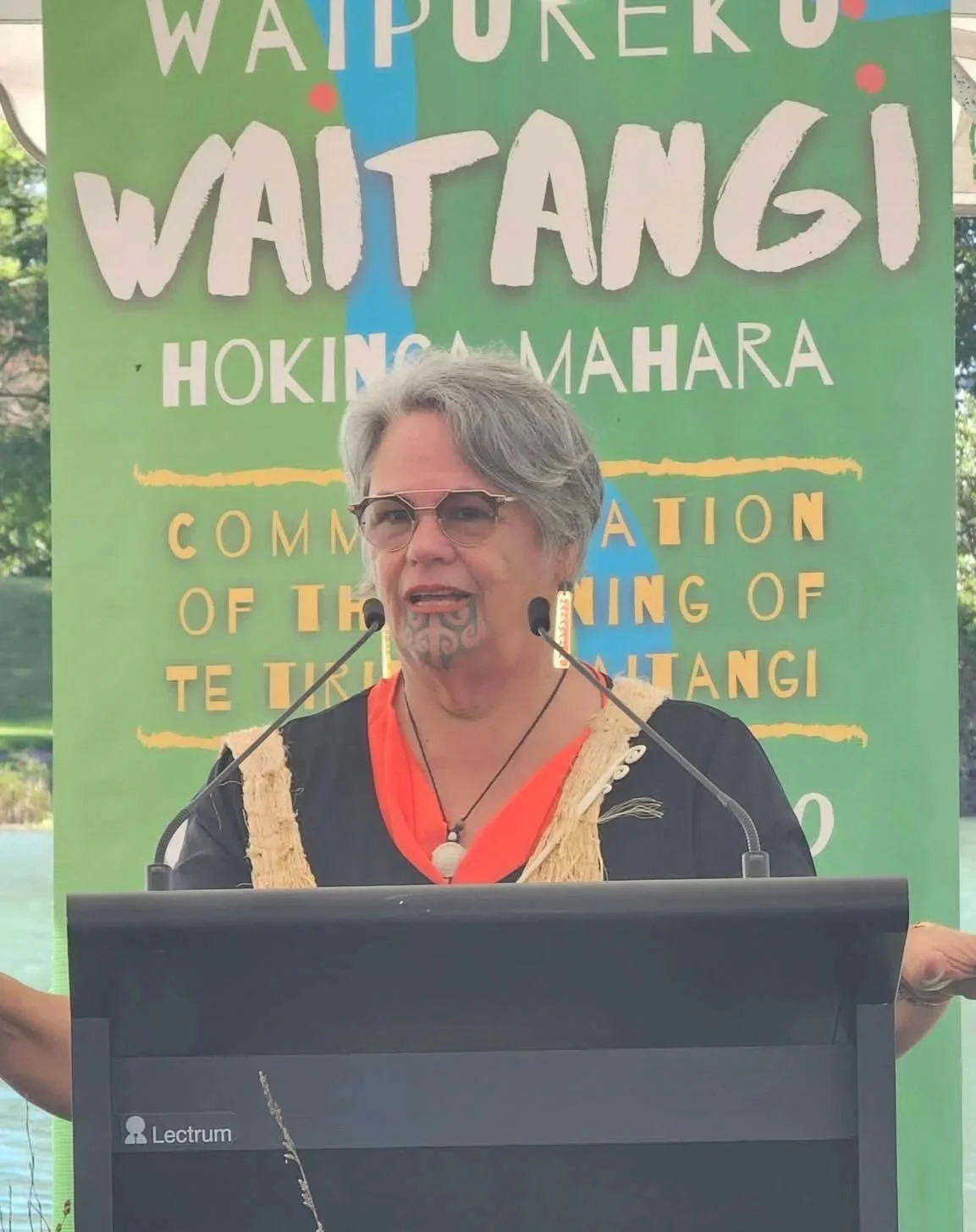
We were honoured to have our Kaihautū, Dr Kathie Irwin, deliver the keynote at the Waipureku Waitangi Commemoration 2026 in Napier. The event started on the Napier foreshore, where three Ngāti Kahungunu rangatira signed Te Tiriti on June 24 1840. Those who gathered then marched to Farnham Park in Clive where the event was held on the river bank. Local Kaumātua Jerry Hapuku is a direct descendant of one of the three rangatira - Te Hapuku - he and his mokopuna were at the event, leading the proceedings.
Thirty - seven years ago Kathie had been invited by Maxine Boag, Chairperson of the Waipureku Waitangi Trust, to deliver a similar address in Napier. Maxine was active in Tangata Tiriti Waitangi activations then, as she still is now. Maxine is a leader in the Napier Housing / Homelessness sector and was until recently Deputy Mayor at the Napier City council - a role she held for many years. Some of the themes addressed all those years ago remain hauntingly present, challenging us as a society.
A critical difference is the local whānau, hapū and iwi Māori Development profile of the region, and this is what Kathie’s keynote explored as the major point of difference.
In the Hawke’s Bay Region the Treaty Settlement process was led at the hapū level, rather than the iwi. The iwi has created a different level of national, regional and local engagement in Aotearoatanga. There are fifty with kōhanga reo in the region - the highest regional level of kōhanga reo presence in the country. Ngāti Kahungunu pioneered total immersion te reo wānanga, initially at Waimarama, and the iwi has long had an iwi te reo Māori strategy (led for many years by Dr Jeremy Tatere MacLeod).
Ngāti Kahungunu leads in the housing sector: Ali Hamlin-Paenga is the CEO of Te Matapihi, the National Māori Housing Peak Provider. Born and raised in the Hawke’s Bay Victoria Crockford leads the Coalition to End Women’s Homelessness in the role of Project Director.
This local engagement is what is different from where Hawke’s Bay was forty years ago.
The event was superbly MC’d by Whare Isaac-Sharland, Napier City Councillor and successful Māori businesswoman.
Accordingly, Kathie highlighted the importance of Article 2 and Rangatiratanga, exploring hapū-level decision making, resilience, and the role of Māori cultural infrastructure in nation building.
As Kathie reflected:
“Te Tiriti o Waitangi offers us a roadmap, a blueprint to frame implementation and a compass to help guide us to the future envisioned in 1840. He taonga Te Tiriti. Let's honour it.”
That roadmap matters urgently. When we look at the realities faced by many women and whānau today, the findings from our research, Ngā Ara ki te Kāinga, are deeply concerning:
Fifty percent of people experiencing homelessness in Aotearoa are women, with over one third being wāhine Māori.
Wāhine Māori, as whare tangata - sacred bearers of life - are disproportionately affected by homelessness. Many are caring for their tamariki while facing systemic barriers to safe, stable and culturally meaningful housing.
Our housing system remains gender-blind, with real impacts on women’s safety, wellbeing and dignity.
Kathie’s keynote at the Waipureku Waitangi Commemoration reminds us that honoring Te Tiriti is not just a historic reflection it’s a call to action for today.
CEWH receives MAS Foundation funding
We are deeply grateful to the MAS Foundation for supporting our mahi through a Tūmatakāhuki Community Koha grant. This funding supports valuable work to improve outcomes for women seeking housing support, including the implementation of the Papatūānuku Paradigm on the frontline.
It will also help contribute to research we are completing using the Stats NZ Integrated Data Infrastructure (IDI). The research question is: “What are typical government interactions that homeless children experience and how do these differ from non-homeless children?”
Thank you to MAS Foundation for helping advance this important work.
AROUND THE SECTOR
CEWH monthly sector blog
Our monthly blog is written by CEWH Kaihautū Dr Kathie Irwin, Project Director Victoria Crockford, and Collective Impact Lead Amanda Kelly.
Grounded in our ongoing engagement with iwi, organisations, leaders and community groups, we share reflections on what we are seeing and learning across the sector.
Read this month’s blog here.
Quick links
Here’s a roundup of news, research, and sector updates that caught our attention this month. We hope these links offer useful insights and encourage ongoing kōrero across our community.
Stuff: She grew up sleeping in a car, now she’s studying at university
The Spinoff: Move-on orders: ‘I’d move on if I had somewhere to go’
Waatea News: War on homeless?: Government’s “Move-On” Orders Spark Debate Over Homelessness Response
RNZ: 'No doubt' new move-on orders for homeless will drain police resources
The Guardian:Pari just wants to get a good night’s sleep – but each morning he’s woken by NSW police, telling him to move on
RNZ: Nelson City Council putting $100,000 towards helping homeless women
RNZ: Young women being left behind in property market
Beehive: Flexi Fund opens for social & affordable housing
Scoop: Latest Justice Report On Targeting Of Wāhine Māori Is A Call For Change
Report: Women and Property 2026
RNZ: Landlords, tenants grapple with new pet rules
The Press:‘It is so hard’: Family unable to secure pet-friendly rental ends up in emergency housing
The Senior (Australia):Would you choose a roof over your head if it meant leaving your dog behind?
POLICY AND POLITICAL INSIGHTS
Opposition to proposed “move-on” powers
The Coalition to End Women's Homelessness supports the many service providers across Aotearoa who oppose the Government’s proposed move-on powers.
Move-on powers are not evidence-based solutions. They do not create new housing, do not deliver the support people need when they are struggling, and do not address the underlying causes of homelessness.
Instead, move-on powers risk displacing people in need and may increase vulnerability to harm - particularly for women experiencing homelessness. Being pushed into more isolated spaces can heighten safety risks, reduce access to support services, and limit contact with trusted community supports.
Our research shows that emergency and temporary accommodation is already operating beyond capacity. Simply moving people on does not solve homelessness when there are not enough safe places for people to move to.
CEWH maintains that the most effective response to homelessness is a housing-plus-support approach.
CEWH advocates for approaches that strengthen whānau, uphold dignity, and deliver lasting change, including:
Nationwide investment in Housing First and kaupapa Māori housing models that respond to complex needs
Expansion of wrap-around support services
Increased supply of affordable, safe housing
Stronger partnerships with iwi, hapū, and Māori housing providers
Policy settings that honour Te Tiriti o Waitangi and address structural inequities
Ensuring no one is discharged from health, justice, care, or protection systems into homelessness
Homelessness reflects a systems failure and requires a systems response. Sustainable solutions will come from cross-sector collaboration, not from approaches that risk criminalisation or displacement.
Read the press release by housing peak bodies Te Matapihi He Tirohanga mō te Iwi Trust and Community Housing Aotearoa here.
Pay equity and housing security
In mid-2025, the Equal Pay Amendment Bill was passed under urgency and without full public scrutiny. In response, a group of ten former women MPs established the People’s Select Committee on Pay Equity to hear from individuals and organisations who were not given the opportunity to be heard through the formal parliamentary process.
CEWH made a submission to the Committee drawing on evidence from our research, Ngā Ara ki te Kāinga, and our long-standing advocacy on the link between pay inequity and housing insecurity for women. We stated that the proposed changes to pay equity risk undermining progress toward economic and housing equity - particularly for Māori and Pasifika women, where persistent wage gaps and housing inequities remain significant.
The People’s Select Committee on Pay Equity report, launched in February, reinforces these concerns. It makes clear that pay inequity disproportionately affects women and contributes to economic insecurity, which in turn is closely linked to housing instability and disadvantage in Aotearoa New Zealand.
On page 74, CEWH Kaihautu Dr Kathie Irwin is named among experts whose submissions highlight the disproportionate and intergenerational impact of pay inequity on wāhine Māori. Across submissions from Hauraki Wahine Māori, the Tūwharetoa Iwi Māori Partnership Board, PSA Rūnanga, the Māori Women’s Welfare League, Amokura Panoho, Dr Kathie Irwin and others, a shared narrative emerges: the 2025 Act is structurally biased against feminised workforces - such as care and support roles - where Māori are highly overrepresented.
The Committee also heard strong arguments that the changes represent a breach of Te Tiriti o Waitangi and a retrogressive step in relation to New Zealand’s obligations under CEDAW (the Convention on the Elimination of All Forms of Discrimination Against Women).
Importantly, the report finds that previous pay equity settlements have delivered tangible benefits - including enabling security of housing, such as being able to meet rent without falling into arrears (p.76). This affirms what CEWH research has consistently shown: income adequacy is central to women’s housing stability.
Recent reporting by RNZ further illustrates this link. This RNZ article examining new data from Cotality’s Women and Property report shows that women - particularly younger women - are being left behind in the property market. Only 33 percent of Gen Z women and 37 percent of Millennial women own the home they live in, compared to more than half of Gen Z men and 66 percent of Millennial men. Just 12 percent of women report earning over $100,000 a year, compared to 25 percent of men - a gap that directly affects the ability to save deposits and service mortgages. Even leaders in the real estate industry are pointing out that lower incomes for women are a key factor in reduced home ownership, reinforcing that this is not about aspiration, but about structural inequity.
Housing instability does not occur in isolation. It sits at the centre of wider systems of inequality - disrupting connections to whenua, whānau, hapū and iwi, and eroding identity, belonging and wellbeing.
Ending women’s homelessness requires strengthening pay equity, addressing systemic discrimination, honouring Te Tiriti, and investing in community-led solutions that support hauora, housing stability and intergenerational security.
He iti te mokoroa, nāna i kati te kahikatea
The grub may be small, but it cuts through the kahikatea
Vic, Kathie, Amanda, Ellie, Helen, Jo, Caroline, and Jill
