
Social housing reform must not deepen existing barriers or cause further harm for women
The Government has outlined three key shifts in the direction of the social housing system as part of its Review of Social Housing. This includes proposed changes to housing support settings such as income-related rent, the Accommodation Supplement, and Temporary Additional Support, which are expected to be progressed through Budget 2026.
The multi-year work programme focuses on three key shifts: refocusing social housing, delivering measures to promote sustainable mobility through the social housing system towards housing independence and improving fairness and financial incentives toward independence. Find out more here.
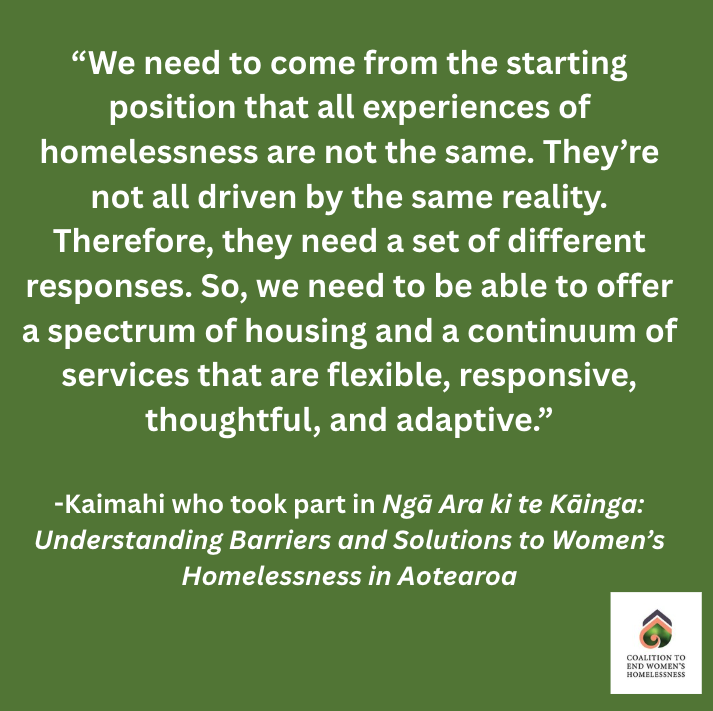
CEWH research, Ngā Ara ki te Kāinga: Understanding Barriers and Solutions to Women’s Homelessness in Aotearoa, highlights the urgent need for targeted interventions and policy change that recognise the full spectrum of housing barriers experienced by women in Aotearoa with a focus on redress for wāhine Māori. Housing for women is more than physical shelter, and the research calls for comprehensive, gendered, and Te Tiriti-based approaches to addressing homelessness. It also identifies system-level barriers that must be addressed to ensure women and children can access safe and equitable housing.
Coalition to End Women’s Homelessness (CEWH) Co-Lead Vic Crockford says the shifts outlined by the government may risk making it even harder for women to access social housing.
“While we welcome a renewed focus on ensuring those with the highest and most complex needs are supported, further limiting access to housing or reducing tenancy duration for those facing barriers due to their incomes is not the answer. Affordability is at the heart of the housing crisis for women and we must focus on solutions for it.”
The quantitative data from Ngā Ara ki tei Kāinga shows that many women experiencing homelessness are reliant on benefits as sole parents.
“Income is a significant cause of housing deprivation for young Mums and older women and this shift could mean they are further locked out of a decent home,” Vic says.
Jill Hawkey, Steering Committee member of CEWH, says she is concerned about housing security, as social housing reform includes settings that require people to move toward independence.
“This has the potential to negatively impact families, which are often headed by women - where tamariki are settled into local schools, parents are in employment, and families are starting to thrive - only to then be told they’re required to move out of social housing,” she says.
CEWH maintains that social housing reform must not deepen existing barriers or result in further harm for women, particularly those already facing entrenched housing insecurity.
