Shared learning and development
CEWH has explored The Papatūānuku Paradigm through wānanga and Communities of Practice (CoP) with Auckland City Mission – Te Tāpui Atawhai, Te Whare Tiaki Wāhine Refuge Porirua and Te Taiwhenua o Heretaunga. These sessions have brought the emerging Paradigm into the hands of people who use it in their own mahi, creating space for rich kōrero, reflection, questioning and shared learning.
Most importantly, the CoP provides real-world testing environments for the gender analysis approaches within the Paradigm. Rather than developing a tool in isolation and then asking practitioners to implement it, we are building and refining it in conversation with those using it. Each organisation brings its own context and experience, helping to shape an approach that is practical, culturally responsive and grounded in the realities of mahi. This collective learning continues to inform how The Papatūānuku Paradigm develops and is used in practice.
July 2025: Wānanga with Auckland City Mission – Te Tāpui Atawhai and Te Whare Tiaki Wāhine in Porirua
In July 2025, CEWH had the privilege of running two wānanga to explore and test the emerging Papatūānuku Paradigm. The first took place with the team at Auckland City Mission - Te Tāpui Atawhai, and the second at Te Whare Tiaki Wāhine in Porirua.
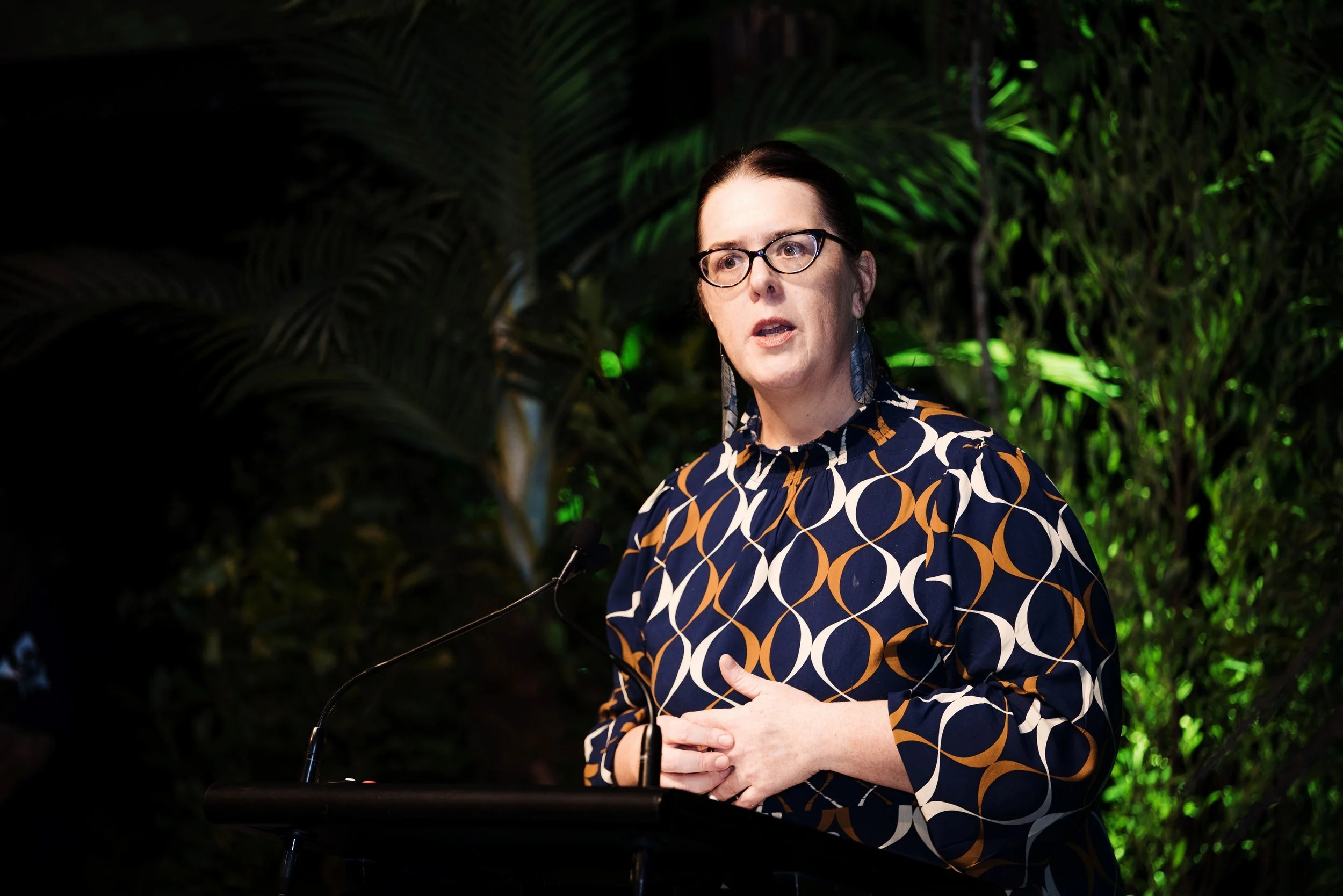
In Tāmaki Makaurau Auckland, Helen Robinson, Manutaki at Auckland City Mission (pictured left), and her dedicated kaimahi gave us an incredibly warm welcome.
The session took a more academic approach, beginning with the whakapapa of the framework and exploring the tool’s application.
The room was alive with energy, insight and aroha as we reflected on a fundamental question: how can we turn evidence and wisdom into frontline practice that truly empowers women? The kōrero ran deep, and the insights from participants were rich and thought-provoking.
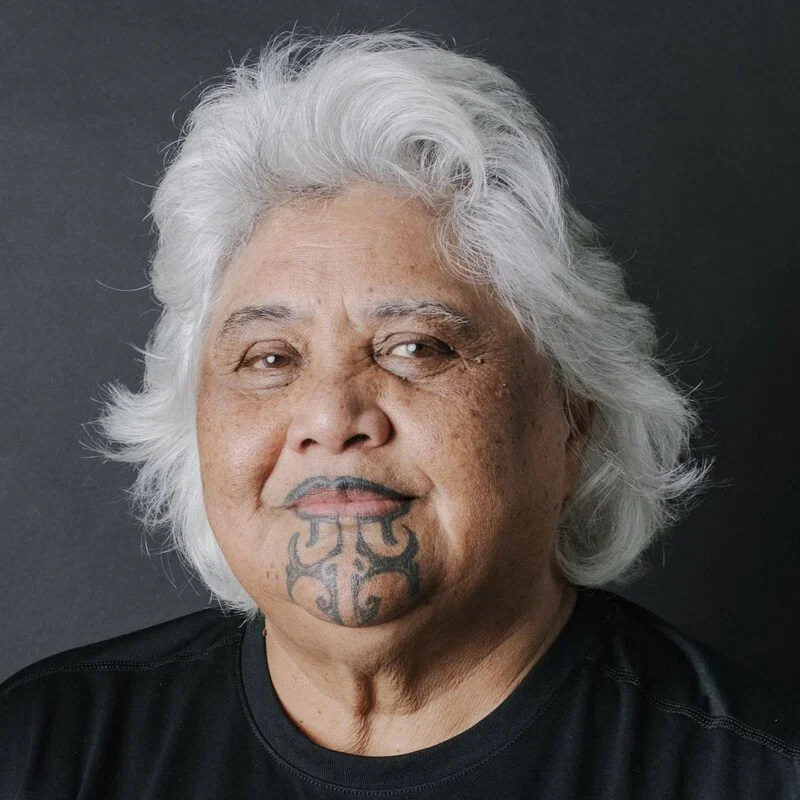
In Porirua, we were hosted by Caroline Herewini (Ngāti Kahungunu and Ngāi Tūhoe), Kaiwhakahaere at Te Whare Tiaki Wāhine (pictured left), alongside her skilled and passionate kaimahi. Here, we focused on testing the framework in practice and examining how it might guide and inform real-world mahi.
The wānanga highlighted the strength of wāhine Māori leadership and the importance of lived experience in Tiriti-informed, gender-based practice.
The Mātauranga Māori-informed organisational Model of Practice at Te Whare Tiaki Wāhine Refuge has deep resonance with The Papatūānuku Paradigm and demonstrates how an authentic Māori model of practice can create an inclusive and humanising approach for Māori, Pacific and Pākehā kaimahi and a diverse range of wāhine.
Kathie closed the Porirua session with her signature words:
“Turou Hawaiiki! May the force be with us!”
This is a reminder of the strength, guidance, and wairua that shape this work.
November 2025: Communities of Practice with Auckland City Mission – Te Tāpui Atawhai
On 19 November 2025, Kathie and CEWH Collective Impact Lead Amanda Kelly hosted the first in-person CoP focused on The Papatūānuku Paradigm, working with kaimahi from Auckland City Mission - Te Tāpui Atawhai.
The CoP brought together staff from Auckland City Mission - Te Tāpui Atawhai, Ministry of Social Development, Auckland Council and Te Miringa Trust. It provided protected time for reflection and deep thinking, enabling practitioners to explore the Paradigm in a real-world context, share challenges and experiences, and consider how gender-informed decision-making can be strengthened within services and systems.
The session generated a strong foundation for future practice, with participants identifying shifts in understanding and perspective, including:
A deeper appreciation of Te Ao Māori framing, historical context and the need for unlearning.
A clearer understanding that equity requires intentional action and can be designed into - or out of - systems.
Increased awareness of gender tax, emotional labour and the daily burden experienced by wāhine.
Recognition of potential barriers at the government and contracting interface, and a desire to challenge structures that prevent gender-responsive design.
Motivation to advocate for greater wāhine representation in services and programmes.
The CoP model provides:
A practitioner-led and culturally grounded approach to building sector capability.
A safe space to share real challenges and learn from practice, rather than theory alone.
A real-world testing environment for The Papatūānuku Paradigm, helping ensure it is fit for purpose in different contexts.
Insights that can feed back into CEWH’s policy, research and ongoing development of the Paradigm.
Since November 2025, the Te Tāpui Atawhai Wāhine CoP has continued to build momentum through regular sessions, with staff demonstrating growing leadership and ownership in shaping and sustaining the group. An ongoing structure is also being developed that reflects their own context and priorities, with CEWH continuing to support and walk alongside the mahi as needed.
Positive changes are beginning to emerge in practice, including shifts within programmes and more joined-up approaches across organisational initiatives and teams, contributing to greater participation by wāhine accessing these programmes.
Ngā mihi mahana to everyone who joined us and shared their manaakitanga, time, insights and expertise.
February 2026: Communities of Practice with Te Whare Tiaki Wāhine Refuge, Porirua
Kathie and CEWH worked with Te Whare Tiaki Wāhine Refuge, Porirua, as a second site to explore Community of Practice applications of The Papatūānuku Paradigm.
The first step was to wānanga what the approach might look like in this organisation. The suggestion was to code the Whare Tiaki Model of Practice and then compare that with The Papatūānuku Paradigm. The second step, charting their model of practice, was completed a few days later.
In the third step, Kathie overlaid the Te Whare Tiaki Wāhine Refuge model of practice over The Papatūānuku Paradigm. She will then compare and contrast fit and stretch.
The fourth step was to take the kaupapa kaimahi through a training programme based in mātauranga Māori to test for kaupapa fit.
Reflections on the CoP
One of the things we’ve learnt is that there is no single model for a Community of Practice. Every organisation brings its own starting point, strengths, structures and needs. The CoP works best when there is space to respond to these differences, while staying grounded in The Papatūānuku Paradigm and its Te Tiriti-informed gender analysis.
The CoP process itself has been an important part of the learning. We’ve heard how much participants valued having dedicated time to step away from the pressures of day-to-day mahi and make space for reflection; being guided through a Te Ao Māori-grounded framework; learning from the leadership and expertise of Dr Kathie Irwin; connecting with people from other teams and organisations; and having a safe, structured space to think differently about gender, Te Tiriti and equity.
These spaces for connection, reflection and shared learning are an important part of how the Paradigm continues to grow.
Participants valued having space to come together, work through challenges collectively, test ideas and learn from one another. Just as importantly, the CoP creates a sense of connection and reassurance that we are not working through these challenges alone.
June 2026: The Papatūānuku Paradigm workshop at the Community Housing Aotearoa Conference
At the Community Housing Aotearoa (CHA) Conference in June 2026, CEWH’s Project Director Victoria Crockford and Amanda Kelly led Papatūānuku in Action: Learning across Communities of Practice, introducing participants to The Papatūānuku Paradigm and the learning emerging from its application in practice.
The session brought together insights from Communities of Practice with Auckland City Mission – Te Tāpui Atawhai and Te Whare Tiaki Wāhine Refuge, two videos from Kathie, and interactive reflection. Participants explored questions from the Paradigm, shared their own thinking and experiences, and brainstormed together about how a Te Ao Māori gender analysis lens could be applied to their mahi, services and systems.
The Papatūānuku Paradigm in practice
This video about The Papatūānuku Paradigm in practice was shared during the workshop, by Te Whare Tiaki Wāhine Refuge. In the video, one kaimahi reflects on what stood out for her, including the way The Papatūānuku Paradigm reframes how we understand homelessness:
“I really enjoyed that it reframes homelessness as disposition not personal failure. Wāhine Maori are not without a home - they are unhoused on the very whenua their culture is rooted in and that's really important. That distinction matters for how we work with wahine.”
She also reflects on the place of Te Tiriti within the Paradigm, and how it can help us look more closely at the structures shaping the work:
“I really appreciate that Te Tiriti sits at the heart of the tool not as a compliance layer but as a structural analysis, and names colonisation as a design feature not the accident. “
From there, she speaks to what this means in practice for services and teams using the Paradigm:
“Is your service informed by Te Tiriti or The Treaty? There's a difference. The Paradigm makes this distinction visible and asks you to be honest about which side you're working from. Bring your whole team into it, not just leadership or social workers. The shift in language and lens needs to be shared to be real. Lastly, don't treat it as a compliance exercise. The nine questions in the tool are an invitation to reflect - not a checklist to tick. The discomfort is part of the work.”
Several strong themes emerged from the CHA conference workshop
Māori worldviews should shape design - not simply inform it
Participants consistently reflected that whanaungatanga, rangatiratanga, manaakitanga and whakapapa should underpin service design from the outset.
One participant captured:
"What's good for Māori is good for everybody."
And another suggested:
"Make Māori your single organising idea."
Women's experiences are different
There was strong recognition that women often present with multiple, intersecting needs; that emergency housing has historically been designed around men’s experiences and safety; and that services need to better reconnect wāhine with whenua, whānau and culture.
Moving beyond individual housing solutions
Participants questioned housing models that focus primarily on individuals, noting that government funding and service contracts often reinforce individual rather than whānau-centred approaches.
Co-design with lived experience
Participants highlighted the importance of wāhine with lived experience shaping support service design, housing design, the communities we live in, and the outcomes we seek.
Systems create barriers
Reflections identified barriers including changing eligibility rules, competitive funding models, the failure to recognise invisible homelessness, and shortages of appropriate housing, particularly larger homes for whānau.
Strengths-based thinking
Rather than viewing wāhine through a deficit lens, participants emphasised resilience, leadership, ambition and supporting rangatiratanga, alongside the value of starting small, working across teams and integrating work programmes.
Intersectionality
Several notes called for stronger recognition of gender inequity, psychosocial supports, the intersectional nature of women’s homelessness, and the need to balance safety with keeping whānau together and housed.
Workshop reflections
Around 60–70 people took part in the workshop, including leaders from kaupapa Māori and non-Māori organisations, frontline practitioners, advocates and government representatives. Feedback was overwhelmingly positive, with participants particularly valuing Kathie’s videos, the framing provided by The Papatūānuku Paradigm and the honest reflections from Auckland City Mission and Te Whare Tiaki. The practical examples helped bring the Paradigm to life and made its application feel achievable within participants’ own organisations. There was also strong interest in staying connected and learning more.
Continuing the learning
Across the wānanga, Communities of Practice and wider sector engagement, The Papatūānuku Paradigm is being explored, questioned and applied in different contexts. The learning is helping to build a growing body of knowledge about what a Te Ao Māori gender analysis can look like in practice, while also showing where the Paradigm can challenge and support existing ways of working.
The next phase (as at November 2026) will focus on consolidating and capturing this learning, including practical examples of changes in practice, service design and organisational decision-making, while continuing to support existing CoPs and organisation-led ownership.
There is also growing interest from other organisations in exploring how the Paradigm could be applied in their own contexts. CEWH will explore opportunities for further engagement through training, wānanga and CoPs, supported by The Papatūānuku Paradigm videos and resources.