
April 2026 pānui
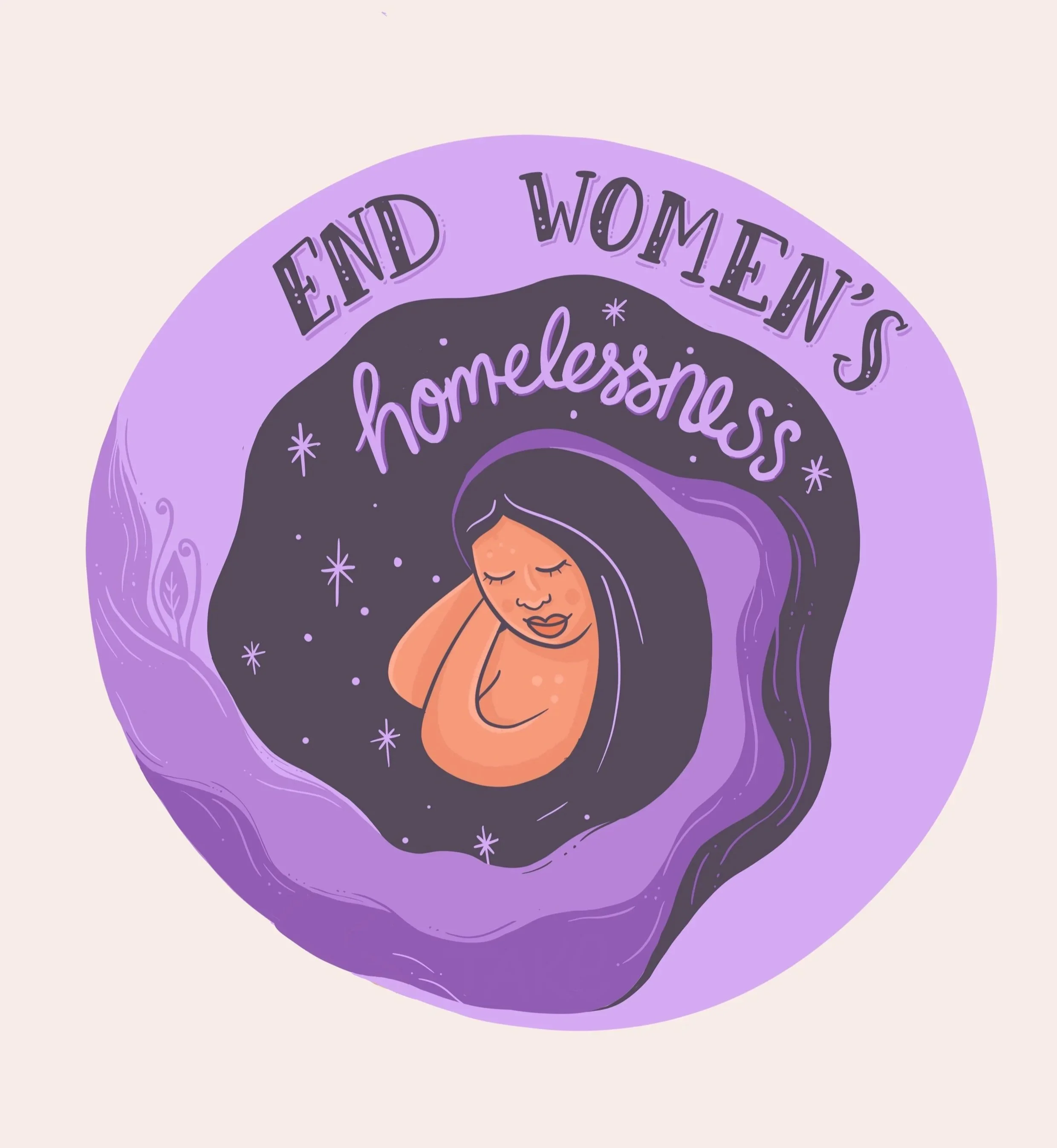
Last month, the Coalition to End Women’s Homelessness and the University of Otago – Ōtākou Whakaihu Waka hosted a research symposium which highlighted key research and insights into the impact of severe housing deprivation on women - particularly women experiencing homelessness, and the implications for their children. This beautiful illustration was created on the day by the League of Live Illustrators.
Mā te whakarongo, ka mōhio, mā te mōhio, ka mārama, mā te mārama, ka matau, mā te matau, ka ora.
Through listening comes knowledge; through knowledge comes understanding; through understanding comes wisdom; through wisdom comes wellbeing.
Over the past month, our voices, and the voices of those we all advocate for - continue to be heard. Calls for change are landing, taking root, and sparking meaningful conversations across Aotearoa.
Hundreds of people have protested across the motu, including vigils and community actions, to oppose the proposed Move On orders. Opposition has been broad and cross-sector and together, we continue to call for responses that address the root causes of homelessness, rather than simply displacing people.
Over the past month we have noticed that kōrero about homelessness has intensified, with particular attention to its impacts on women, older people, and rangatahi. Conferences, talks, exhibitions, symposiums, webinars, and campaigns have been plentiful - all advocating for meaningful change and a housing-led approach that protects our most vulnerable whānau.
The conversation is shifting, alliances are strengthening, and the voices of women, rangatahi, and older people experiencing homelessness are shaping change.
Nāku noa,
Kathie Irwin and Victoria Crockford
Kaihautū and Project Director
Coalition to End Women’s Homelessness
WAKA HUIA
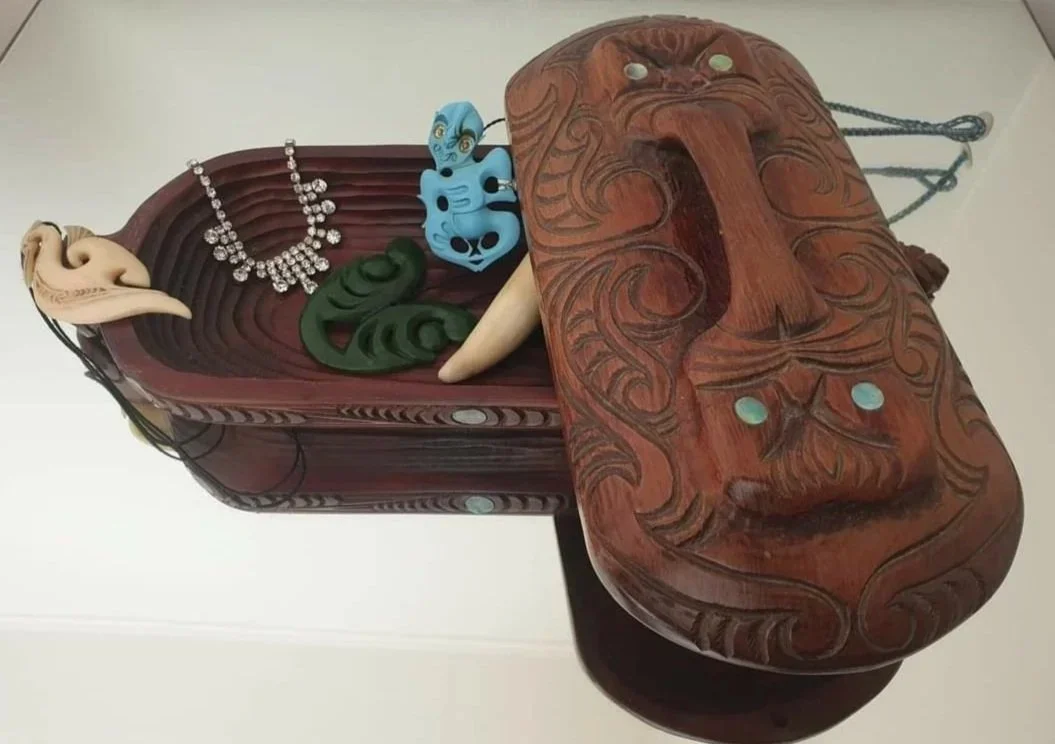
Kathie Irwin’s personal Waka Huia.
CEWH and Otago University Research Symposium - The Impact of Severe Housing Deprivation on Women
Last month, the Coalition to End Women’s Homelessness and the University of Otago – Ōtākou Whakaihu Waka hosted a research symposium which highlighted key research and insights into the impact of severe housing deprivation on women - particularly women experiencing homelessness, and the implications for their children.
The symposium was a lightning bolt for everyone involved — a day that had us laughing, crying, learning, and feeling inspired to act. From an opening question, “Whose voices are we really listening to?”, to the final reflections, the symposium reminded us of how much work still lies ahead.
Across the day, we heard from six incredible keynote speakers. A huge thanks for the inspiring presentations from:
Te Whāriki Manawāhine o Hauraki
Pū Rā Ka Ū in Practice: Māori-Led Pathways to Ending Women's HomelessnessWellington City Council
Understanding Homelessness: Wāhine Māori Experiences of Rough Sleeping in Wellington City and their Safety NeedsManaaki Rangatahi (with Ma Te Hurururu and Purangakura)
More Than a Roof: Tackling the Urgent Youth Homelessness Crisis in Tāmaki Makaurau in 2025University of Otago
Making Housing First Work for Everyone: Striving for Enduring Systemic Change - Housing First implementation in Aotearoa NZ, five-year outcomes, adaptation for Māori, women, youth (18+), women with children, and survival analysis with a gendered lens.Housing First Auckland
National Homelessness Data ProjectCoalition to End Women’s Homelessness
Papatūānuku Paradigm: A Gender Analysis Toolkit with a Te Ao Māori Lens
Participants - providers, researchers, council representatives, rangatahi services, and advocacy organisations - shared insights that inspired further learning, action, and collaboration.
There was a clear call for more Tiriti-centred, gender-disaggregated data and research, practical application, and solutions for women experiencing severe housing deprivation. There is a strong appetite for insights from the research presented - and how these insights can be applied in practice. This highlights the importance of using evidence to inform effective responses and support for women experiencing homelessness.
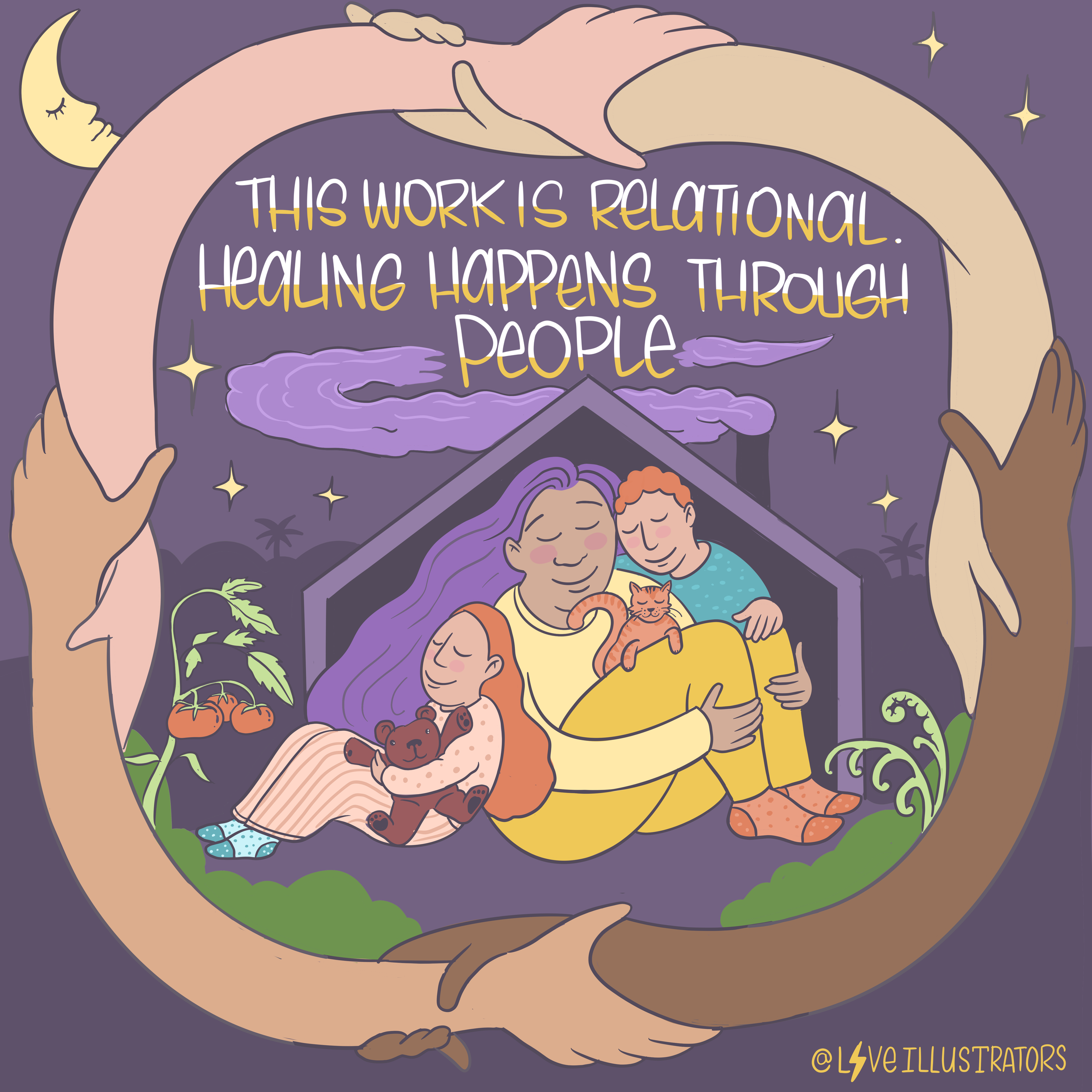
The creative energy flowed at the symposium too: the League of Live Illustrators captured the day in real time, weaving together stories, insights, and moments of reflection.
This intimate and powerful gathering reminded us of the value of sharing, listening and learning together.
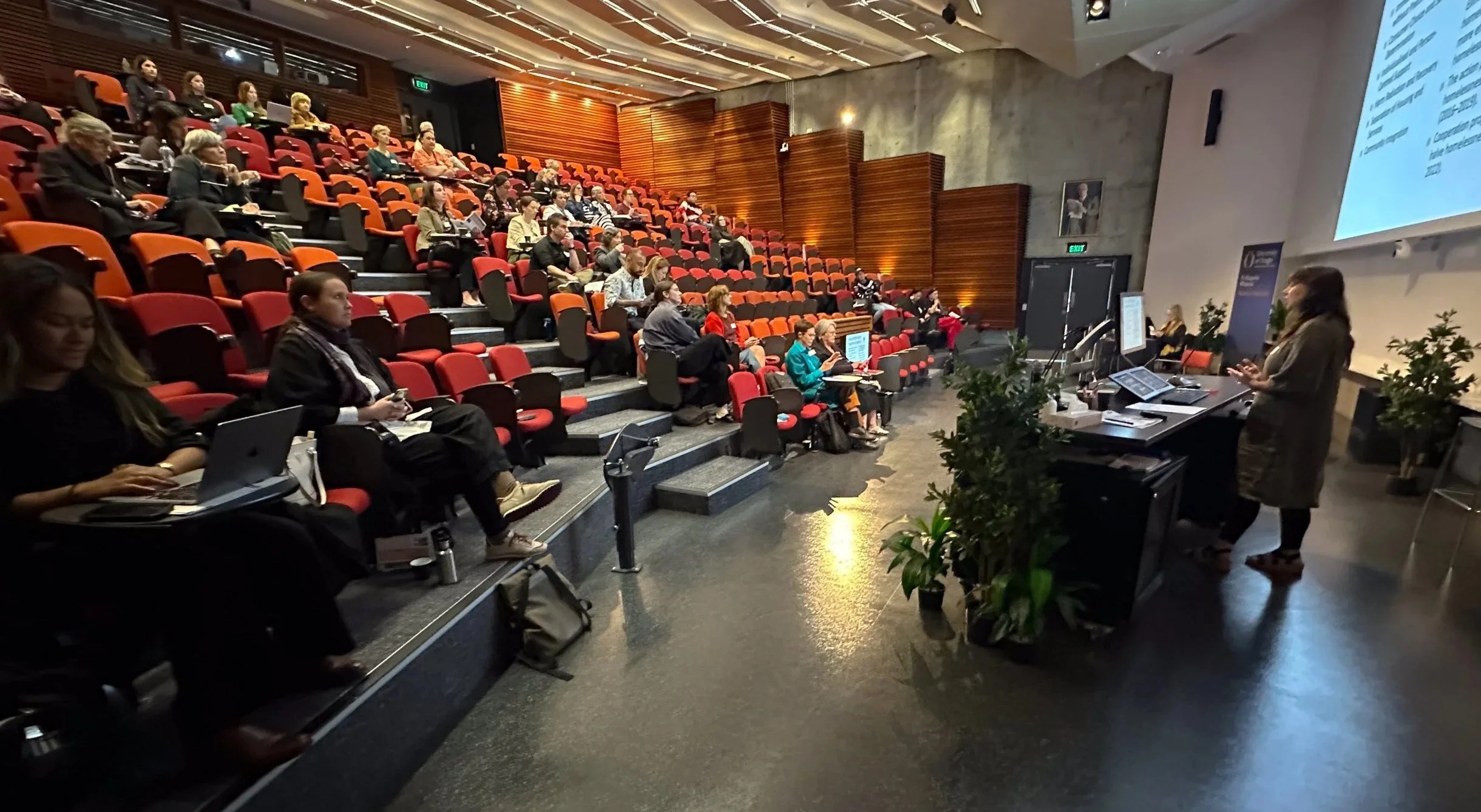
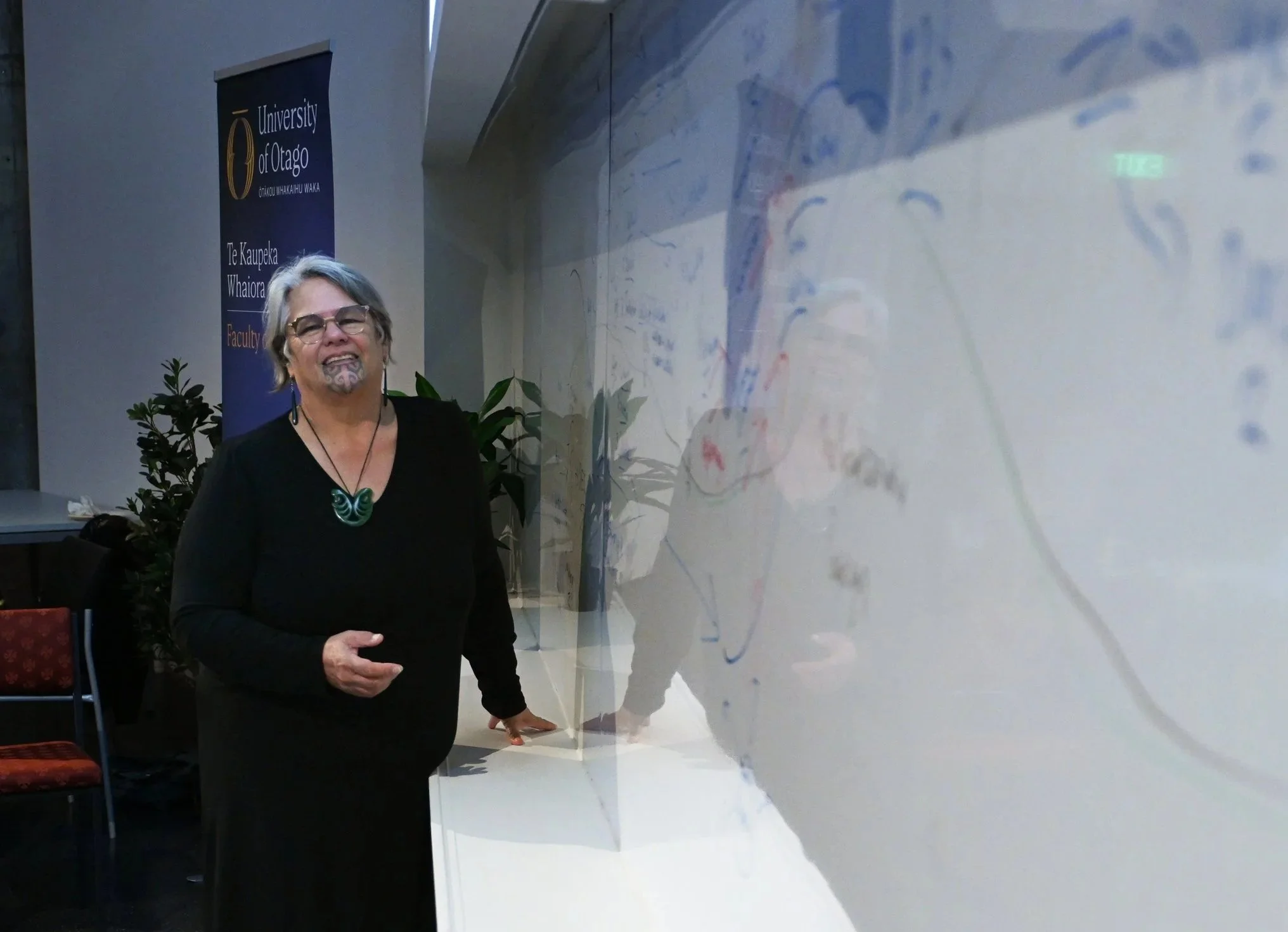
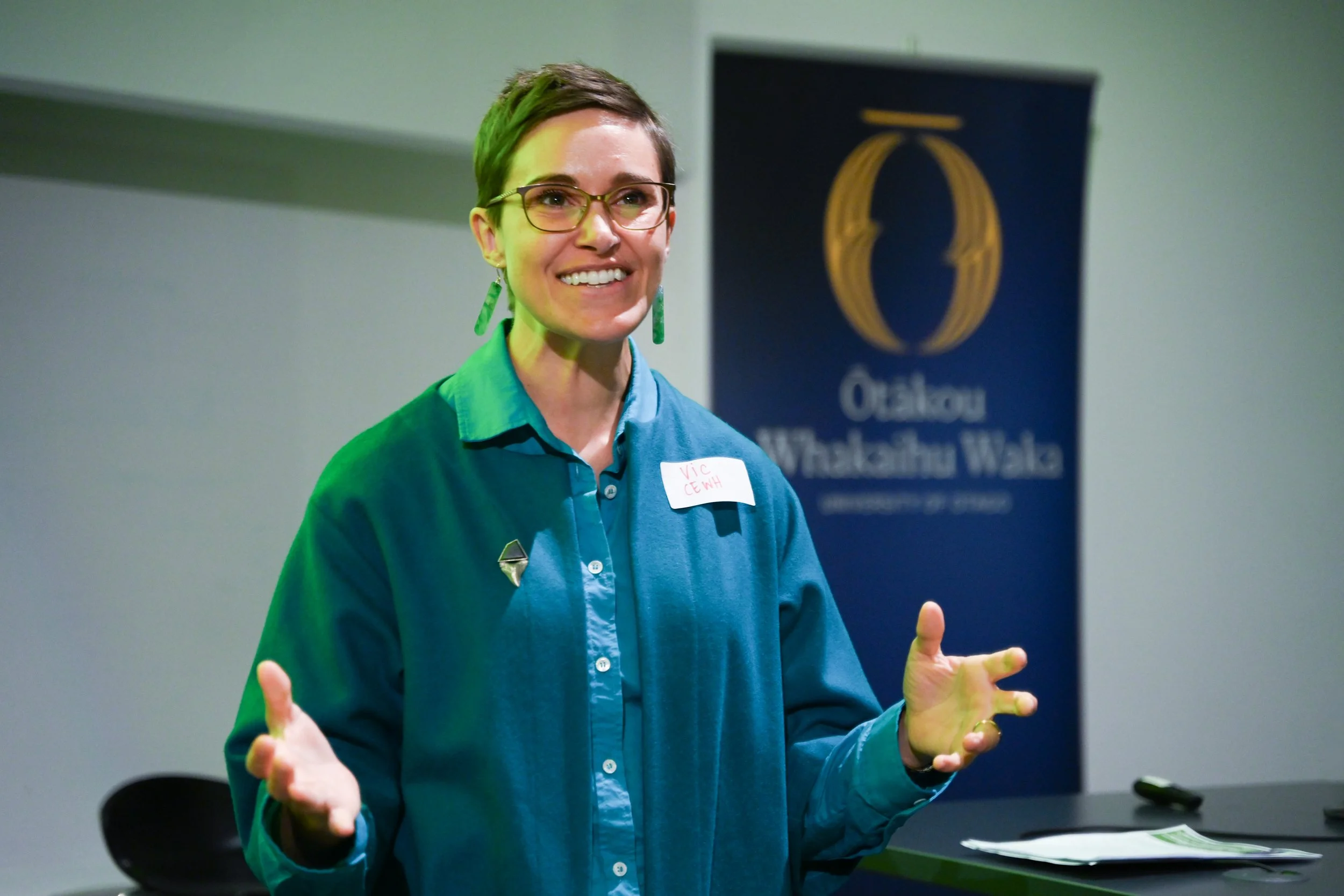
Photos below: Research symposium held at Otago University, CEWH project director Victoria Crockford, CEWH Kaihautū Dr Kathie Irwin.
Doors to Dignity - calling for affordable, accessible homes for older people
CEWH was privileged to support our steering committee member Jill Hawkey and her team from the Christchurch Methodist Mission at the launch of Doors to Dignity- a campaign calling for affordable, accessible homes for older people.
We know that older women face increasing precarity when it comes to finding decent housing options, especially those who are renting.
The campaign launch and accompanying photo exhibition were held at New Zealand Parliament last month, and the cross-party presence of politicians highlighted just how critical this issue is for the entire country.
CEWH Kaihautū Dr Kathie Irwin noted that, in response to a new housing initiative for older people, Jill’s organisation received two inquiries - one from an 87-year-old woman and another from an 84-year-old kuia.
As Kathie reflected,
“The 2022 survey of 451 people in the What Does Retirement Look Like for Māori? undertaken by the Retirement Commission, is full of deeply concerning testimonies from older Māori who were asked what retirement looks like for them … our elders deserve the love and support they have so generously given others over their lives.”
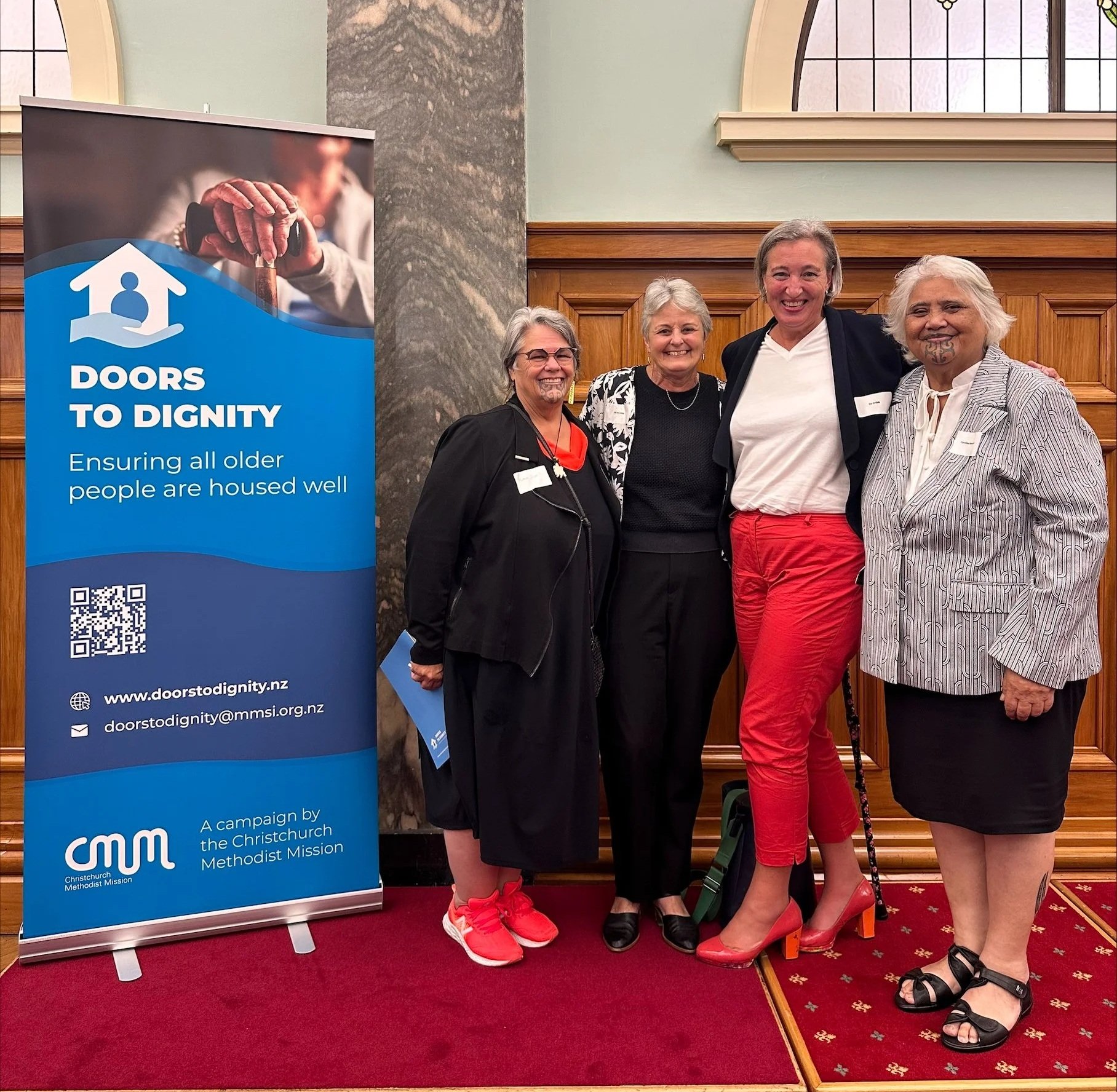
Photo: CEWH Kaihautū Dr Kathie Irwin (Ngāti Porou, Rakaipaaka, Ngāti Kahungunu), Jill Hawkey, Dr Jo Cribb, Caroline Herewini (Ngāti Kahungunu/ Ngāi Tūhoe)
Victoria Crockford on RNZ: Queenstown's quality of life survey and its impact on young women
A new Queenstown Lakes District Council quality of life survey shows a sharp rise in housing insecurity across the district, with the proportion of residents affected doubling over the past year. Ten percent of residents reported experiencing some form of housing insecurity or homelessness in the past 12 months, including staying with friends or family, or sleeping in cars, tents, or overcrowded housing. The impact is even more severe for young people aged 18–24, with nearly one in five reporting housing instability, including sleeping in vehicles, tents, or on the street.
CEWH project director Victoria Crockford said to RNZ that she wasn’t surprised by the findings, noting that housing insecurity is often hidden and can be particularly dangerous for women. She highlighted that women are more likely to experience hidden homelessness - staying temporarily with others or in unsafe arrangements that are not always visible in official data. “Because it (homelessness) is hidden, it is even more dangerous,” Crockford said, emphasising that this invisibility means there is often no adequate or formal response to women’s housing need.
Listen to, and read the RNZ story here.
Read the survey here.
Te Tiriti-Based Futures + Anti-Racism Online Conference
CEWH Kaihautū, Dr Kathie Irwin, presented the Papatūānuku Paradigm, a Tiriti-centred, gender analysis tool from a Te Ao Māori perspective, in the first session of the Te Tiriti-Based Futures + Anti-Racism online conference held last month. We were very proud of Kathie for presenting her work and representing CEWH at this important conference.
The conference was guided by the whakatauākī Hei kanohi mātaara, hei ringa whiti - eyes wide open, ready for action. It brought together over 25 webinars, a rangatahi and youth research day, and discussions on topics including institutional racism and anti-racism, decolonisation, building Tiriti-based futures, and constitutional transformation.
Kathie highlighted that over 50% of homeless whānau are women, with one-third identifying as Māori.
We extend our thanks to the organisers, speakers, and all those who participated, and ngā mihi nui to Kathie for representing CEWH and sharing her expertise on this important kaupapa.
AROUND THE SECTOR
CEWH monthly sector blog
Our monthly blog is written by CEWH Kaihautū Dr Kathie Irwin, oroject director Victoria Crockford, and collective impact lead Amanda Kelly.
Grounded in our ongoing engagement with iwi, organisations, leaders and community groups, we share reflections on what we are seeing and learning across the sector.
Read the April blog here.
Quick links
RNZ: Cost-of-living squeeze hits pensioners, with some using foodbanks to survive
RNZ: One in four skip meals, medical care due to cost of housing - survey
Stuff: Beyond the waiting list: Why housing success is more than just money in and money out
RNZ: Prisoners need help planning for release - Salvation Army
RNZ: Corrections does not know how many leave prison with nowhere to go, report reveals
Waipapa Taumata Rau University of Auckland: Housing fails to meet Māori and Pacific needs, say experts
The Office of the Auditor-General: Supporting people in immediate housing need
RNZ: Minister stands by decision to tighten emergency housing criteria despite criticism
Te Ao Māori news: Emergency housing rejections surge with Māori continuing to bear the brunt
Bay of Plenty News: Tauranga homeless advocates plan ‘peaceful’ protest against Govt’s move-on orders
Pacific Media Network: Pasifika nearly quarter of NZ's homeless so where do they go under new police powers?
The New Zealand Herald: Move-on orders for homeless: Wellington leaders urge Prime Minister Christopher Luxon to scrap proposed powers
POLICY AND POLITICAL INSIGHTS
CEWH engagement with Minister Potaka and Minister Grigg: Tiriti-centred, gender-disaggregated data; gender analysis; and retirement policy impacts on wāhine Māori
CEWH met with Associate Housing Minister Tama Potaka and Minister for Women, Nicola Grigg, as well as representatives from the Ministry for Social Development and the Ministry for Housing and Urban Development in March to discuss three key issues:
The need for Tiriti-centred, gender-disaggregated data
The need for gender analysis to inform policy and funding design
The impact of retirement policies on wāhine Māori
We thank the Ministers and officials for their engagement.
Our research symposium highlighted just how critical having accessible, disaggregated data - or data broken down into sub-categories - is for housing providers and funders to have a nuanced picture of the different supports needed in each community. We recognise data as a taonga and believe there are critical issues with relying only on administrative data, as it is currently gathered and analysed, to make decisions about housing need.
We are pleased that some progress has been made on gender-disaggregated data for transitional housing and thank the team at the Ministry of Housing and Urban Development who have worked on this.
A recent national breakdown of age and gender among individuals in transitional housing services shows:
a higher number of women than men were recorded in both the 18–24 and 25–39 age groups.
in the 18–24 age group, there were 827 women compared with 439 men.
in the 25–39 age group, there were 1,460 women compared with 860 men.
as at February 2026, almost the same number of adults (5,846) and children (5,164) were reported in Transitional Housing.
Next month, we will be looking to publish fresh statistical analysis from the Integrated Data Infrastructure on the impact of women’s homelessness on their children as we continue to spotlight hidden trends and disparities beyond the headlines.
CEWH IDI research on children’s experiences of homelessness
Next month, CEWH will publish new findings from research using the Stats NZ Integrated Data Infrastructure (IDI). This work explores the question: what are the typical government interactions experienced by children experiencing homelessness, and how do these differ from those of children who are not homeless? It will provide deeper insight into the impacts of women’s homelessness on children, helping to highlight hidden patterns and disparities that are not always visible in headline statistics.
He iti te mokoroa, nāna i kati te kahikatea
The grub may be small, but it cuts through the kahikatea
Vic, Kathie, Amanda, Ellie, Helen, Jo, Caroline, and Jill
