
Climate change and the impact on women’s homelessness
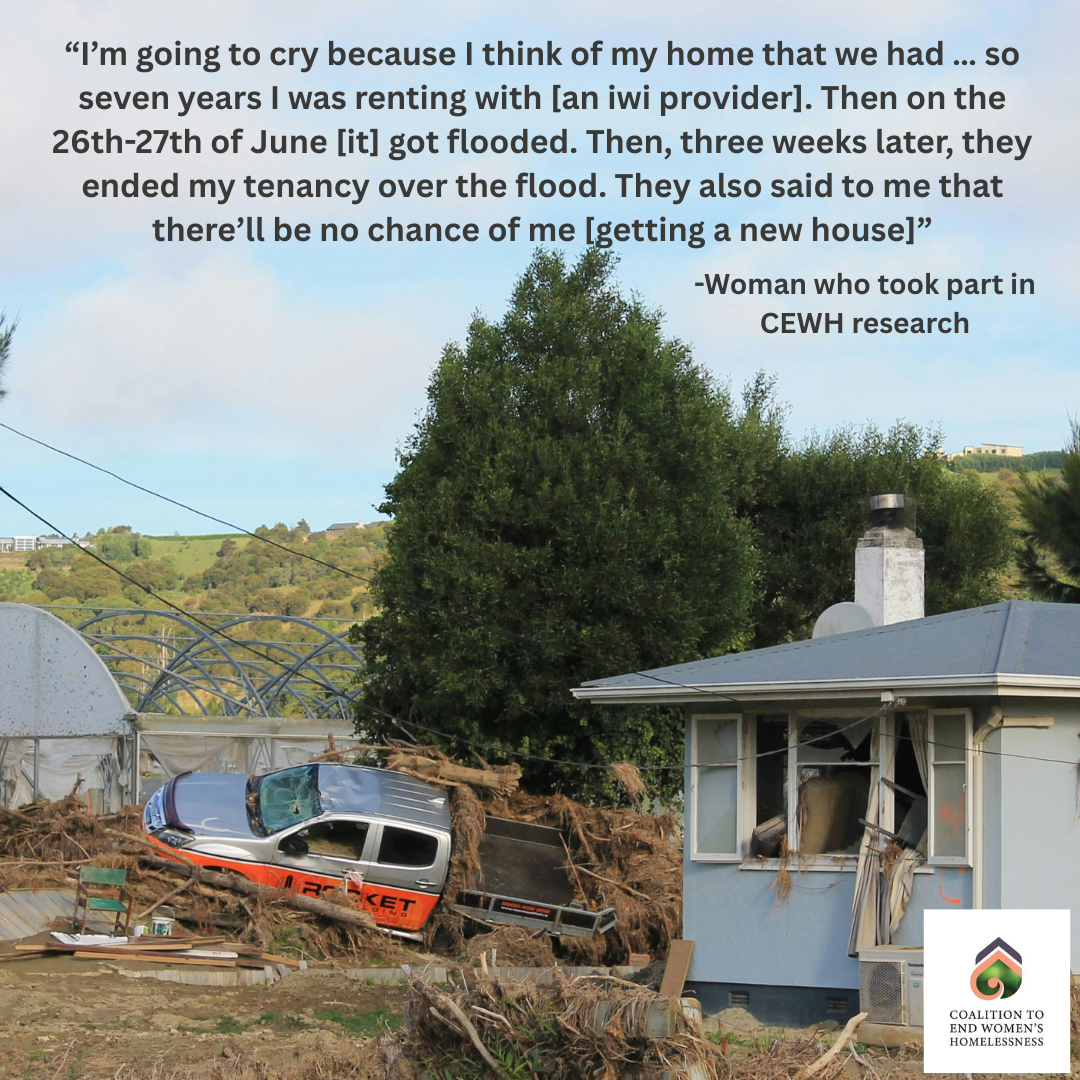
Image for illustrative purposes only; does not depict the home of the woman described.
As world leaders gathered at COP30 in Belém, Brazil last month - the connection between climate change and homelessness is impossible to ignore. This year’s discussions take place as climate-driven weather events displace millions and intensify inequalities already faced by women and children.
At COP30, organisations such as Habitat for Humanity are urging governments to recognise that without housing at the centre of adaptation planning, climate action will remain incomplete and inequitable.
For women on low incomes, and especially for wāhine Māori in the rural communities of Aotearoa, multiple pressures intersect with long-standing housing inequities. Sudden climate events can push women into unsafe or overcrowded living situations - or into homelessness altogether.
CEWH’s research shows that climate-related displacement is already shaping women’s homelessness:
Safe houses and women-only shelters are often unavailable in smaller towns and rural areas, leaving women with no choice but to often stay in unsafe environments.
Women report minimal housing support following climate events; one single mother, evicted after her rental was flood-damaged, was forced into severe overcrowding - 12 people in one home.
“I’m going to cry because I think of my home that we had … so seven years I was renting with [an iwi provider]. Then on the 26th-27th of June [it] got flooded. Then, three weeks later, they ended my tenancy over the flood. They also said to me that there’ll be no chance of me [getting a new house] … so yeah. I got fucked over.”
Kaimahi in flood-affected regions describe total gaps in housing providers, with emergency response falling largely to local marae.
“… if you’re looking across all those threads, education, rural connectivity, environmental, you just need to have a look at [Cyclone] Gabrielle and the impact. If you’re looking at wāhine Māori who come from a rural area and have no access to connectivity, transport. There are no banks in Wairoa … no access to economy.” (Kaimahi)
Rural women, including wāhine Māori, face additional barriers such as limited transport, no local banking services, unreliable connectivity, and restricted access to the economy - challenges that are intensified during disasters.
Community-led, grassroots housing initiatives are essential and must be established before more major climate events occur.
Climate change will continue to expose and amplify the cracks in our housing system. If we want women and their whānau to remain safe, connected, and resilient, secure housing must be treated as a cornerstone of climate adaptation.
