
No holiday from homelessness - women and their children unhoused in Aotearoa
Single mothers are disproportionately affected by homelessness
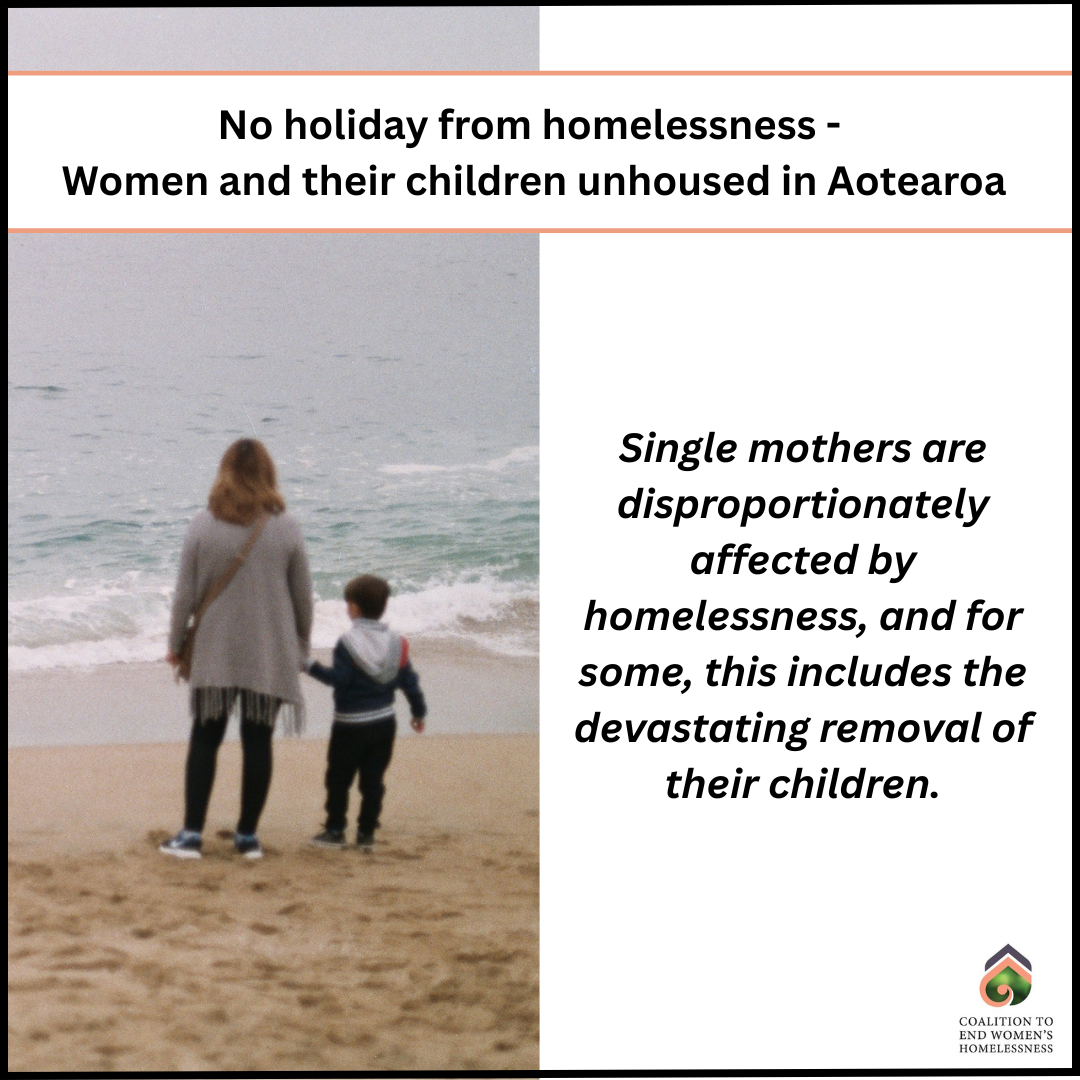
This summer, we’re highlighting the urgent reality that for many women and their children - there is no holiday from homelessness in Aotearoa.
Single mothers, particularly Māori and Pacific women, face systemic discrimination, financial hardship, and barriers to safe housing, leaving many and their children without a home.
The removal of children, unsafe emergency housing, and the intersecting impacts of poverty, mental health challenges, and domestic violence all deepen the crisis.
Our research shows that:
single mothers are disproportionately affected by homelessness, often more so than men.
severely housing deprived women are more likely to have children – often four or more – than men or other women.
many severely housing deprived women are sole parents, receiving government support, including sole parent benefits (17% in 2018 vs 2% of men; similar rates in 2023).
Intimate partner violence is a significant driver of homelessness for women and children
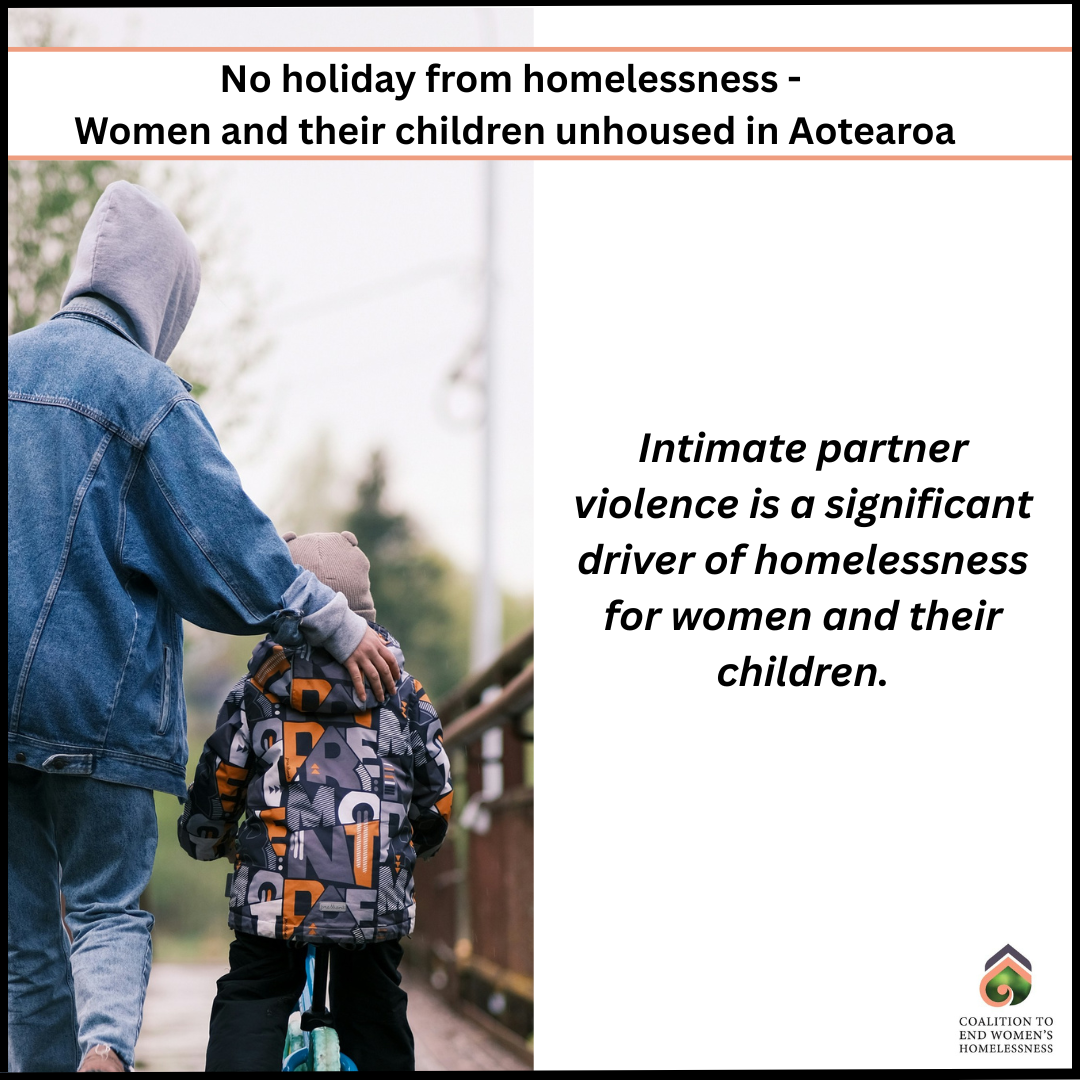
In Aotearoa, single mothers - particularly Māori and Pacific women - are disproportionately affected by homelessness, facing the daily challenges while caring for their tamariki.
Our research highlights the prevalence of intimate partner violence (IPV) as a significant driver of homelessness for women and their children.
Several participants shared that they were victims of extreme physical violence and, at times, thought they were going to die.
Others spoke about the challenges of parenting while navigating housing deprivation, IPV, mental illness, and other intersecting factors.
Many described how violent and abusive relationships affected their ability to secure and sustain safe, long-term housing, with a common experience being the loss of a rental property, or eviction due to partners damaging or destroying their homes.
“We ended up in transitional [housing], and then I ended up getting a house. It was built brand new, and the abuse was still occurring. He ended up smashing up the whole house. It was really bad at that time; my babies would’ve been just walking,” said one woman who took part in our research.
Emergency accommodation can be unsafe for women and children
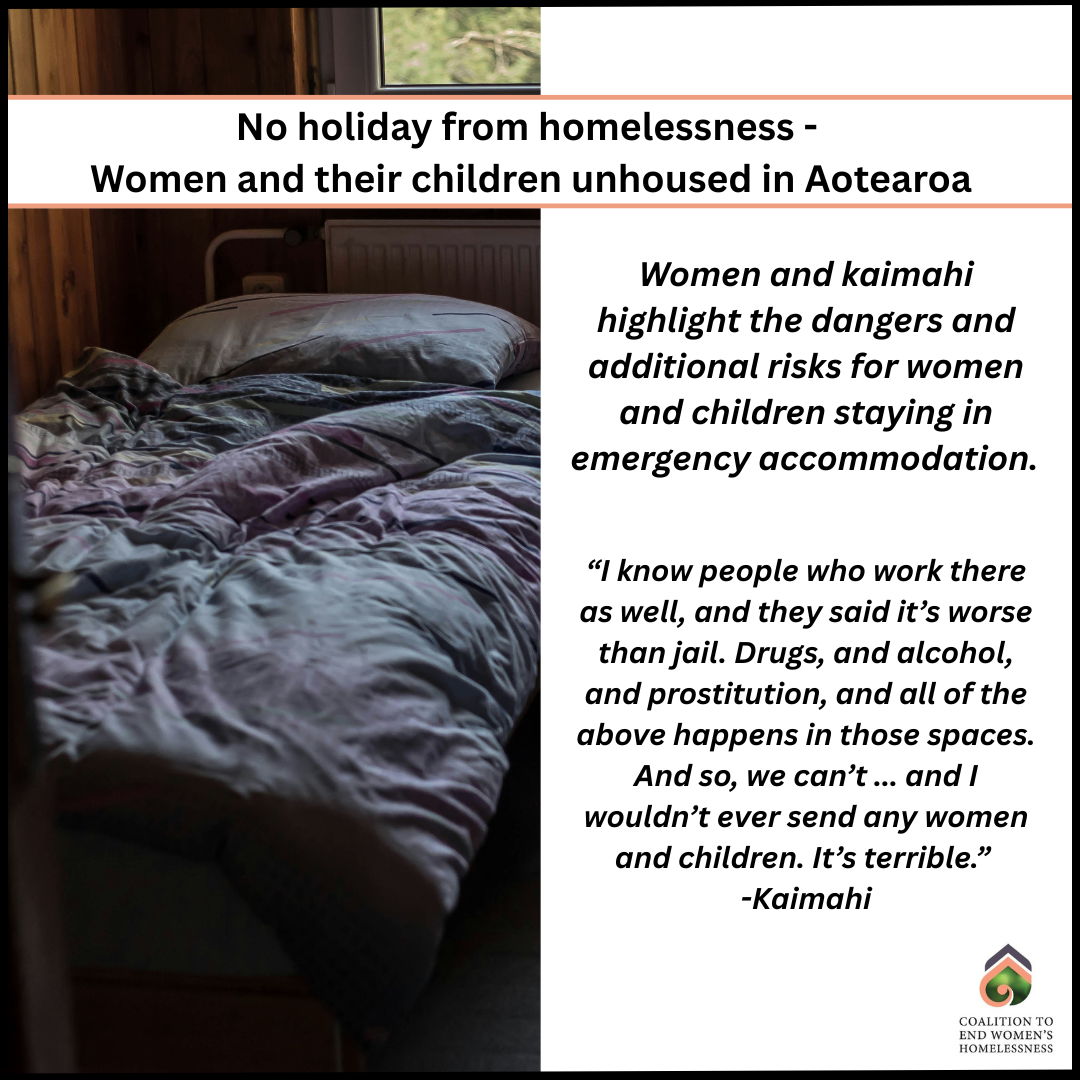
Too many women and their children continue to face homelessness in Aotearoa. Single mothers - especially Māori and Pacific women - bear the heaviest burden.
Emergency accommodation can be unsafe for women and children as it often lacks security, privacy, and the supportive environments they dearly need.
Waimarama, who features in our research, was given emergency housing which provided her and her young whānau with a warm place to sleep, however she struggled with the presence of drugs, break-ins and violence in the complex.
At times Waimarama had to live in a tent or a shed because the emergency accommodation was simply too unsafe for her and her baby.
She recalls being in a one- room motel room with her baby. She was unable to make any noise while her baby was sleeping, and she had no space of her own.
“It was doing my head [in] and I couldn’t even put my baby to sleep, and any noise, he would wake up. It was affecting my mental health so much that I started to fall. I started to become my environment and yeah, my mental health was so bad that I started taking drugs again. I just knew from there … I had to get out, and I think I started praying.”
Read Waimarama’s full story on page 44 of our research, here
Many single mothers face the trauma of losing the care of their children
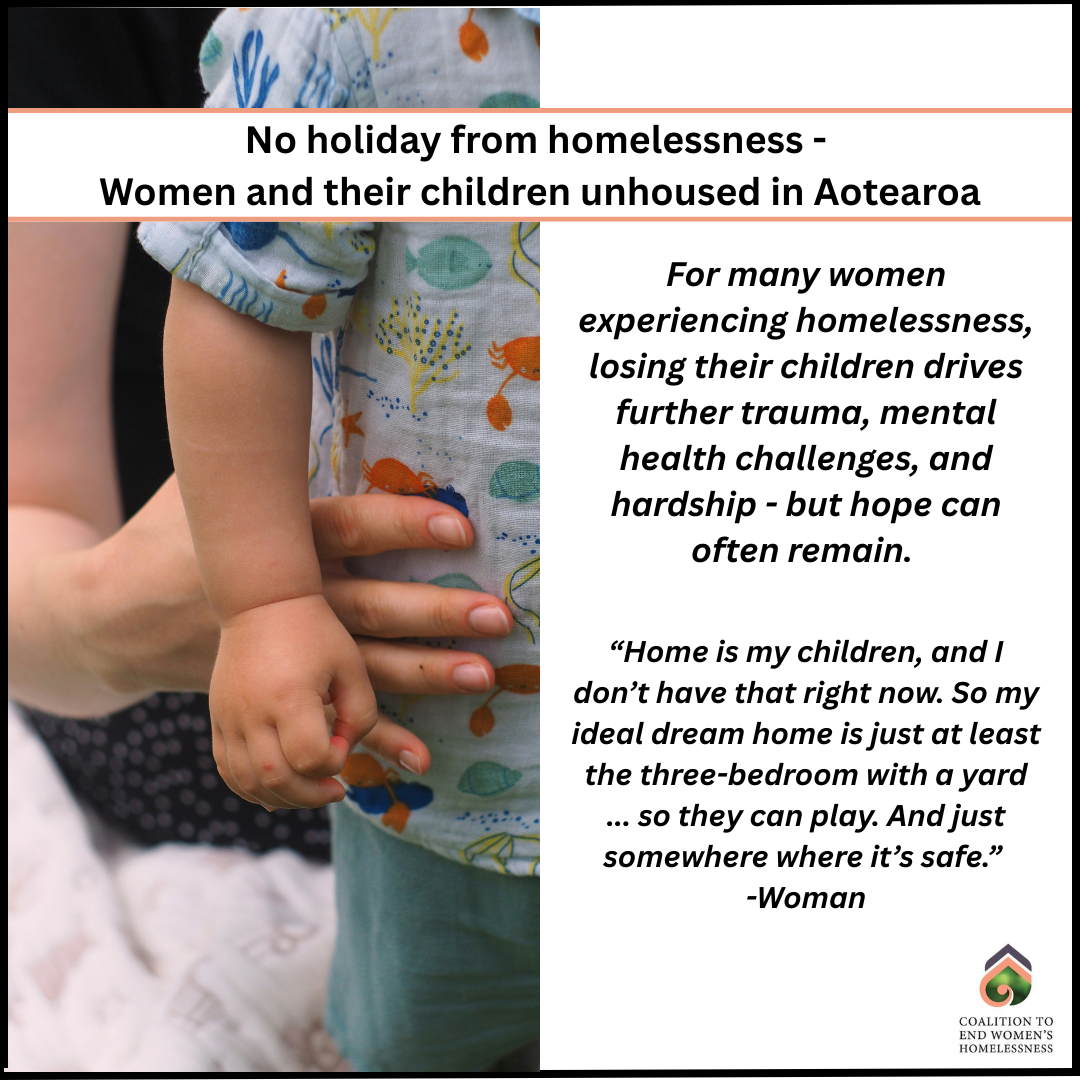
Many single mothers face the trauma of losing the care of their children - whether voluntarily or through Oranga Tamariki - a painful reality that adds to the significant challenges of homelessness.
Our research shows that the removal of children is both a driver and consequence of women’s homelessness, with the loss potentially exacerbating existing mental health issues and addictions.
One woman described,
“Addiction, loss of children. Because once I lost them, I gave up everything, if you know what I mean. So, what’s the point of paying rent? And you might as well just go spend it on other things. And [then] I lost my house …”
While many face deep grief from separation, they also acknowledge the importance of caring for their own mental health as a first step toward reconnecting with their children. Women who took part in our research shared their gratitude for the support they received through providers in creating plans for visitation and gaining day-to-day care of their children.
Finding safe and long-term housing is a critical step for women seeking visitation or custody of their children.
Discrimination is a major barrier for single mothers experiencing homelessness
Māori and Pacific women in particular report heightened discrimination from government agencies, authorities, police, healthcare professionals, landlords, and potential employers.
“I’ll tell you something else … some people who work in those departments are very judgemental … you’re made to feel dirty…You withdraw into yourself; you don’t open up… it’s very hard. If you’re a proud person who [is] used to being independent and to go and ask for that help, that takes a lot of courage,” said one woman who took part in our research.
Over time, these negative interactions, along with feeling judged, and receiving inadequate support have left many with deep distrust - with some women saying discrimination contributes to their homelessness.
Discrimination is intensifying the struggles these women, and their tamariki, face.
Discrimination is making it harder for women to secure the safe, affordable housing they are striving to provide for themselves and their tamariki.
Our research shows that being a single mother can be a pathway to homelessness
Our research shows that being a single mother can be a pathway to homelessness, particularly when combined with additional challenges women living in homelessness may face such as:
trauma, mental illness, or addiction
domestic or sexual violence
discrimination and systemic barriers
financial insecurity and poverty.
Generic homelessness services and policies often fail to meet the specific needs of women with children, leaving children in unsafe, unstable, or inadequate housing. Combined with poverty and systemic disadvantage, especially for Māori, Pacific, and sole‑parent families, this increases the risk of entrenched disadvantage and can undermine children’s long-term wellbeing and life opportunities.
To protect our children, we must first ensure their mothers are supported during times of acute need.
Safe, long-term housing is essential for single mothers experiencing homelessness who are working toward regaining care of their children
Some mothers in our research expressed gratitude for the support they received from providers to plan toward reunification.
One woman who lived in temporary women-only housing was pregnant while receiving support:
“It has healed my mental health, in a way … just being around other women, and just having people in your life every day,” she said.
Of the 18 women we spoke to for our research, 14 are mothers. They made it clear - and we tautoko - that kaimahi provide essential, hands-on support, helping women navigate housing challenges, care for their wellbeing, and work toward reconnecting with their children.
Thank you to the kaimahi who provide compassionate, judgment-free, and supportive care to women and their children who are experiencing homelessness in Aotearoa.
Women who took part in our research associated home with whānau/family, and in particular - their children
Women expressed a desire for a space where they could be with their loved ones, create a loving environment, and raise their children in comfort.
“To be honest, home is my children, and I don’t have that right now. So my ideal dream home is just at least a three-bedroom with a yard … so they can play. And just somewhere where it’s safe,” said one woman.
As this campaign highlighting Aotearoa’s unhoused women and their children draws to a close, we reflect on the stories, insights, and voices that have shaped our research. We thank the women who generously shared their time and deeply personal experiences of homelessness, housing deprivation, trauma, and abuse.
Our work underscores the often-hidden struggles of women experiencing homelessness and the profound impacts on their children. We call for urgent action to ensure all women and their children have safe, stable homes.
Me aro koe ki te hā o Hine-ahu-one
Pay heed to the power and dignity of women
There is no holiday from homelessness in Aotearoa
You can help make a difference
Sign and send our Open Letter calling for a national, Te Tiriti-based strategy to end women’s homelessness.
Find out more here.
Our research: Ngā Ara ki te Kāinga Understanding Barriers and Solutions to Women’s Homelessness in Aotearoa
Find out more here
