
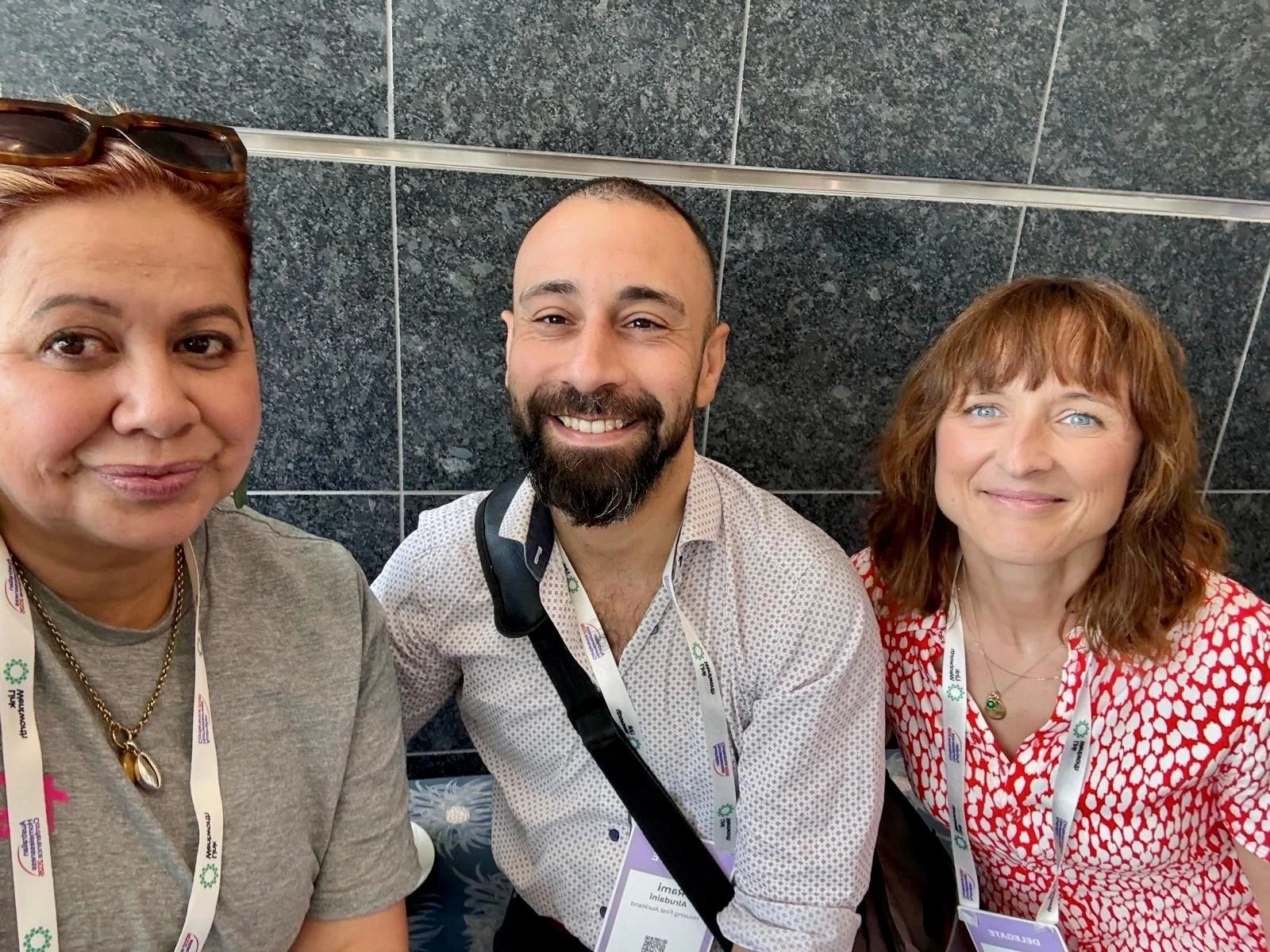
Written by Amanda Kelly (Coalition to End Women’s Homelessness and Community Housing Aotearoa), Bee Johanson (Manaaki Rangatahi) and Rami Alrudaini (Housing First Auckland) who attended the National Homelessness Conference in Darwin in October 2026.
Image, from left: Bee, Rami and Amanda.
It was a valuable opportunity to connect with colleagues across Australia, hear about some inspiring work and reflect on what we might take back to Aotearoa. While we bring different perspectives and areas of focus, we share a commitment to preventing and ending homelessness.
We've brought together some of the key themes, conversations and ideas that stood out to us.
Disrupting the narratives about homelessness
One of the strongest themes throughout the conference was the need to challenge the language, assumptions and narratives that shape how homelessness is understood and how we respond.
People experiencing homelessness are not inherently vulnerable. They are people experiencing vulnerabilities, often created or compounded by the circumstances and systems around them.
People experiencing homelessness are not cases to be managed or problems to be solved. They are people with strengths, relationships, aspirations and expertise in their own lives.
These distinctions are important. The language we use can reinforce stigma, locate the problem within individuals and obscure the wider conditions that contribute to homelessness.
We also need to recognise the different experiences of homelessness, including those that are often less visible, particularly among women, children, young people and gender-diverse communities.
Changing the narrative means shifting our attention from what is supposedly wrong with people to understanding what has happened to them, the circumstances they are navigating and what needs to change around them.
Lived experience is knowledge, expertise and leadership
Lived experience was a strong focus throughout the conference, with important conversations about how we recognise and value the expertise of people who have experienced homelessness.
This goes well beyond inviting people to share their stories or consulting them on decisions that have already been made.
There was also a challenge to the generic term "lived experience". Rather than treating it as a broad label, we need to recognise the specific expertise people bring through their direct experiences of homelessness, family violence, incarceration and other systems, and ensure this expertise influences policy, service design, governance, research and systems change.
Indigenous leadership was a particularly important part of these conversations, reinforcing the need to recognise Indigenous knowledge, self-determination and community-led solutions.
It also challenges us to consider whose knowledge we value, who holds decision-making power and whether we are genuinely sharing power and resources with the people and communities most affected.
Prevention means breaking the loop, not bridging the gap
One of the most thought-provoking ideas from the conference was the distinction between bridging gaps in the system and breaking the loops that perpetuate and maintain homelessness.
Governments can set ambitious visions and strategies to end homelessness while continuing to direct most investment towards crisis responses. We become better at responding to homelessness without necessarily changing the conditions that produce it.
Prevention requires us to look further upstream and understand the different pathways into homelessness.
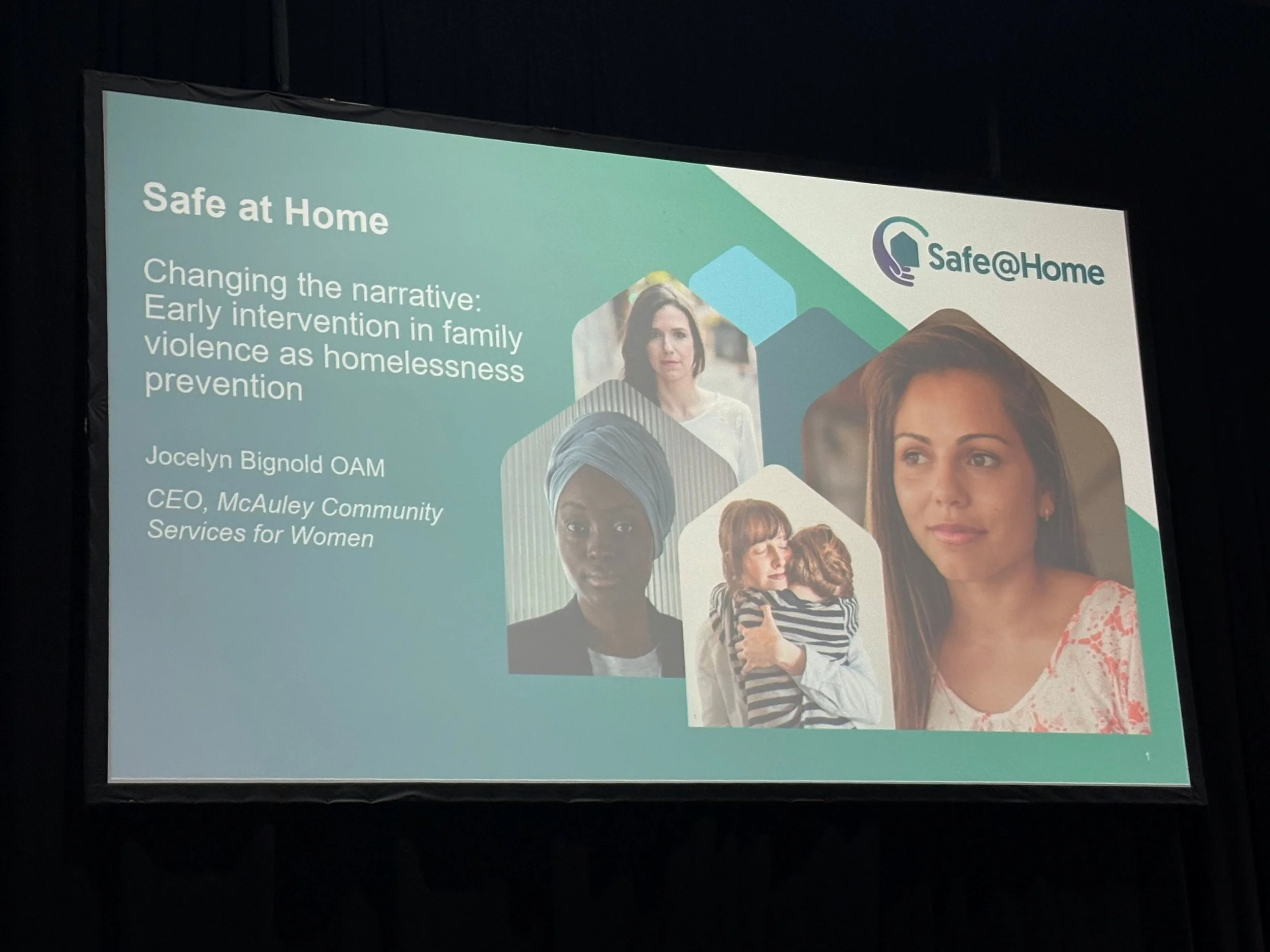
For women, family and domestic violence is a significant driver. For children and young people, we heard confronting accounts of sexual abuse, violence, neglect and family breakdown.
Preventing homelessness means addressing these underlying causes, including tackling violence against women and children, strengthening families and communities, and building the support networks and conditions that help people stay safe and connected.
It also means recognising that prevention is not solely the responsibility of homelessness services. Housing, health, education, child protection, family violence and income support systems all have a role to play.
Another important challenge was ensuring that no one exits a state system into homelessness. Whether someone is leaving state care, health, prison or another institution, safe housing and appropriate support should be planned before they leave, rather than expecting homelessness services to respond after a crisis occurs.
There is also an opportunity to use what we have learned through Housing First and other responses to better understand the circumstances and risk factors that lead people into homelessness, and use that knowledge to inform prevention.
Rather than continually managing the consequences, how do we interrupt the conditions that allow homelessness to happen in the first place?
Housing and homelessness are human rights issues
Another important theme was the need to approach housing and homelessness through a human rights lens.
Housing is a fundamental human right, not simply a commodity or a service provided when people reach crisis point.
Governments have both legal and moral responsibilities to ensure people have access to safe, secure and adequate housing, and to address the conditions that lead to homelessness.
This includes stronger legal protections for tenants and reform that improves housing security, prevents avoidable homelessness and holds governments accountable for protecting people's rights.
For children and young people, homelessness is also a children's rights issue, affecting their safety, development, education, identity and sense of belonging.
A rights-based approach changes the question from how we manage homelessness to how we uphold people's rights and prevent those rights from being violated in the first place.
Designing systems around people, not expecting people to fit the system
Another important challenge from the conference was to examine whether our services and systems are genuinely designed around the people who need them.
Rather than asking why people aren't engaging with services, we should also be asking whether those services are accessible, appropriate and safe in the first place.
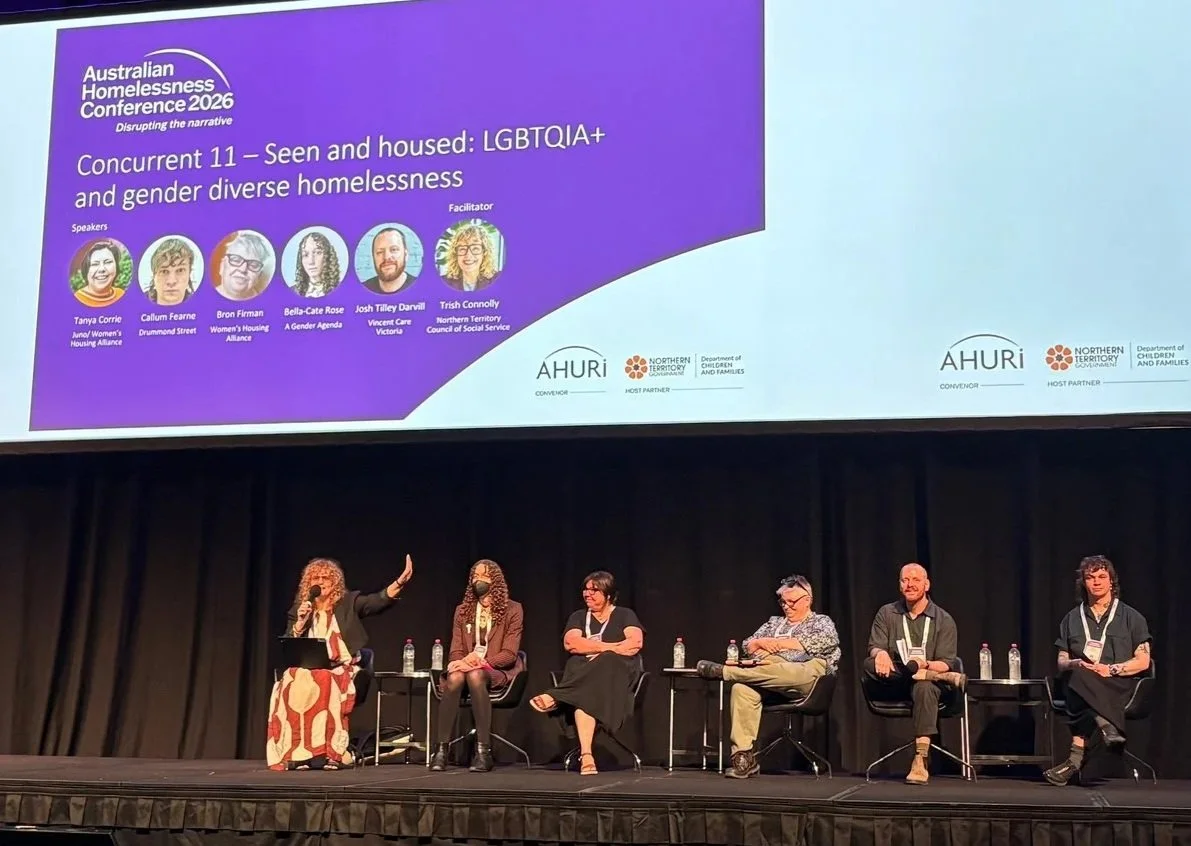
This was particularly relevant to discussions about women and trans and gender-diverse people, whose experiences can be shaped by intersecting forms of discrimination, violence, exclusion and disadvantage.
For trans and gender-diverse people, safety from discrimination is fundamental to whether services are accessible at all.
For women, responses need to recognise the connections between homelessness, family violence, trauma, poverty, pregnancy, incarceration and caring responsibilities.
Inclusion cannot simply be added to existing service models. It needs to shape how services are designed, how staff are supported and how organisations work with specialist communities.
The challenge is to stop expecting people to fit our systems and instead ask what needs to change within those systems to respond to people's different circumstances, identities and needs.
Housing, health and wellbeing cannot be separated
The relationship between housing, health and wellbeing came through strongly across the conference.
Housing is not simply a roof over someone's head. It is connected to physical and mental health, family wellbeing, cultural identity, safety and social connection.
We heard examples of health services working alongside homelessness responses, including mobile healthcare, outreach and approaches that recognise the barriers people face in accessing mainstream health services.
For people who have experienced discrimination, trauma or distrust of institutions, improving access requires more than making services available. It means building relationships, creating trust and changing how services respond.
There was also a strong message about the importance of the right housing, with the right support, at the right time.
For women and children experiencing family violence, safe housing is also a form of violence prevention and protection. For young people, housing provides a foundation for education, relationships, culture, identity and belonging.
Community housing providers have an important role in creating flexible housing pathways, supportive housing and longer-term stability, including for people whose circumstances do not fit traditional housing or service models.
The discussions challenged us to think about housing as an investment in health, child protection and community wellbeing, rather than treating these as separate policy areas.
Data must create visibility and drive action
The importance of good data was another recurring theme, particularly through Australia's Advance to Zero work.
Data helps us understand who is experiencing homelessness, what is changing, where systems are failing and whether our collective efforts are making a difference.
But collecting and reporting data is not enough.
The real value comes when data informs decisions, strengthens coordination, improves services and drives action towards making homelessness rare, brief and non-recurring.
This has particular relevance for Aotearoa as we strengthen our national understanding of homelessness and explore how shared data can support more coordinated, place-based responses.
We also need to recognise who remains invisible in the data, particularly people who never present to homelessness services, and ensure our approaches reflect the diverse experiences of homelessness.
What we collect data on, and what we don't, also shapes our understanding of homelessness.
When women's experiences of homelessness are not adequately captured, they become invisible in the evidence used to inform policy, funding and service responses. Better data isn't simply about counting people; it's about recognising who is missing, understanding their experiences and ensuring responses reflect the full picture of homelessness.
Systems change requires collaboration and the infrastructure to support it
A particularly valuable learning from Australia's Advance to Zero approach was the importance of backbone organisations in supporting collective efforts to end homelessness.
Collaboration does not happen simply because organisations share a common goal.
It requires dedicated coordination, trusted relationships, shared data, collective priorities and accountability for progress.
Backbone organisations provide important infrastructure to support this work, helping partners move beyond individual organisational responses towards coordinated systems change.
The conference also reinforced that meaningful collaboration requires shared power and sustained investment, including in the capability of community organisations, specialist services and Indigenous-led organisations that are often expected to lead complex work with limited resources.
Systems change also requires investment in the people and organisations doing the work.
One reflection from the conference captured this pressure: "I’m always hustling in this system." Housing and community-sector organisations are being asked to innovate, work alongside communities and sustain partnerships, often with increasingly constrained resources. This raises an important question about how we support and sustain this work, particularly for smaller Indigenous-led organisations.
Short-term pilots and fragmented funding are unlikely to deliver the long-term change needed to prevent and end homelessness.
There was also a useful reminder about focusing our efforts on the parts of the system we can influence, while keeping sight of the bigger goal.
For smaller organisations working on complex systemic issues, this is an important consideration. Where can we have the greatest influence, and how do we ensure our activities are contributing to the goal of ending homelessness?
Bringing it together
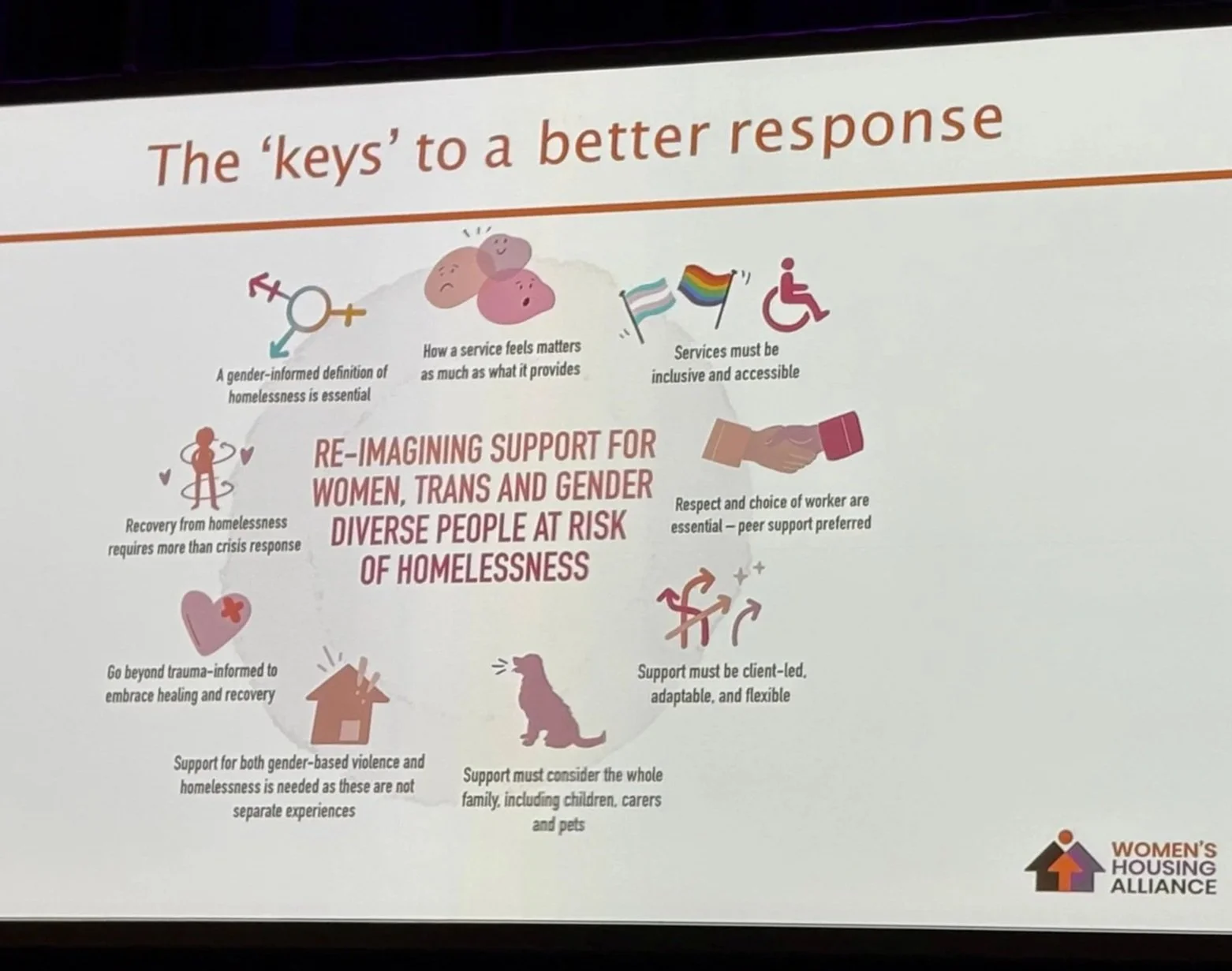
A key learning from the conference was that changing how we talk about homelessness is only part of the work. We also need to challenge how we understand the problems, the solutions we invest in and the systems that shape people’s experiences.
Disrupting narratives means moving beyond individual explanations of homelessness to recognising the wider conditions that create and sustain it.
It also means reframing solutions, from managing homelessness and responding to crisis towards prevention, protecting people’s rights, strengthening communities and changing the systems that perpetuate homelessness.
For Aotearoa, these learnings are an opportunity to reflect on where we focus our collective efforts and how we use our knowledge, partnerships and influence to contribute to the shared goal of preventing and ending homelessness.
