
Mahuru & Whiringa-ā-nuku | September & October 2026 pānui

He manako te kōura i kore ai
Wishing for the crayfish won't bring it.
Kia ora koutou,
In her address marking the second anniversary of her coronation, Te Arikinui Kuini Ngā wai hono i te po called on Māori to move from the legacy of Raupatu towards a future of Rauora. She described Rauora as “more than recovery. It is revival” and spoke of a future where tamariki are strong in their reo and whakapapa, whānau are healthy and secure, Māori own homes and build wealth, and people determine their own future.
Her words invite us to think about the legacy we build and what we leave for the generations that follow.
“Our Kotahitanga gives us the strength to build it together,” she said.
Under the theme Ake, Ake, Ake – A Forever Language, Te Wiki o te Reo Māori closed with Te Reo Tuku Iho, a day centred on legacy, intergenerational transmission, and looking ahead – reminding us all that the future of te reo Māori will be shaped not only by one week of action, but by what continues afterwards. This also matters deeply when we think about women’s homelessness in Aotearoa.
Homelessness is not simply about what happens to someone today. For many women, it is shaped by the cumulative and intergenerational effects of inequality, and by systems that have disrupted their connection to whenua, whānau, culture, language, housing and economic security.
For wāhine Māori, the disproportionate impact is stark - around one in three women experiencing homelessness are wāhine Māori.
This week we have released Dr Kathie Irwin’s training videos and resources for The Papatūānuku Paradigm - Te Ao Māori approach to gender analysis. In one of the videos, Kathie speaks about how the layers of inequality compound across generations:
“First they came for the land, then they came for our language and culture, then they came for our social structures, and then the economic impact of those combined forces of inequality shows up in older age…” she says.
Legacy matters and The Papatūānuku Paradigm is part of our legacy work at CEWH. It is work that asks us all to look beyond the immediate problem and understand the systems and structures that have shaped women’s experiences across generations. Importantly it asks what we can change and how .
Nāku noa,
Kathie Irwin and Victoria Crockford
Kaihautū and Project Director
Coalition to End Women’s Homelessness
WAKA HUIA
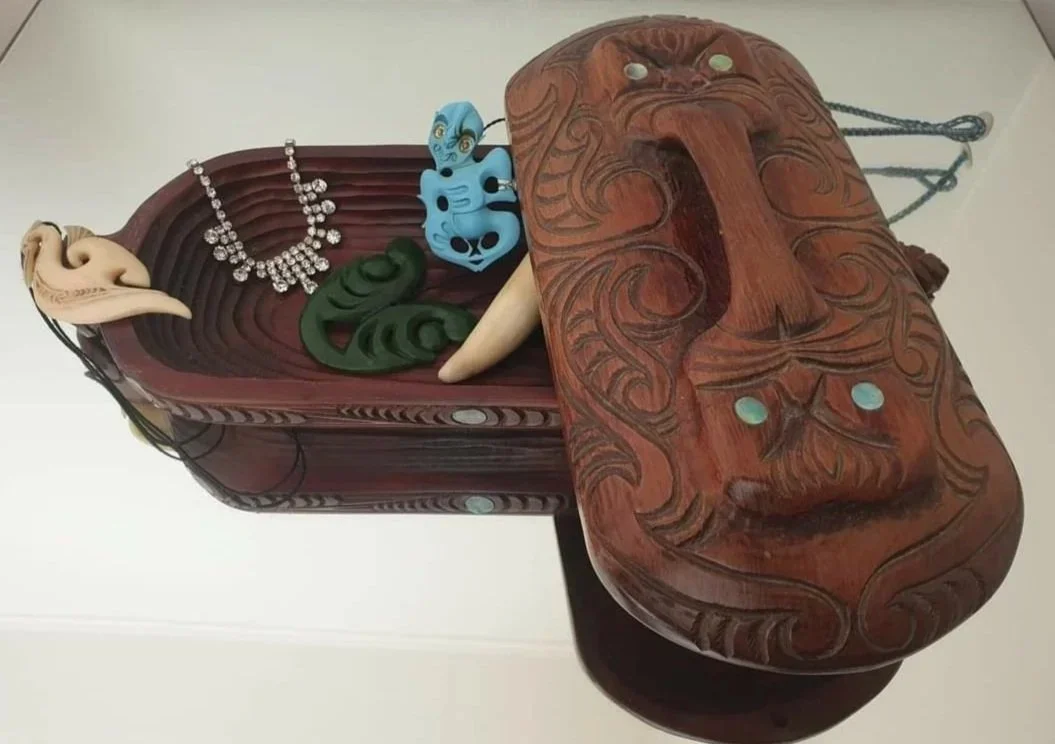
Kathie Irwin’s personal Waka Huia.
The Papatūānuku Paradigm videos are available now
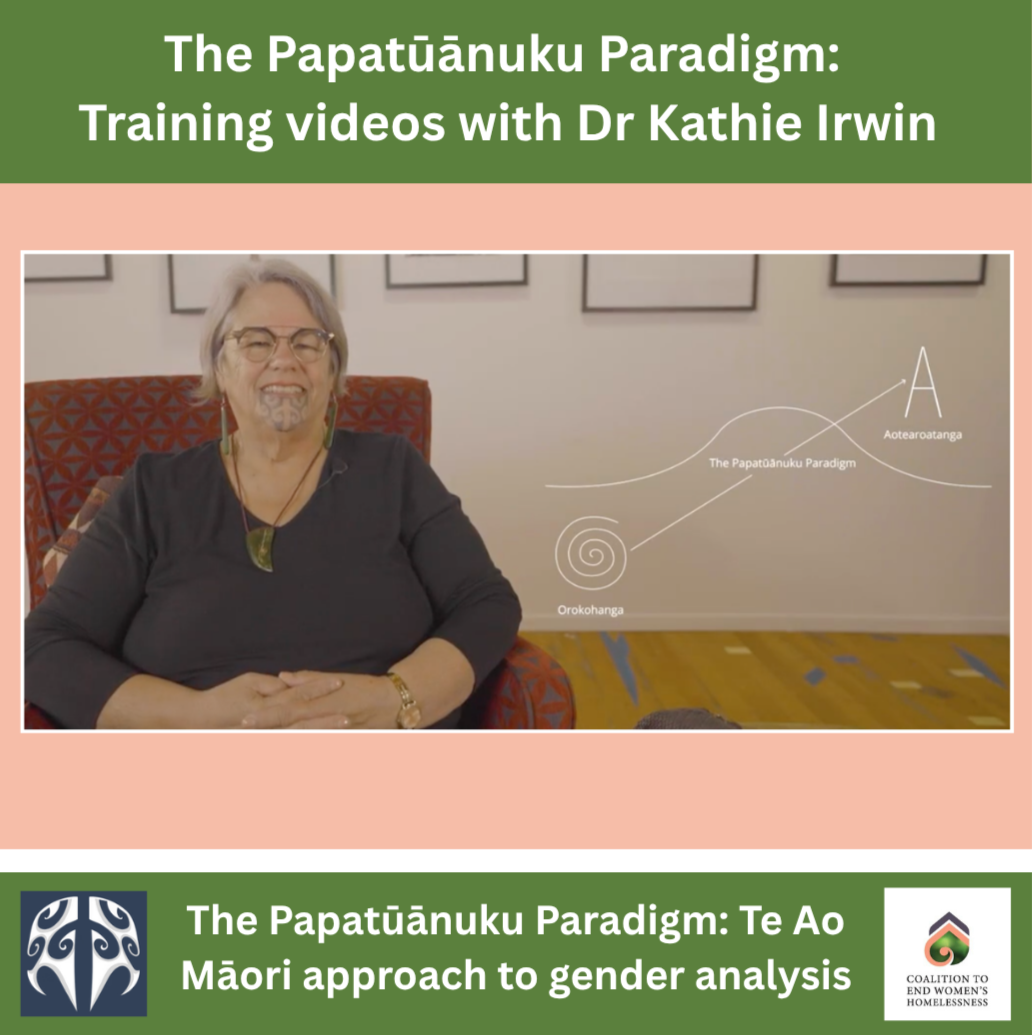
In this series of six short videos, you can spend time with Dr Kathie Irwin as she introduces and explores The Papatūānuku Paradigm - sharing the thinking, knowledge and whakaaro that sit behind it, and bringing the Paradigm to life through her own kōrero.
The Papatūānuku Paradigm was developed by Kathie, and commissioned by the Coalition to End Women’s Homelessness to address the issue of women’s homelessness in Aotearoa, and to contribute to ending it.
In the first episode, Kathie asks a fundamental question about the dispossession of wāhine Māori, before exploring how state-designed policies, legislation and regulatory frameworks have created homelessness for wāhine Māori.
Watch The Papatūānuku Paradigm videos here.
Research symposium: the impact of severe housing deprivation on women
Earlier this year, the Coalition to End Women’s Homelessness and the University of Otago – Ōtākou Whakaihu Waka brought together researchers, providers, council representatives, rangatahi services and advocacy organisations for a research symposium exploring the impact of severe housing deprivation on women and their children.
The kōrero highlighted the need for more Tiriti-centred, gender-disaggregated research and data, alongside practical solutions for women experiencing severe housing deprivation.
The insights shared continue to inform our learning, action and collaboration.
Read the paper here.
Te Piringa Tau - a new whare for wāhine
Congratulations to Wellington Homeless Women’s Trust on the opening of Te Piringa Tau - a new whare providing safe, welcoming accommodation and support for wāhine experiencing homelessness.
Women make up more than half of people experiencing homelessness in Aotearoa. Our research, Ngā Ara ki te Kāinga, shows why safe, women-centred housing and support are so important. Te Piringa Tau is a wonderful example of this in action.
We wish the Trust, the wāhine they support and everyone involved in this new whare all the very best – and acknowledge Dr Jo Cribb, CEWH Steering Committee member, for her work as Chair with the Trust.
Charlotte Gibson: a story 100 Years in the making
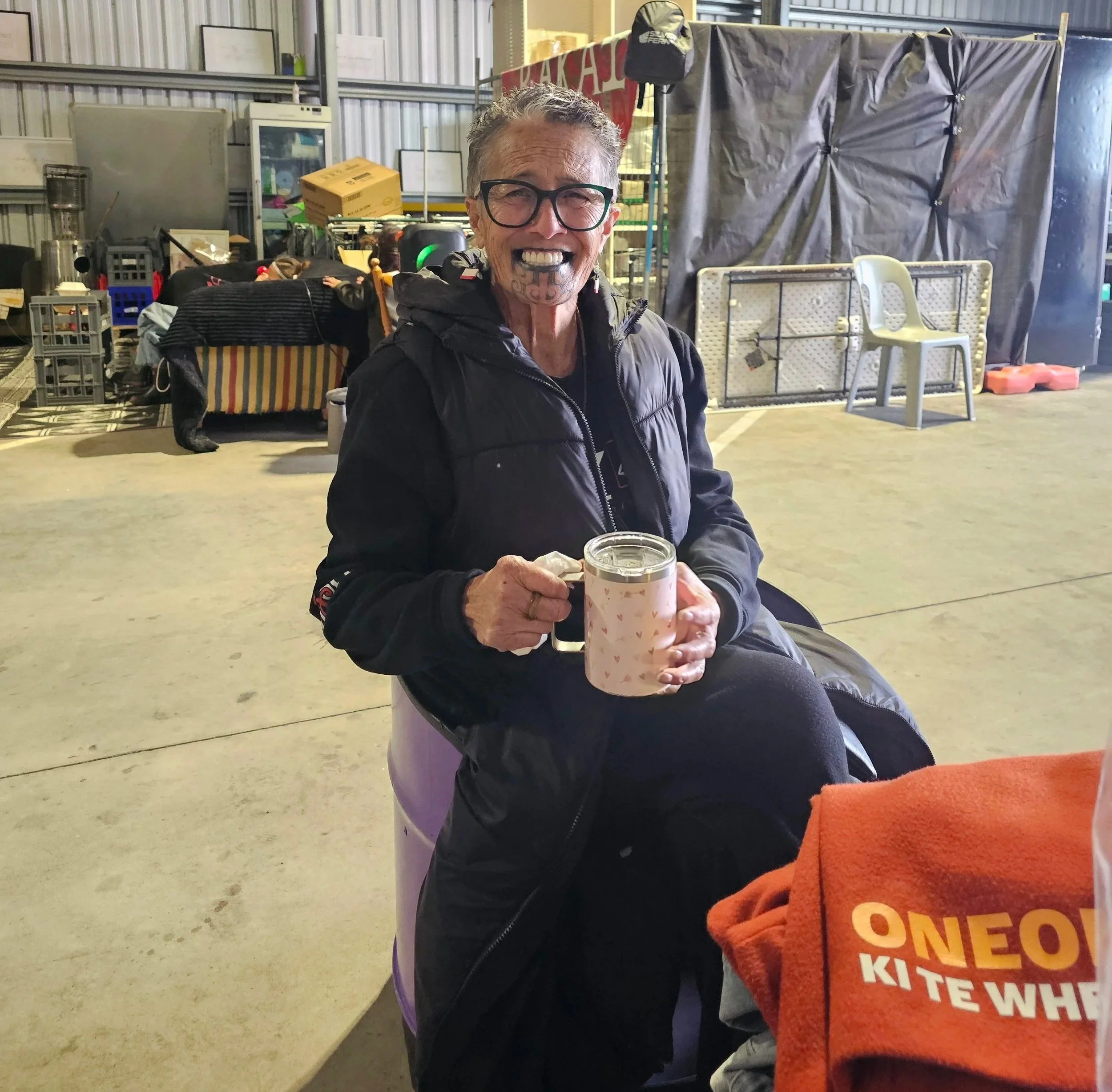
A story 100 years in the making.
Of whenua reclaimed.
Of colonisation that isn’t simply history.
And of an older Māori woman who refuses to let the history inherited by her generation determine what her mokopuna inherit.
Written by CEWH Kaihautū Dr Kathie Irwin (Ngāti Porou, Rakaipaaka, Ngāti Kahungunu), this is the story of Charlotte Gibson (Ngāti Oneone), of whenua, whakapapa, leadership and determination. Read Charlotte’s story here.
Good Shepherd New Zealand launches This is Violence

Last month, Good Shepherd New Zealand launched a new movement called This is Violence NZ to raise awareness of economic abuse and push for systemic reform to prevent and respond to economic abuse in ways that better support victim-survivors.
We tautoko their call for better recognition of financial control, ruined credit, withheld payments, and coerced loans and debt as forms of family violence.
Our research, Ngā Ara ki te Kāinga: Understanding Barriers and Solutions to Women’s Homelessness in Aotearoa, tells the story of a woman in her late 60s who struggled with housing after enduring years of financial abuse from her son.
One kaimahi described the woman’s situation:
“She used to get stood over by her son every pension day.”
The stress of the abuse, alongside living in homelessness, led to a heart attack and hospitalisation. Her son had previously tracked her down at a transitional housing unit. After he kicked in the door, the woman was evicted from the accommodation with nowhere to stay. A provider was eventually able to offer secure, women-only transitional housing and support her into safe accommodation, free from financial abuse and intimidation.
Economic abuse is family violence. It can undermine a woman’s financial security, housing, independence and safety - and its impacts can last for years.
Read RNZ’s coverage “You may be a victim of economic abuse and not even realise it” here
Visit thisisviolence.co.nz
Sign the petition to show your support, here
Kia kaha te reo Māori
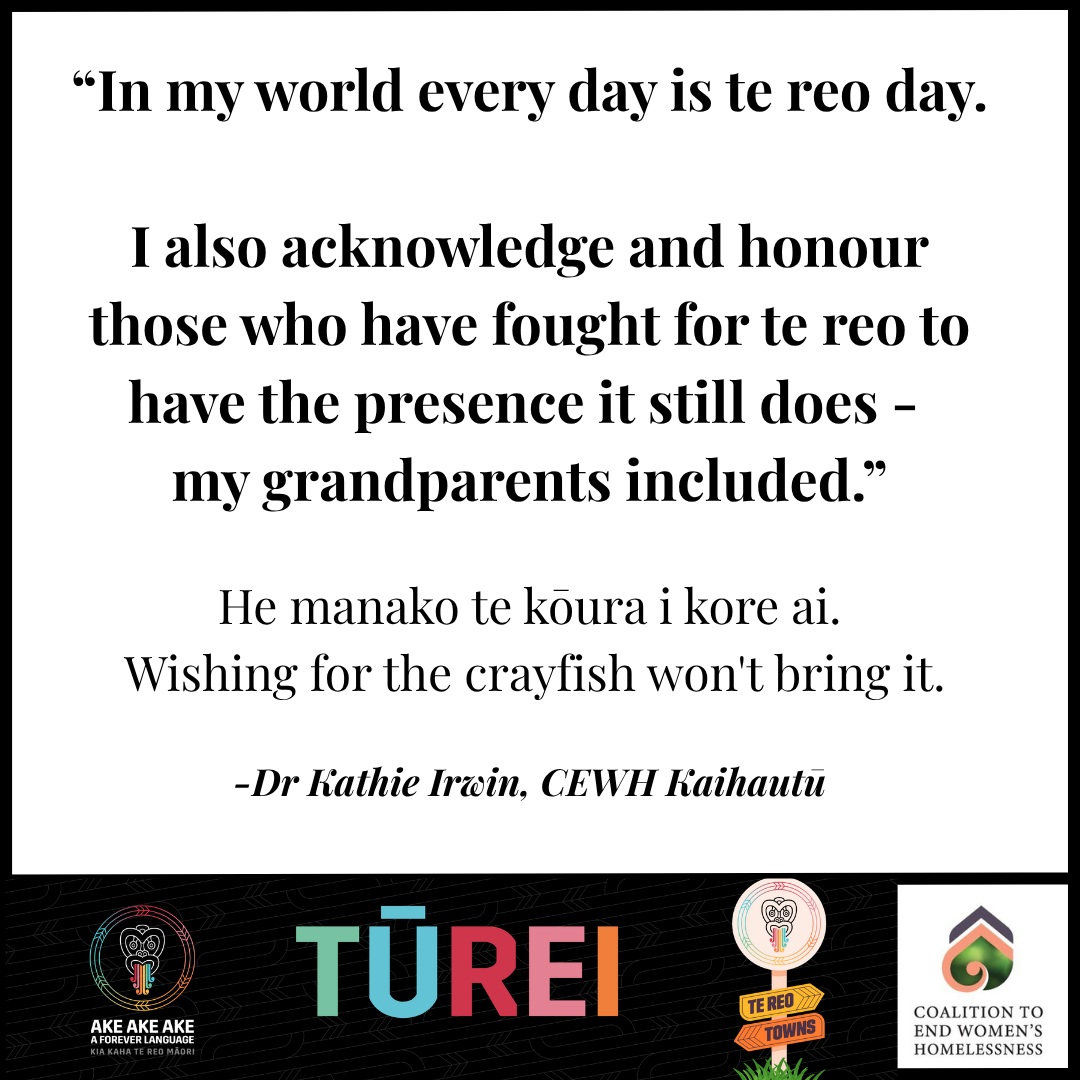
He manako te kōura i kore ai
Wishing for the crayfish won’t bring it.
Earlier this month we marked Te Wiki o te Reo Māori – a time to celebrate te reo Māori and honour those who have fought to protect and strengthen it. For CEWH Kaihautū Dr Kathie Irwin, that work is deeply personal:
“In my world every day is te reo day. I acknowledge and honour those who have fought for te reo to have the presence it still does – my grandparents included,” she said.
The whakataukī Kathie shared is a reminder that wishing alone won't bring change. Keeping te reo strong means using it, learning it and making space for it in our everyday lives.
CEWH Project Director Vic Crockford reflected on the opportunities to learn and use te reo Māori that are increasingly part of everyday life:
“One gift is the ability of all that live here to be exposed to te reo Māori and the many opportunities there are to learn it now… There is a humility needed when you remember that it is still under threat, and there is so much joy in seeing people view our country through the lens of our indigenous language,” she said.
Kia kaha te reo Māori, āke, āke, āke.
Mihi whakatau for Dr Emma Saunders
Kathie attended the mihi whakatau for Dr Emma Saunders, the new CEO of the Centre for Family Violence and Sexual Violence Prevention, where she was invited to speak on behalf of Emma.
Kathie spoke to the significance of the poi used during the whakatau, recalling the sound of the drums at Parihaka and the importance of recognising structural violence and colonisation in the Centre’s work.
“The distinctive sound of the poi brought memories of Parihaka into the room. The thud thud thud of the poi is reminiscent of the sound of the drums the soldiers beat during the invasion of Parihaka on November 5th 1881,” Kathie said.
She also reflected on her long-standing relationship with Emma, which began with an invitation to coffee and grew through many kōrero, wānanga and projects focused on Māori strategy, Te Tiriti and equitable outcomes.
Congratulations again Emma on the new role.
TŪ TOA 2026: Creating Māori Success in Education
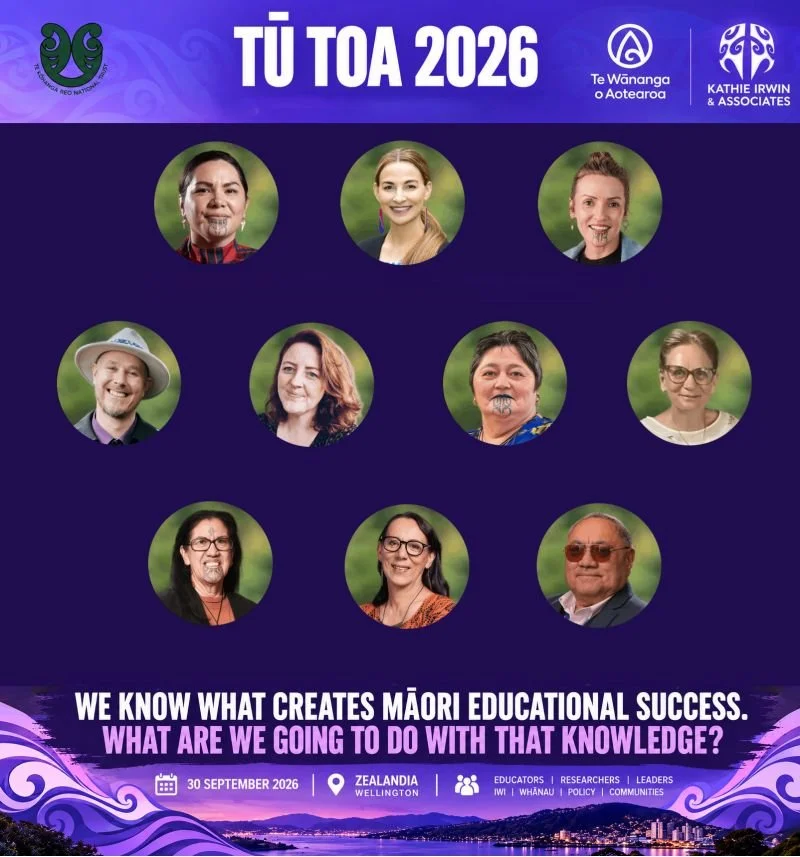
Hosted by Dr Kathie Irwin, her whānau and Kathie Irwin and Associates, Tū Toa 2026: Creating Māori Success in Education was held at Zealandia, in Wellington, on Wednesday September 30th.
Zealandia provided a natural environment in which to meet - literally cloaked in Te Wao-Nui-A-Tane - listening to manu and natural sounds during our breaks - and looking out over a lush, native landscape as we moved in and out of wānanga during the day.
Trevor Moeke was Pou Tikanga for the day, and held us all in a respectful tikanga based culture. Kara Nepe-Apatu and Elena Higgison were the MC's for the day keeping us energised and organised throughout.
Our speakers were stunning, every single one of them. Speaking praxis to kaupapa and context, walking their talk with us beside them, speaking from decades of experience and insight. Their kauhau were inspirational.
The key link here is the economic precarity caused by intersectionality for wahine Māori, especially prevalent in older years as the effect has time to have more impact. The Human Rights Commission Pacific Pay Equity Campaign research found that the most important factor for wahine Māori was level of education. Educational success for wahine Māori, then, is a critical issue in the context of economic precarity as this impacts on housing and homelessness.
Four of the five women keynote at Tū Toa 2026 were wahine Māori. The messages about the need to create educational success with Māori, especially wahine Māori, was a driver for holding the conference.
Post Conference activity includes uploading the Keynotes to The Mana Wahine foundation, producing a conference report and uploading photos from the Conference for people to remember the day through.
New housing development opens in Gisborne
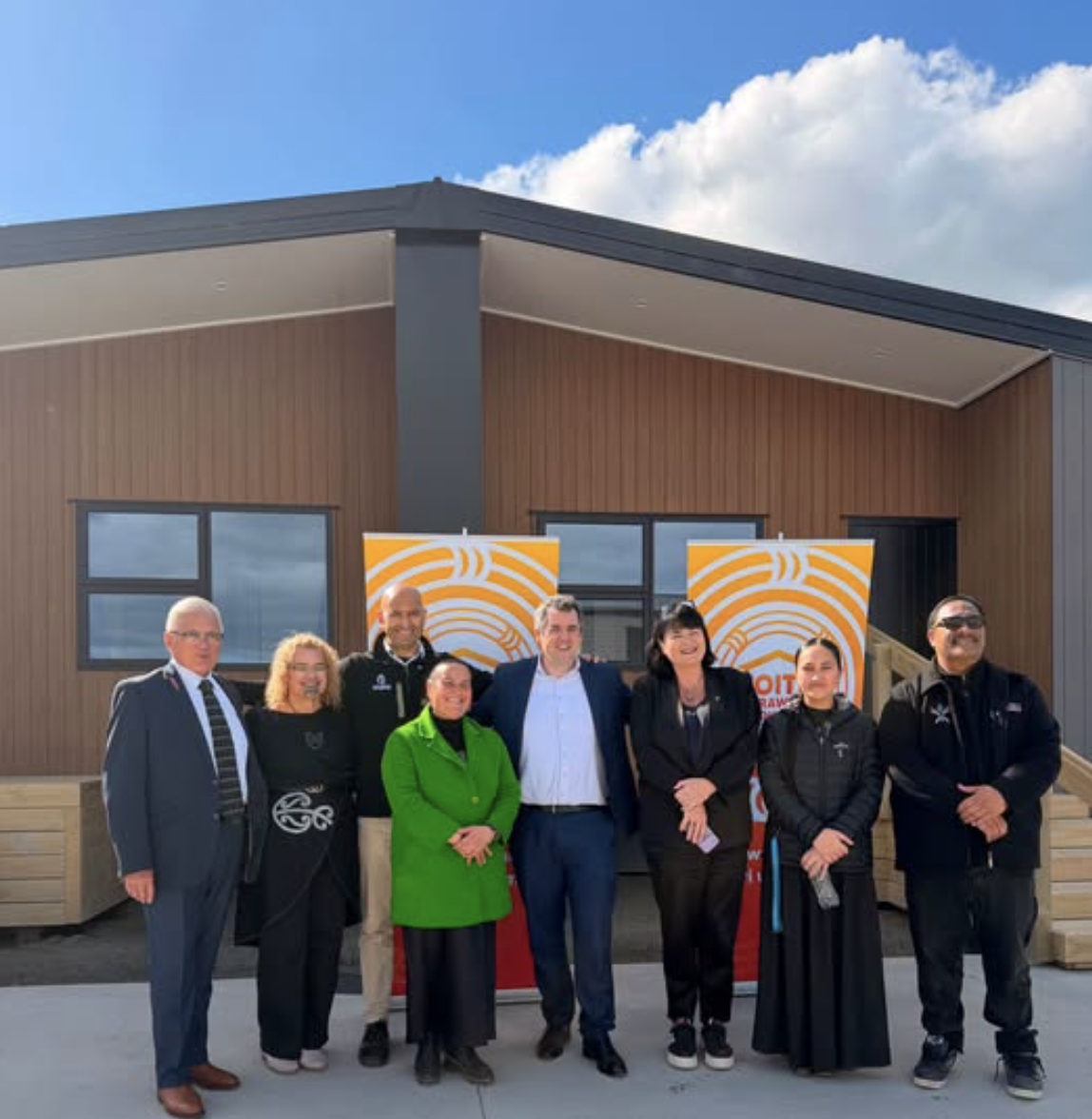
Ministers Tama Potaka and Chris Bishop attended the opening of the first 50 homes in the new housing complex in Gisborne.
In May 2025, the Government announced nearly $50 million in support for Toitū Tairāwhiti Housing Ltd to build 150 homes next to Gisborne Hospital. Through Toitū Tairāwhiti, iwi have invested $26.25 million in the development.
On 21 August, Minister Chris Bishop, East Coast MP Dana Kirkpatrick and Minister Tama Potaka attended the opening of the first 50 homes and announced additional support for more housing.
Working with iwi and community organisations, businesses and leaders including Annette Wehi, Kararaina Calcott-Cribb, Pehimana Brown and Willie Te Aho, Te Tūāpapa Kura Kāinga – Ministry of Housing and Urban Development and Te Puni Kōkiri are part of the development team, supporting housing and wellbeing in Tairāwhiti.
Women and children are given priority consideration in the tenanting of the new homes.
Youth Homelessness Summit: From crises to collection action
Manaaki Rangatahi, the motu’s youth housing and homelessness collective, is bringing together rangatahi, people with lived experience and those working across the sector for a day of kōrero, connection and action.
The summit will include lived experience and sector panels, a political panel, new IDI data, and kōrero on the changes needed - including more youth housing, a national youth homelessness strategy and a Duty to Assist law.
You are invited to join, hold space, learn together and be part of the solutions.
Register here
Te Matapihi review raises concerns about social housing reforms
An independent review commissioned by Te Matapihi and undertaken by Dr Jack Barrett, Social Housing Reforms in Aotearoa: An Evidence-Based Analysis and Implications for Māori Housing, examines the Government’s social housing reform programme announced on 21 May 2026.
The review raises concerns that the combined reforms could increase financial pressure on households already struggling with housing and essential living costs, with Māori disproportionately affected.
Te Matapihi is calling for greater investment in affordable, secure housing and Māori-led approaches that support housing independence, highlighting the wider social and economic value of secure housing.
Find out more here
POLICY AND POLITICAL INSIGHTS
Move on orders: bearing witness, carrying the mahi
The passing of the final reading of the Move-on Orders legislation was a deeply reflective week for our team. We were together to bear witness to the parliamentary debate and it was a powerful experience, as we watched our mahi, research and the experiences of women experiencing homelessness reflected in the kōrero.
Hearing our research referenced and knowing that the work of so many people working to end women’s homelessness was part of that conversation - was deeply moving. It was also a reminder of the relationships, trust and collective effort that have shaped our mahi over the past three years.
There was a strange tension in the experience: feeling both powerless in the moment and, at the same time, deeply aware of the strength and reach of the collective work that has brought us to this point.
As we move forward, we are carrying both the weight of the week and a strong sense of the importance of our collective hikoi. Ending women’s homelessness requires us to keep working together, to keep learning, and to find creative ways forward. We are grateful for the people and relationships that continue to sustain this mahi.
Vic Crockford spoke to Dale Husband at Waatea News about the potential impact of Move-on Orders on women experiencing homelessness. Vic raised concerns that Move-on Orders could push women who are already difficult to reach even further from view - away from the places where outreach services can find and support them.
Vic and Dale’s kōrero also covered the hidden realities of women’s homelessness, the impact of homelessness and Move-on Orders on wāhine Māori, and the growing number of older women experiencing homelessness in Aotearoa.
Dale described the reality starkly:
“That's just shocking, that we've got old ladies who have to curl up in doorways and alleyways.”
Listen to Vic and Dale’s kōrero to hear more about Move-on Orders and their potential impact on women here.
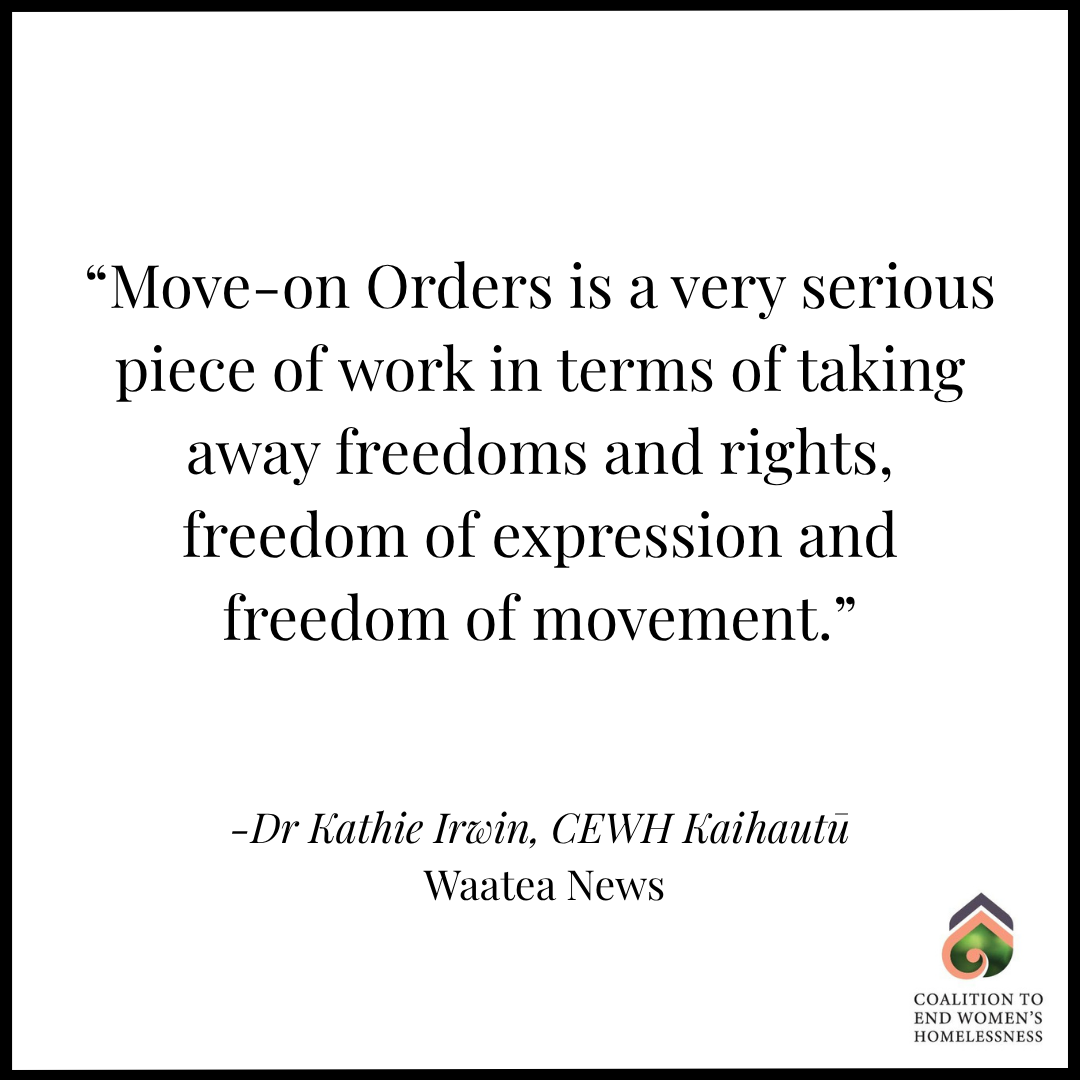
CEWH Kaihautū Kathie spoke with Matthew Tukaki at Waatea News. It was a kōrero that started with Move-on Orders, but asked a much bigger question: what would it take to create lasting housing and economic security for wāhine Māori?
In her interview, Kathie looked at the wider conditions shaping homelessness for wāhine Māori, and highlighted the compounding effects of pay inequity, lower home ownership and fewer opportunities to build savings and assets over a lifetime. She pointed out another vitally important thread: education. Research from the Human Rights Commission has identified education level as a critical factor in gender and ethnic pay differences for Māori women.
That connects directly to Kathie’s mahi in education and the Tū Toa 2026 | Creating Māori Success in Education conference, hosted by Kathie Irwin and Associates and The Mana Wahine Foundation. The conference, held last month, brought together research, evidence and practice around what helps Māori learners succeed.
As Matthew Tukaki put it:
“We need to move this conversation on from homelessness to economic security and resilience.”
Listen to the full kōrero with Kathie and Matthew Tukaki at Waatea News here.
He iti te mokoroa, nāna i kati te kahikatea
The grub may be small, but it cuts through the kahikatea
Vic, Kathie, Amanda, Ellie, Helen, Jo, Caroline, and Jill
