
State of Care Report 2025 Kei te rongo koe? Are you listening? by VOYCE - Whakarongo Mai- webinar recording and resources now available
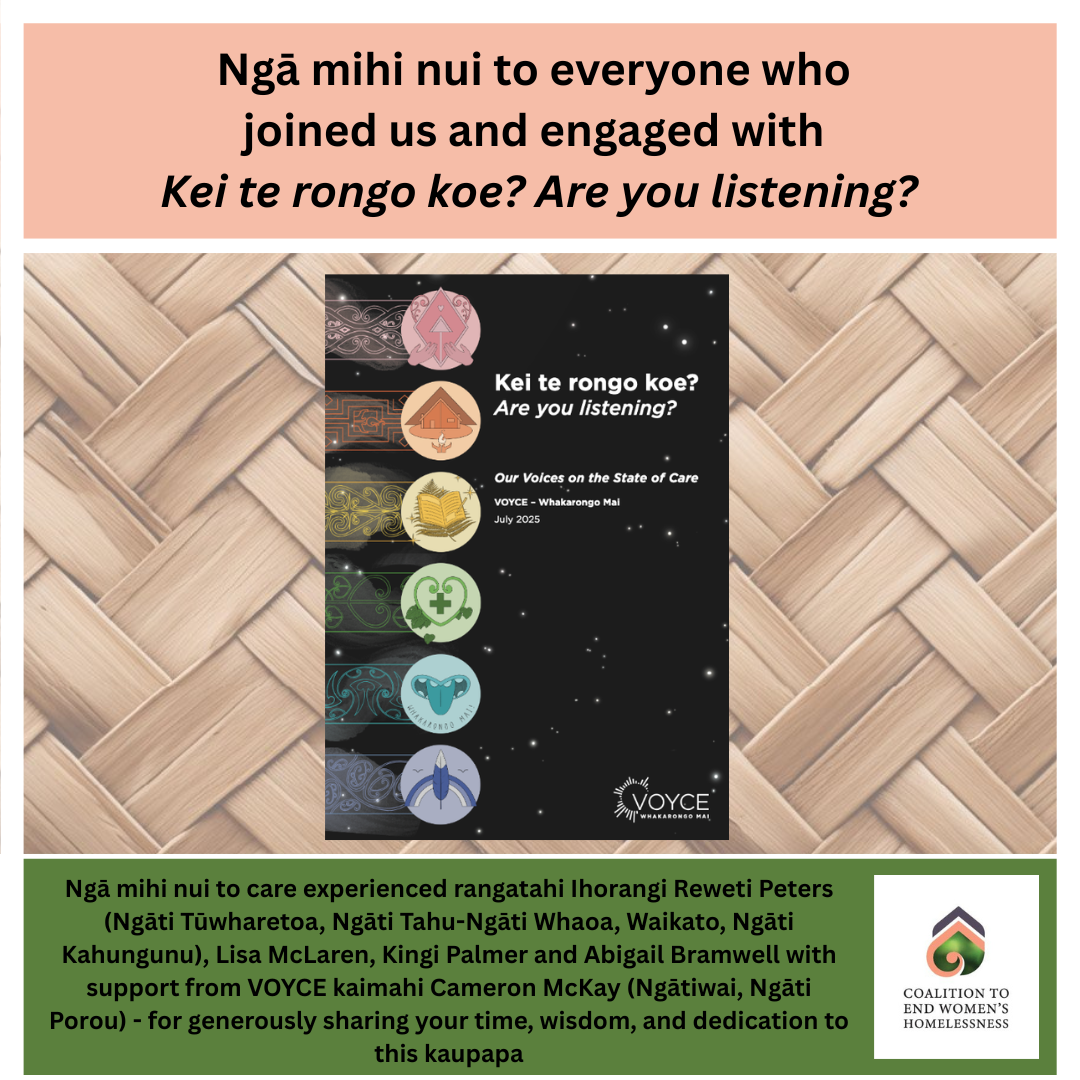
On 25 February, CEWH hosted a Lunchtime Learning webinar which explored the State of Care Report 2025 Kei te rongo koe? Are you listening? by VOYCE - Whakarongo Mai.
Ngā mihi nui to care - experienced rangatahi Ihorangi Reweti Peters (Ngāti Tūwharetoa, Ngāti Tahu-Ngāti Whaoa, Waikato, Ngāti Kahungunu), Lisa McLaren, Kingi Palmer and Abigail Bramwell with support from VOYCE kaimahi Cameron McKay (Ngātiwai, Ngāti Porou) - for generously sharing your time, wisdom, and dedication to this kaupapa, and to CEWH Project Director Victoria Crockford for guiding the kōrero with such aroha and care.
These speakers shared the methodology, findings and what is needed to ensure that tamariki and rangatahi in state care feel supported and cared for - a right of every child and young person.
Resources from the webinar are available:
Webinar Zoom recording: here
Webinar audio recording: here
Read the research: here
View the Voyce slides: here
Additional resources:
'Kia Tika, Kia Pono' ethical framework to guide engagement with care experienced tamariki and rangatahi - https://voyce.org.nz/kia-tika-kia-pono/
Korowai Aroha independent submission to the Royal Commission - https://voyce.org.nz/korowai-aroha/
Kōkiri – The Future Speaks conference - https://voyce.org.nz/kokiri-2026/
We encourage you to share these resources with friends, whānau, colleagues, and peers.
Pātai
We received some thoughtful pātai at the end of the session that we didn’t have time to address. The VOYCE team has responded to them below.
Q1: For young people transitioning to independence, what are some barriers they face with social/community and private housing, and what are some ways professionals can bridge the gaps?
A1: Some of the barriers care-experienced rangatahi face when accessing social and community housing include long waitlists, limited availability, strict eligibility requirements, stigma and discrimination, and a lack of transitional housing options.
Accessing private housing is even more challenging. Barriers include high rental costs and upfront payments, no rental history or guarantors, and increased experiences of discrimination.
Professionals can help bridge these gaps by:
Advocating directly with landlords and housing providers. Professionals can act as a bridge by providing reassurance, offering character references, and partnering with youth-friendly providers.
Pushing for flexible eligibility criteria, including advocating for care-experienced young people to be recognised as a priority group.
Supporting WINZ navigation, including helping young people understand their entitlements, book appointments, and access emergency housing, youth payment, or bond assistance.
Providing consistent, trusted adult support. Rangatahi often say it is people, not services, that help them feel safe. Maintaining connections beyond age cut-offs prevents the “cliff edge” of turning 18.
Building wrap-around support networks by linking young people with youth workers, mentors, budgeting support, mental health services, and community groups to reduce isolation.
Q2: I appreciated the child and young person focus of your report, rather than a systems focus. How did you achieve this when many reports are systems-focused and adult-centric?
A2: We focused on surveys and reports that centred tamariki and rangatahi experiences rather than system outcomes, especially those that included direct quotes from young people.
We also referred to VOYCE’s advocacy records, written reports, and submissions. Our findings were then sense-checked with rangatahi atawhai through workshops and structured feedback sessions.
Q3: What would you encourage philanthropy and business to do?
A3: Philanthropy and business can help fill gaps that government funding does not reach by:
Investing in stable, youth-friendly housing solutions, such as youth-specific transitional housing and bond or move-in support.
Creating real employment and training pathways through internships and apprenticeships designed for care-experienced young people.
Backing lived-experience leadership, including paid rangatahi consultants and youth advisory groups.
Funding wrap-around supports, not just crisis responses, such as:
Life skills coaching (budgeting, renting rights, applications)
Mental health and wellbeing support
Cultural connection programmes
Long-term relational mentoring
Supporting VOYCE – Whakarongo Mai to provide connection and advocacy services for care-experienced young people, ensuring their voices are amplified across the sector.
Businesses can also review their own services and consider how they engage young people, particularly those without a parent or trusted adult to help them navigate systems.
Q4: Many supports prior to transitioning to independent living focus on immediate struggles (for example, mental health issues) rather than building skills like budgeting, understanding renting rights, or making applications. How can we support rangatahi to meet both needs?
A4: Preparing young people to transition from care begins with their entire care journey. When they first enter care, are they and their caregivers given what they need to adjust, heal, and thrive? Does their care uphold the 6 Promises and meet the Care Standards Regulations? Are caregivers and professionals equipped to build resilience and independence throughout the journey?
We need a “both-and” approach rather than an “either-or” approach. Systems often prioritise immediate struggles over life skills learning, but rangatahi do not experience their needs in silos. Mental health, housing readiness, and life skills are interconnected.
A both-and approach means stabilising immediate challenges while building practical independence skills at the same time, in small, achievable, relationship-based ways.
This can include:
Embedding life skills learning into everyday moments.
Prioritising emotional regulation before expecting skill development.
Coordinating with other professionals to provide genuine wrap-around support.
Creating realistic, youth-centred plans that reflect the young person’s pace.
Giving rangatahi real opportunities to practise independence before it is required.
Send the CEWH Open Letter
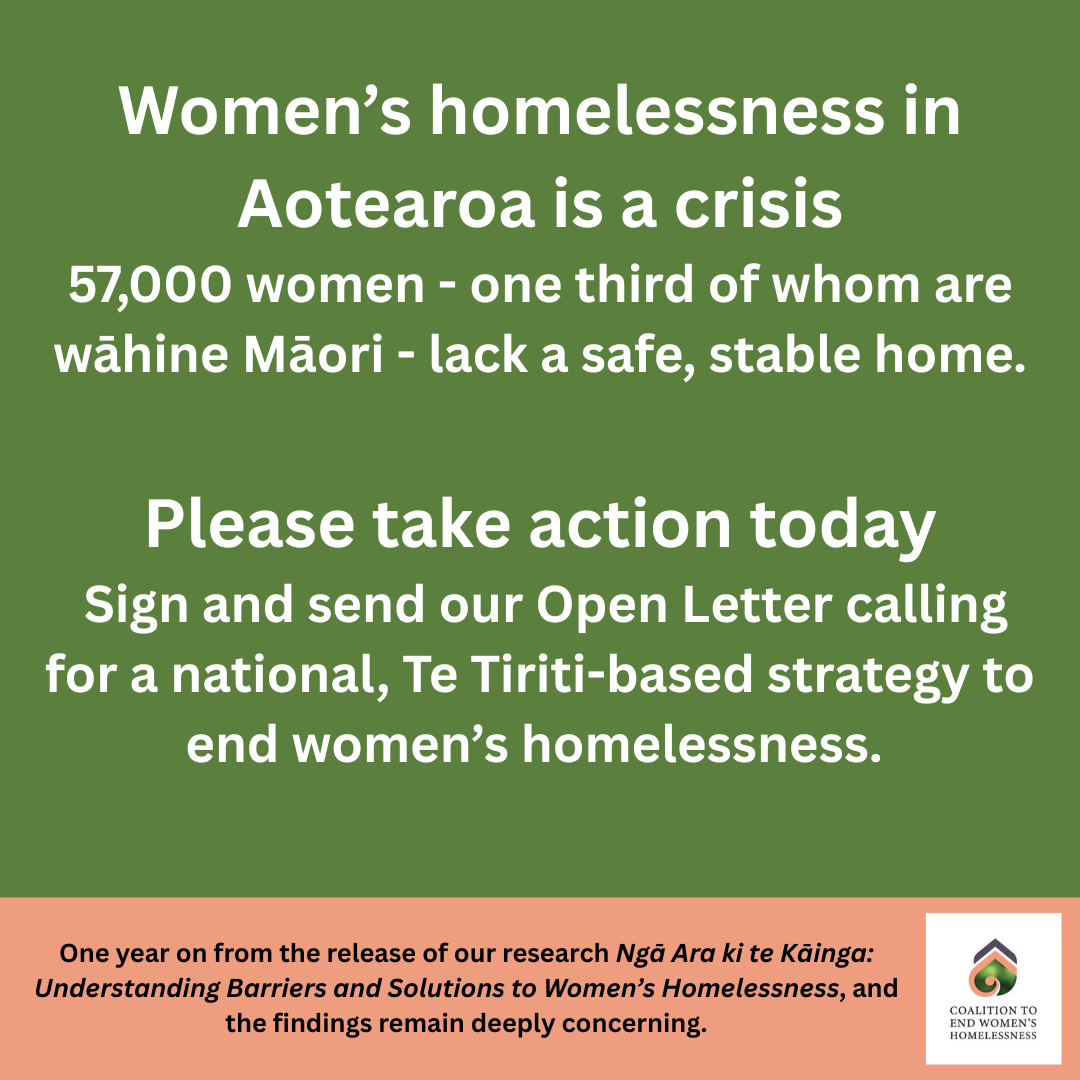
If this kōrero moved you to take action, please sign and send the CEWH Open Letter, which calls for a national, Te Tiriti-based strategy to end women’s homelessness.
Find out more here.
