
Send our Open Letter: calling for a Te Tiriti-based national strategy to end Women’s homelessness in Aotearoa
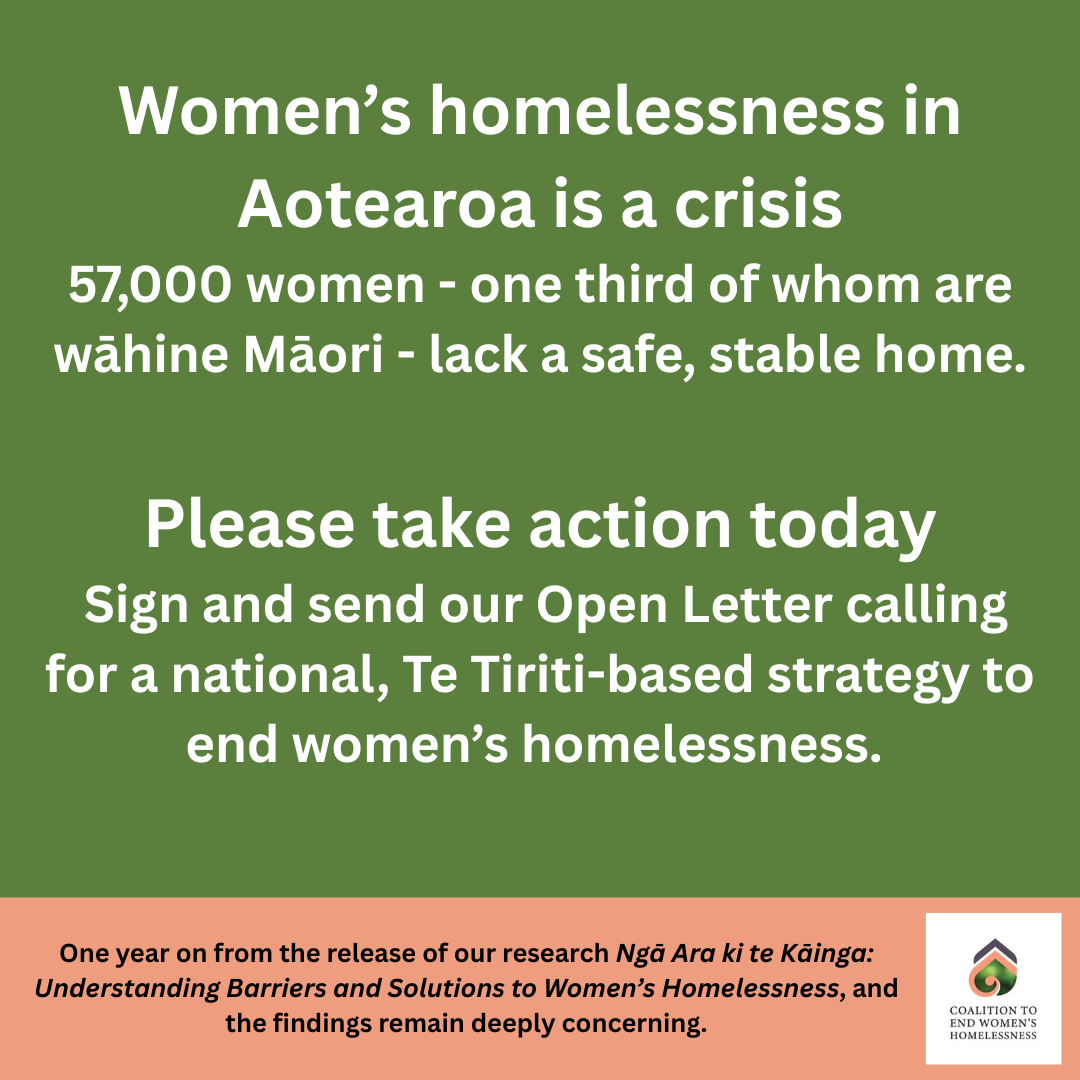
This month we mark one year since releasing our women’s homelessness research Ngā Ara ki te Kāinga: Understanding Barriers and Solutions to Women’s Homelessness in Aotearoa, and we’re inviting our community to take one simple action that can help make a real difference:
Sign and send our Open Letter, which calls for a national, Te Tiriti-based strategy to end women’s homelessness. Please send it to key Ministers, your local MPs, Mayors, and councillors (find the letter and who to send it to, below).
By sending this letter, you help make women’s homelessness visible and impossible to ignore - at every level of government. If you can, send it today.
Our research shows that 50% of people experiencing homelessness in Aotearoa are women, and that their health and housing needs are not often being met. It also documents the disproportionate impact on wāhine Māori, who are over one third of women experiencing homelessness, single mothers, and - increasingly - older women.
Research is a powerful tool for change. It helps ground our advocacy in evidence. It highlights connections, intersections and potential collaborations. And it gives us shared language about an issue that has been invisible for too long.
One year on, however, the findings of our research remain deeply concerning.
Nga Ara ki te Kāinga exposes critical gaps in policy and funding design. It shows that our housing system has been flying gender-blind — and the consequences are being felt every day.
Women and frontline workers who contributed to our research described the impacts, including:
increased vulnerability to domestic and sexual violence
substance abuse and mental illness
discrimination and social exclusion
challenges during pregnancy
difficulties maintaining personal hygiene
lack of personal safety and security
Who we see in the research
Wāhine Māori: Wāhine Māori are whare tangata – sacred bearers of life. Yet one third of homeless women are Māori, labelled “homeless” on the very whenua that shaped their culture, identity, and strength.
Older women: Rising rates of homelessness among older women are driven by widowhood, divorce, elder abuse, financial insecurity, rising living costs, and a lack of appropriate and affordable housing.
Single mothers: Many women experiencing homelessness or severe housing deprivation are single mothers caring for three or more children, often relying on benefits such as sole parent support. Some mothers are also having their children removed – both a consequence and a driver of homelessness. The gender-blind nature of our housing policies leaves mothers and their children trapped in cycles of insecurity.
We are calling on the Government for action
We are calling for a Te Tiriti-based national strategy to end women’s homelessness in Aotearoa - a strategy that addresses the unique challenges faced by wāhine Māori, older women, single mothers and other marginalised women.
How you can help - send our Open Letter
Download and sign our Open Letter, then post or email it to key Ministers, your local MPs, Mayors, and councillors.
Who to send the Open Letter to:
Your local MP – the person elected to represent you.
List of New Zealand electorate MPs and their email addresses and post addresses here
Key Ministers responsible for housing, social development, women, and Māori development.
List of Ministers and their email addresses are here
Free post address: Minister of [Portfolio], Freepost Parliament, Private Bag 18 888, Parliament Buildings, Wellington 6160
Your local councillors and Mayor, who influence bylaws, rough-sleeping policies, and local housing responses.
Check your council website for the details of your Mayor and councillors.
Me aro koe ki te hā o Hineahuone
Pay heed to the dignity of women
