
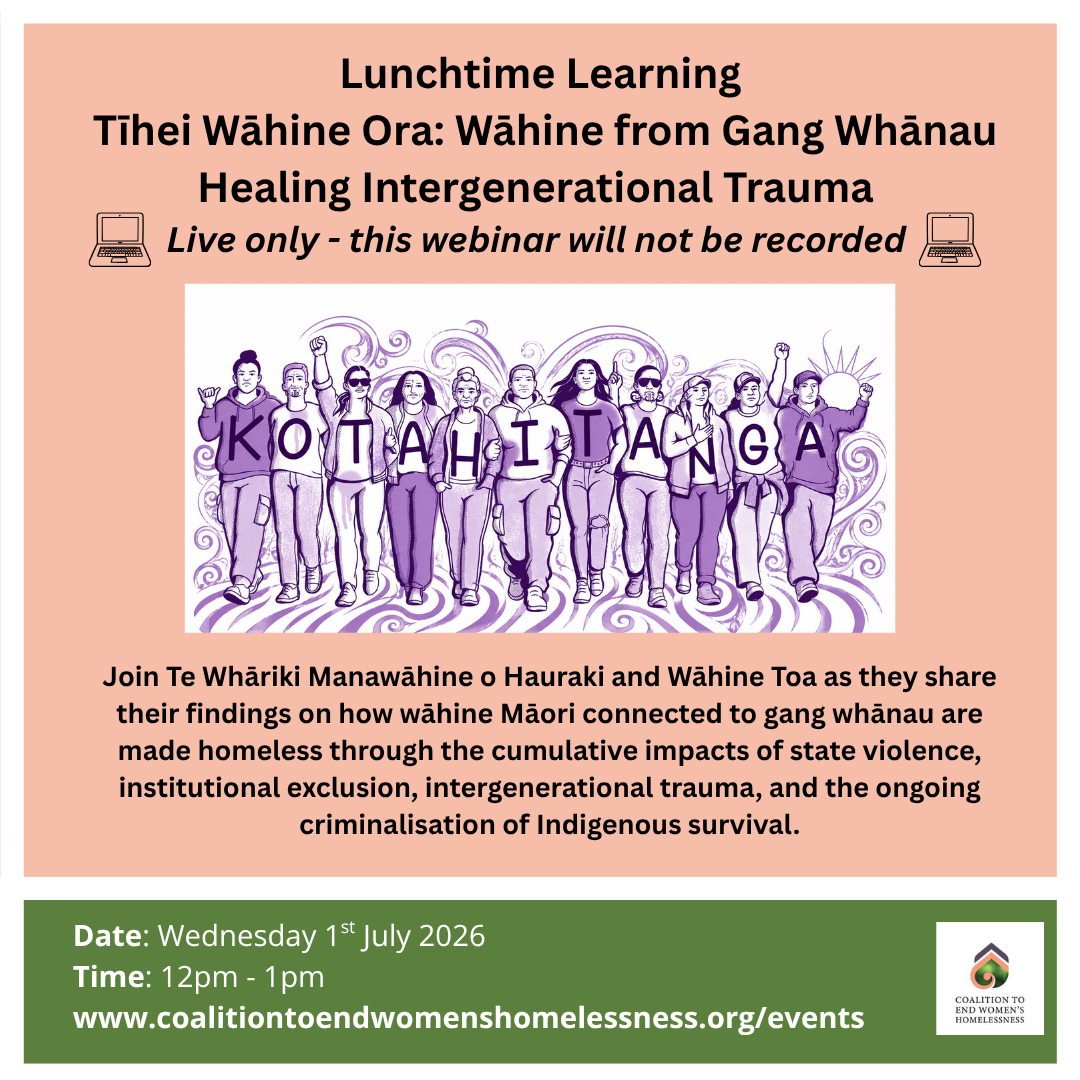
Join Te Whāriki Manawāhine o Hauraki and Wāhine Toa as they share their findings on how wāhine Māori connected to gang whānau are made homeless through the cumulative impacts of state violence, institutional exclusion, intergenerational trauma, and the ongoing criminalisation of Indigenous survival.
This presentation draws on findings from Tīhei Wāhine Ora, a research project that centred pūrākau shared by 20 wāhine Māori over two years in Aotearoa and across the Tasman.
Date: Wednesday 1 July 2026
Time: 12–1pm
Location: Online | Free | Note this webinar will not be recorded
Register on Humanitix: here
Wāhine Māori connected to gang whānau are made homeless through state violence, institutional exclusion, intergenerational trauma, and the criminalisation of Indigenous survival.
Housing instability for gang whānau wāhine is produced through police targeting, Oranga Tamariki intervention, landlord discrimination, child removal, and state care abuse, operating alongside intimate partner violence and chronic poverty.
The research documents the survival knowledge, relational networks, and collective forms of care wāhine have built and sustained. Using the Pū-Rā-Ka-Ū analytical framework, the presentation situates homelessness within an intergenerational colonial process and examines Pouhine wānanga as spaces of collective restoration, embodied safety, and healing.
Find out more:
Find out more about Te Whāriki Manawāhine o Hauraki here
Do you want to take action against homelessness? Please sign and send the CEWH Open Letter, which calls for a national, Te Tiriti-based strategy to end women’s homelessness. Find out morehere
Sign up for the CEWH newsletter to stay updated on news and eventshere
We hope you can join CEWH, Te Whāriki Manawāhine o Hauraki and Wāhine Toa in July.
Ngā mihi nui,
Coalition to End Women’s Homelessness