
The Papatūānuku Paradigm is a gender analysis tool grounded in Te Ao Māori. It was developed by Dr Kathie Irwin and commissioned by the Coalition to End Women’s Homelessness out of a recognition that if wāhine Māori bear the brunt of women’s homelessness in Aotearoa New Zealand, then the tool designed to end women’s homelessness must be anchored in Te Tiriti and in Mātauranga Māori.
The whakapapa of The Papatūānuku Paradigm reaches back through Dr Kathie Irwin’s decades of experience and expertise as a Māori feminist, educator and researcher, working across Māori education, research, development and public policy. Her contribution has elevated CEWH’s initial toolkit concept into a community of practice movement.
Within CEWH, the Paradigm’s journey began with our establishment in 2023, when we recognised that it is not enough to point out gaps - that we should offer a tool for change to the housing and social services sector, and beyond.
The Paradigm grew further from our 2024 research Ngā Ara ki te Kāinga: Understanding Barriers and Solutions to Women’s Homelessness in Aotearoa, and a workshop at the 2024 Community Housing Aotearoa Conference, where participants emphasised the need for a tool that could help bring women’s experiences and needs into the systems and decisions that shape their lives.
CEWH whakapapa
Here
CEWH Commitment to Te Tiriti o Waitangi
The Papatūānuku Paradigm is grounded in CEWH’s wider commitment to Te Tiriti o Waitangi and to addressing the structural inequities experienced by wāhine Māori.
The CEWH position statement articulates our commitment to Te Tiriti o Waitangi:
At the heart of our work is a focus on redress for wāhine Māori, who are whare tangata - the house of the people. Yet, so many are identified as “homeless” on the whenua | land from which their culture took root and has grown for nearly 1000 years. Therefore, while we use the commonly understood language of “homelessness,” we take the position that Aotearoa is home for Māori, so wāhine Māori are not without a home in Aotearoa but live unhoused due to a process of colonisation that has not protected their rights. To uphold our commitment to redress, we:
acknowledge Te Tiriti o Waitangi as the founding document of Aotearoa
recognise the status of Māori as tangata whenua of Aotearoa
are committed to upholding Te Tiriti o Waitangi in all our work
are committed to upholding te tino rangatiratanga and mana motuhake otangata Māori, and we stand against all forms of oppression
CEWH workshop at 2024 CHA Conference
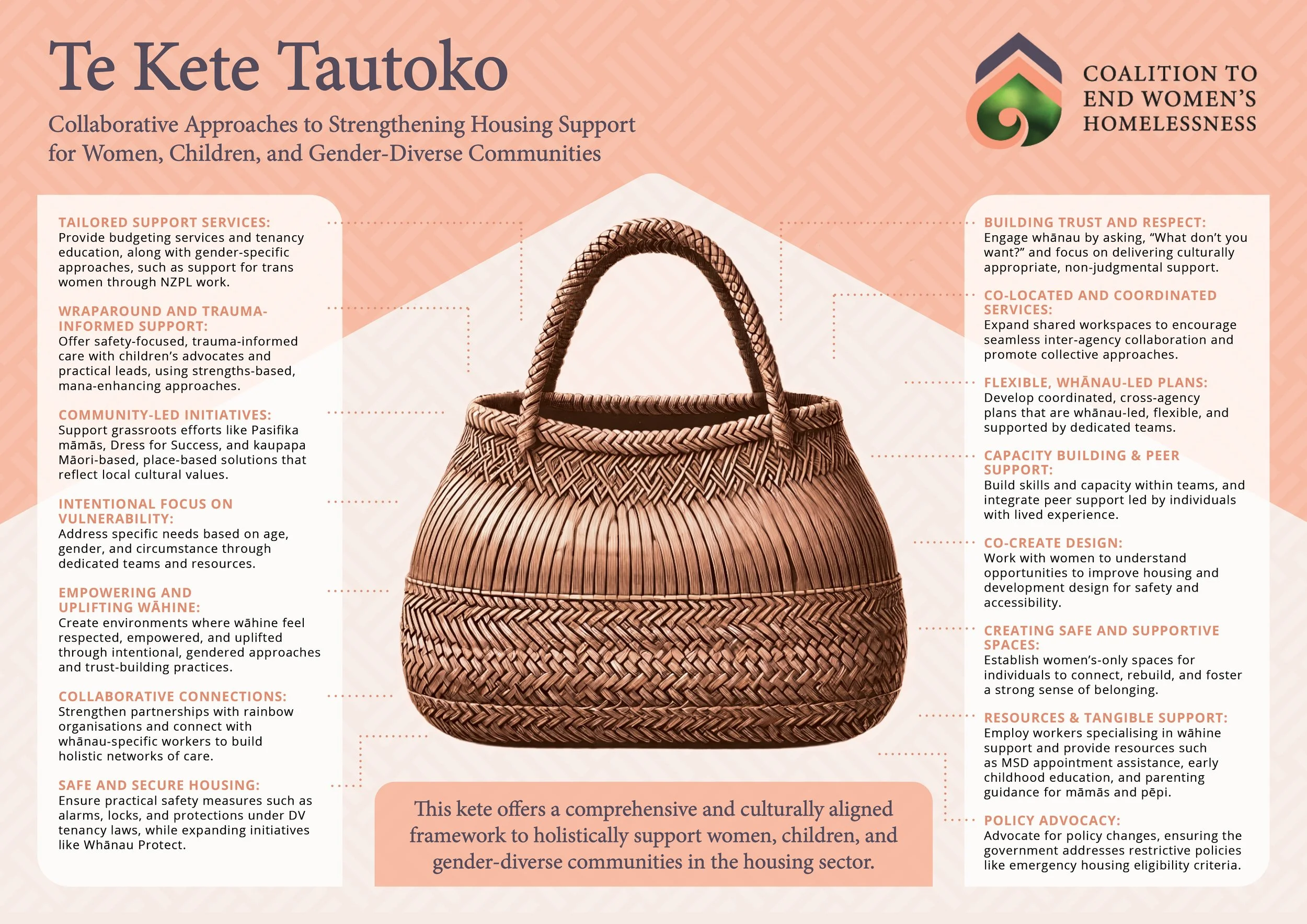
At the end of 2024, Katarina Kupenga facilitated a one-hour workshop with kaimahi at the CHA Conference 2024 in Auckland. The purpose of the workshop was to co-create a gender analysis kete of knowledge for working with women and children. This was an ideas generation session that explored the challenges and gaps in the sector’s current approach and what tools and resources might be needed.
The kōrero was used to generate an infographic: “Te Kete Tautoko” which is shared below and can be downloaded here.
Ngā Ara ki te Kāinga Understanding Barriers and Solutions to Women’s Homelessness in Aotearoa
The commissioning of The Papatūānuku Paradigm was prompted by findings of Ngā Ara ki te Kāinga: Understanding Barriers and Solutions to Women’s Homelessness, which revealed how gender and structural factors shape women’s experiences of homelessness. CEWH partnered with kaupapa Māori researchers Ihi Research and analytics firm Taylor Fry to better understand women’s experiences of homelessness, bringing together the voices and experiences of women and kaimahi captured by Ihi Research with Taylor Fry’s analysis of Census 2018 and Census 2023 data.
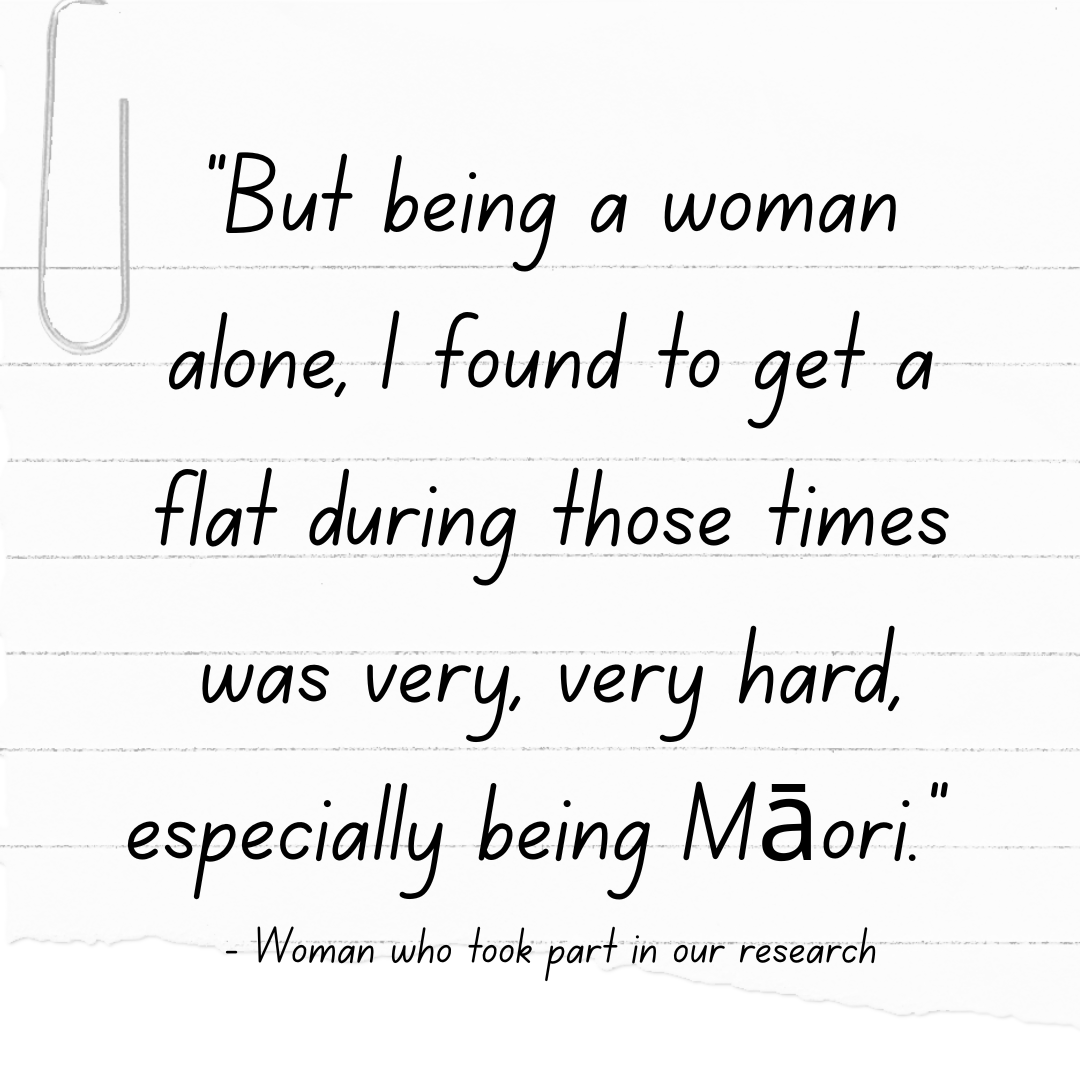
The research revealed the hidden nature of women’s homelessness in Aotearoa, showing that women make up 50% of people experiencing homelessness and that wāhine Māori are disproportionately affected.
It also highlighted systemic inequalities and key opportunities for intervention, including for wāhine Māori, older women, and younger women with children.
Key findings highlight that wāhine Māori and single mothers are most impacted
The research shows that women represent 50% of those experiencing homelessness in Aotearoa, making us atypical internationally - in OECD countries women typically account for 22% of people experiencing homelessness, on average.
Wāhine Māori are most impacted by homelessness, consistently accounting for one third of women experiencing homelessness in the 2018 and 2023 data, with Pacific women and Asian women are also overrepresented.
The report finds other groups of women who are most disproportionately impacted include:
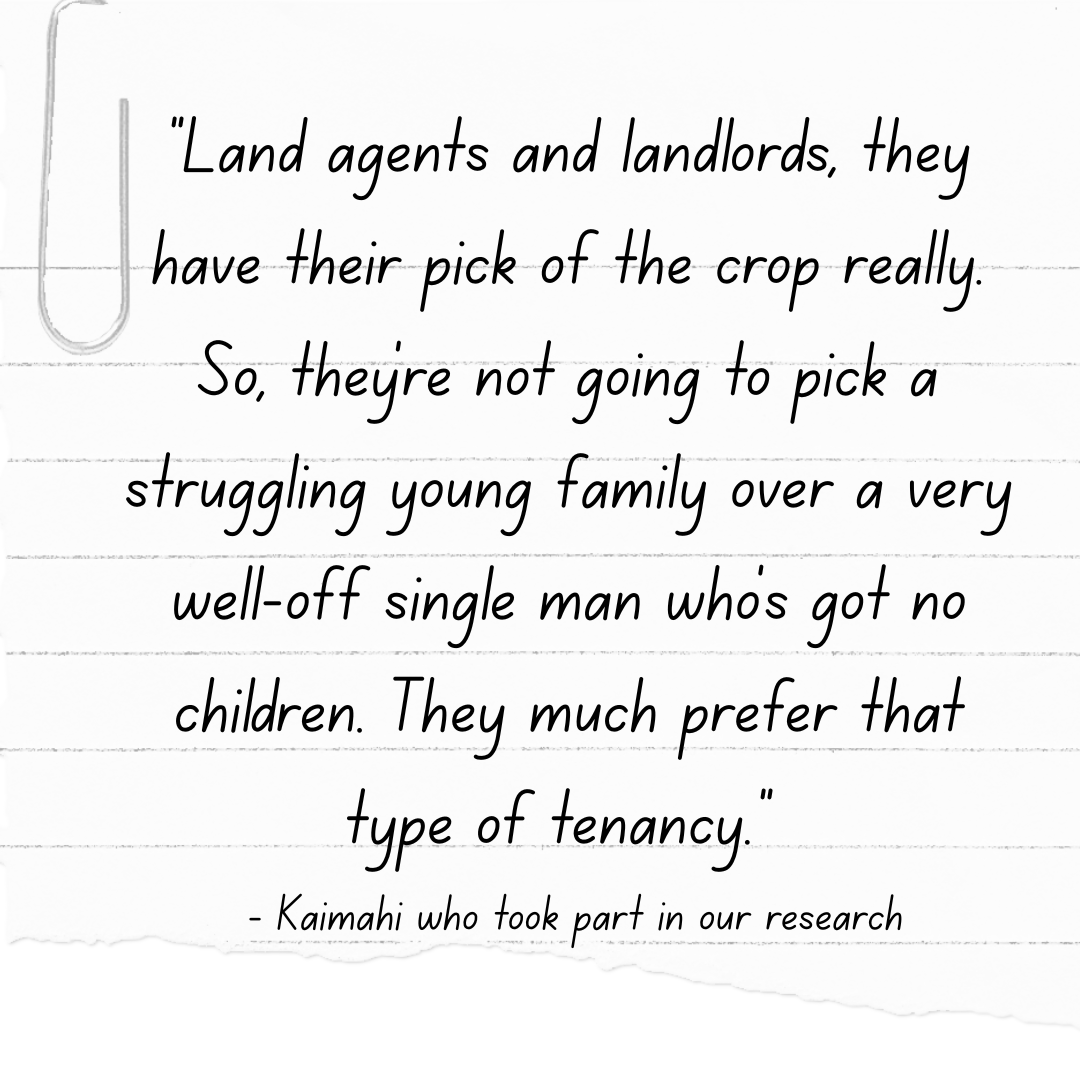
Single mothers report experiencing heightened discrimination in accessing housing, employment, and support services, as well as higher reliance on the sole parent benefit than housing deprived men.
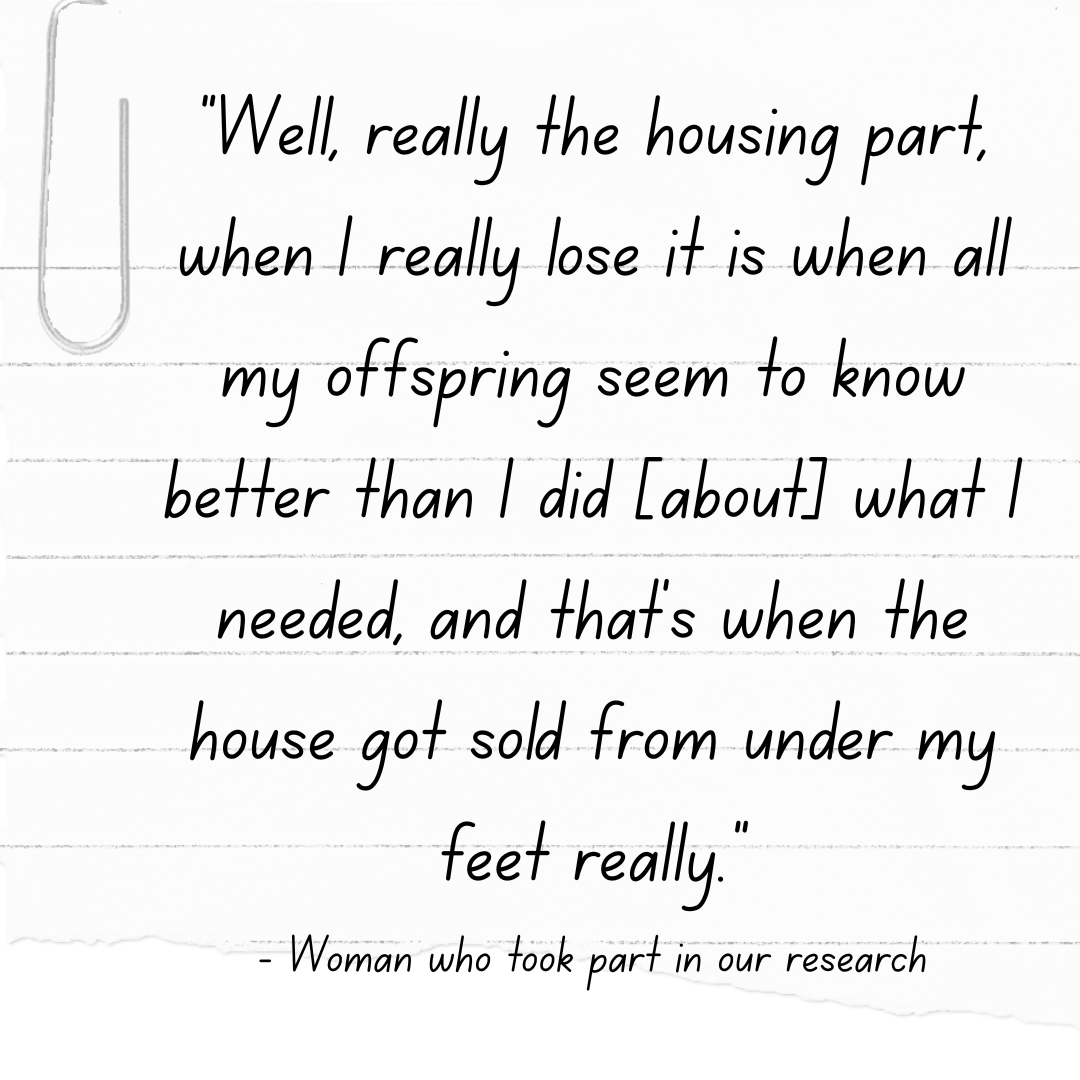
Older women report facing rising homelessness rates due to factors including widowhood, divorce, elder abuse, and financial insecurity.
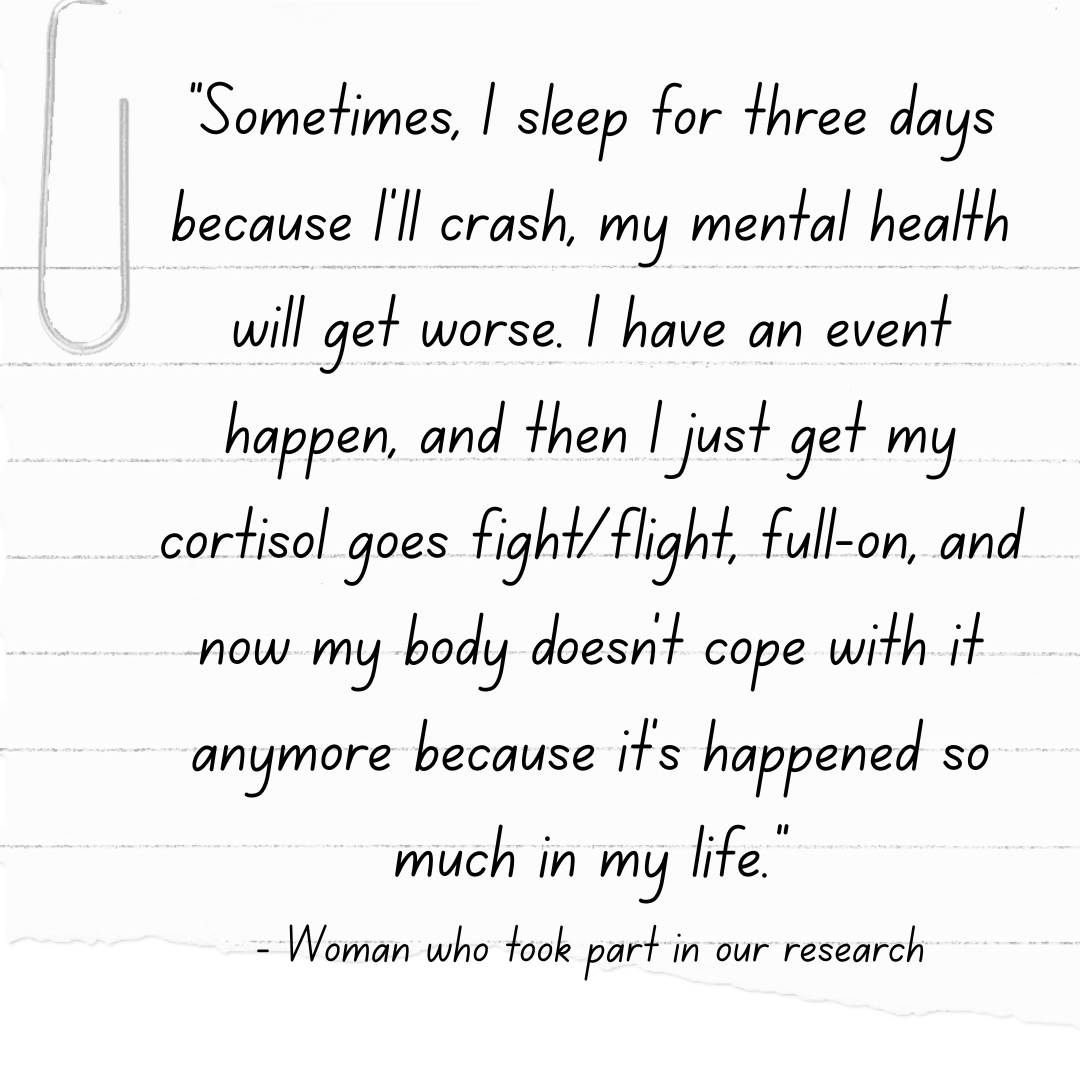
Young women report struggling with complex challenges, including untreated mental health issues and limited financial support, as well as economic barriers such as lower rates of driver’s licensing.
Intersecting challenges reveal gendered nature of housing insecurity
Ngā Ara ki te Kāinga uncovers the gendered ways in which women experience homelessness in several key areas, including in relation to unmet mental health needs, higher risks of sexual or family violence and related trauma, and a lack of accessible housing to enable women (who are living longer than men) to age in place - a particular concern for older wāhine Māori forced to move off their whenua.
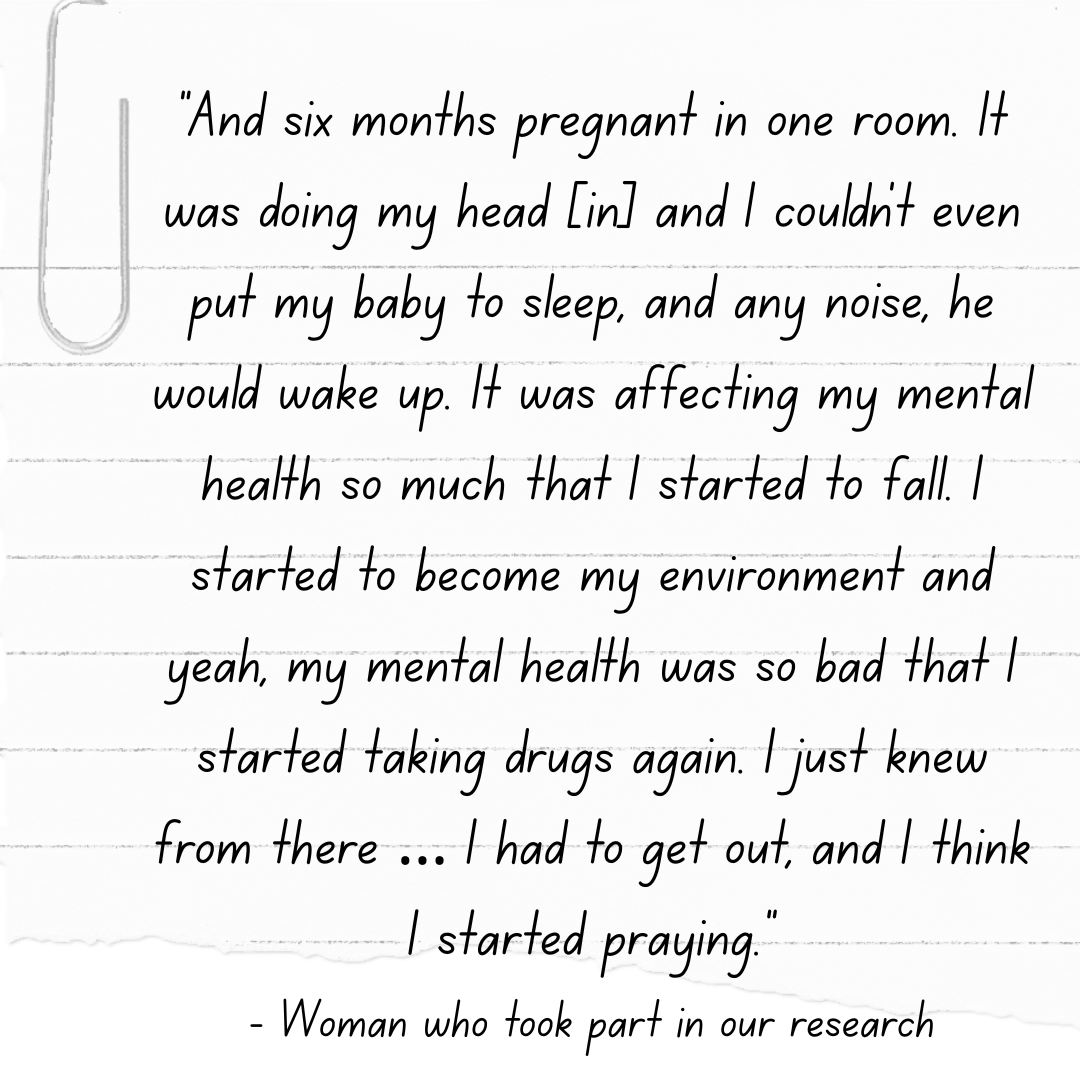
It also reveals that women have increased vulnerability during pregnancy, with many interviewees describing a lack of maternal healthcare options in transitional and emergency housing.
As a result of the research, the Coalition to End Women's Homelessness is calling for:
Government agencies to develop comprehensive policy and operational frameworks that specifically address women's housing needs, including improved gender disaggregated data collection and analysis.
A national strategy dedicated to women's homelessness that provides targeted support for wāhine Māori, Pacific women, older women, single mothers, and other marginalized women's groups.
Stronger, coordinated partnerships between government agencies, community providers, Māori, and iwi organizations to deliver holistic support.
Prioritization of targeted prevention and early intervention programs for women at high risk of homelessness. With a social investment approach, special focus should be given to older women facing financial insecurity, single mothers, and women experiencing domestic violence.
Implementation of a robust monitoring and evaluation framework to continuously assess the effectiveness of interventions and policies targeting women's homelessness.
2025: the beginnings of The Papatūānuku Paradigm
In 2025, CEWH invited Dr Kathie Irwin of Kathie Irwin and Associates to begin developing a gender analysis tool through a Te Ao Māori lens. Drawing on over 25 years of research, scholarship and experience as a Māori feminist, educator and researcher, Kathie began shaping what would become The Papatūānuku Paradigm. The intellectual architecture and visual framing for early iterations of The Papatūānuku Paradigm were developed in Kathie’s 2002 PhD, with successive iterations evolving and building on the work that came before.
August 2025: Strengthening Māori leadership at CEWH
As Ngā Ara ki te Kāinga showed - of the 57,000 women experiencing severe housing deprivation in Aotearoa, more than one third are wāhine Māori.
When we are asked why wāhine Māori are disproportionately impacted by homelessness, our answer is clear: colonisation. Breaches of Te Tiriti o Waitangi are a causal factor in the poverty and exclusion many wāhine Māori face.
As a ‘by women, for women’ organisation, CEWH is a staunch advocate for all women experiencing homelessness. In mid 2025 we were a majority Pākehā team, and we knew we needed to do more and do better for wāhine Māori.
Our organisational strategy commits us to “do, not just say” - that means living our commitments to Te Tiriti and representation in the way we work. We needed a Kaihautū - a wāhine Māori leader to work alongside our Project Director, Victoria Crockford, and help guide CEWH through its next stage of development.
We were looking for someone with policy expertise, strong relationships across housing and social services, and a willingness to work alongside our existing team in a new way of working. Above all, we wanted a staunch advocate for wāhine experiencing homelessness.
CEWH Kaihautū Dr Kathie Irwin (Ngāti Porou, Rakaipaaka, Ngāti Kahungunu)
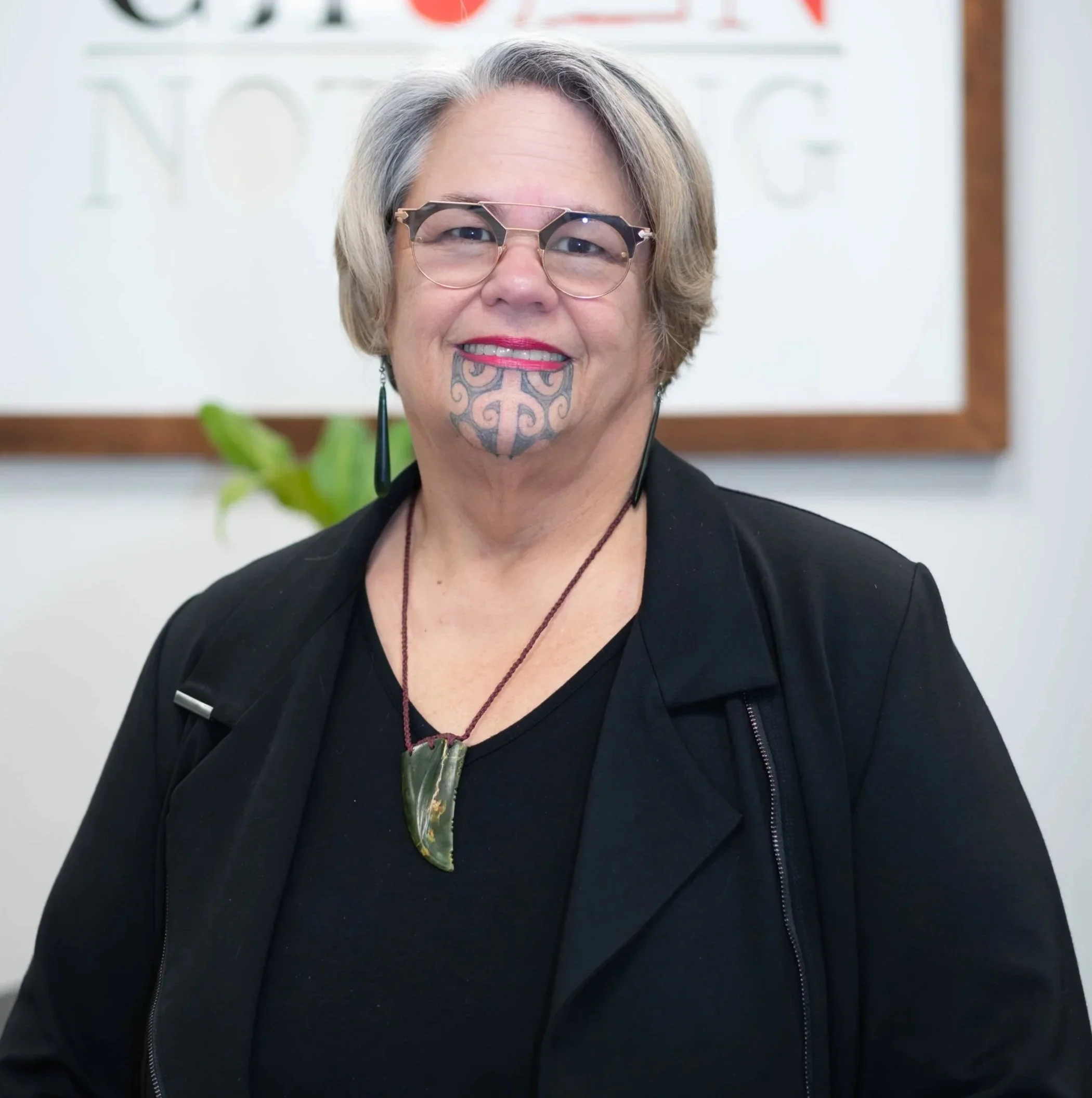
In August 2025 we were honoured to welcome Dr. Kathie Irwin as Kaihautū of the Coalition to End Women’s Homelessness, joining our Project Director, Victoria Crockford, to lead our vital kaupapa.
Kathie breathes life into our Te Tiriti o Waitangi statement and responds to the profound reality that at least one in three women experiencing homelessness are wāhine Māori. Having already collaborated on our toolkit, we knew her insight and mana would lift our work and cultural strength.
“Ending homelessness for wāhine in Aotearoa is critical. I’m ready to roll up my sleeves and get stuck into the mahi,” Kathie said as she started in her new role.
Find out more about Kathie here
November 2026 - Acknowledging the challenging environment so many of us are navigating
So many of us are working in a challenging environment at the moment, and have been for too long. The mahi we are all doing to create systems change in Aotearoa is both necessary and complex.
The Papatūānuku Paradigm is intended to be explored and applied within many realities. As you use it in your own mahi, you will bring your own knowledge, experience and context. There is no single way to apply it, and we all have something to learn from one another.
Challenge 1: Incoherent policy environment
The absence of strategic, coherent housing policy creates significant challenges. Public sector churn, ad hoc policy responses, and a poorly performing economy mean that our goal of achieving a women's homelessness strategy feels increasingly distant in the short term. The Move On Bill has compounded these difficulties.
Challenge 2: Racism and gendered violence
The enabling environment created by the Treaty Principles Bill and the rise of misogyny online means we are working against significant headwinds. We must act as a counterpoint to these forces, but we are also vulnerable to the erosion of hard-won gains in Te Tiriti recognition and gender equity.
This context makes Kathie's Kaihautū role and the Te Tiriti grounding of our work more critical than ever. The Papatūānuku Paradigm is not just a gender analysis tool - it is a statement about whose knowledge and worldviews matter and an examination of the intergenerational lived experience of Māori of colonisation..
Challenge 3: Social fragmentation and democratic threats
The erosion of trust in institutions, the rise of misinformation, and threats to democratic politics worldwide create strategic challenges for many of us in our advocacy and movement-building work. However, these same conditions also create opportunities for us to contribute to social cohesion through our collaborative, evidence-based approach.
CEWH Tiriti-informed webinars, research symposium, and Communities of Practice all serve dual purposes: they build capacity to address women's homelessness AND they create spaces for trust-building, respectful dialogue, and collaborative problem-solving.
How we’ve responded: Finding stability in volatility
These challenges, along with many more, are real and significant. They shape the strategic choices we are all making, and sometimes slow our progress.
But they do not diminish our commitment or our impact.
If anything, they underscore why patient, relationship-based, systems change funding is so essential - because this work cannot be rushed, and quick fixes are not available.
