
December 2025 pānui
Summer is a time for whānau to be together and to share simple joys. For those experiencing homelessness and housing deprivation - may connection, community, and support bring comfort and moments of light this season.
Celebrating change, collaboration, and hope this festive season
As 2025 draws to a close, we at the Coalition to End Women’s Homelessness celebrate the remarkable partnerships being forged across the sector, the groundbreaking research released, and the tangible changes underway to support Aotearoa’s 57,000 homeless women. Momentum is building, and with it comes hope for meaningful change.
We know the festive season can be particularly challenging for many, and we are deeply grateful to the countless volunteers, charities, and organisations providing essential support at this time of year.
On Friday, we marked one year since the release of our research Ngā Ara ki te Kāinga: Understanding Barriers and Solutions to Women’s Homelessness in Aotearoa. This research, which wove together data and the stories of women and frontline kaimahi, has been a powerful tool for advocacy, awareness, and centering the voices of women experiencing homelessness in policy recommendations.
Over the summer, look out for our mini campaign, No Holiday from Homelessness – Women and Their Children Unhoused in Aotearoa, rolling out across LinkedIn.
It’s been a month of significant action across the motu and around the world – from COP30 Climate Change Conference, to the proposed move-on orders, the launch of STILL Minding the Gap, and so much more. Together, these efforts are driving the systemic, interconnected changes needed to reduce housing precarity for women.
A heartfelt thank you to our funders, Clare and the JM McKenzie Trust, and to all of you for your support, collaboration, and friendship. We look forward to continuing this work in 2026, and wish you a safe and joyful festive season.
Kia pai te rāumati
Nāku noa,
Victoria Crockford and Kathie Irwin,
Project Director and Kaihautū, Coalition to End Women’s Homelessness
WAKA HUIA

Kathie Irwin’s personal Waka Huia.
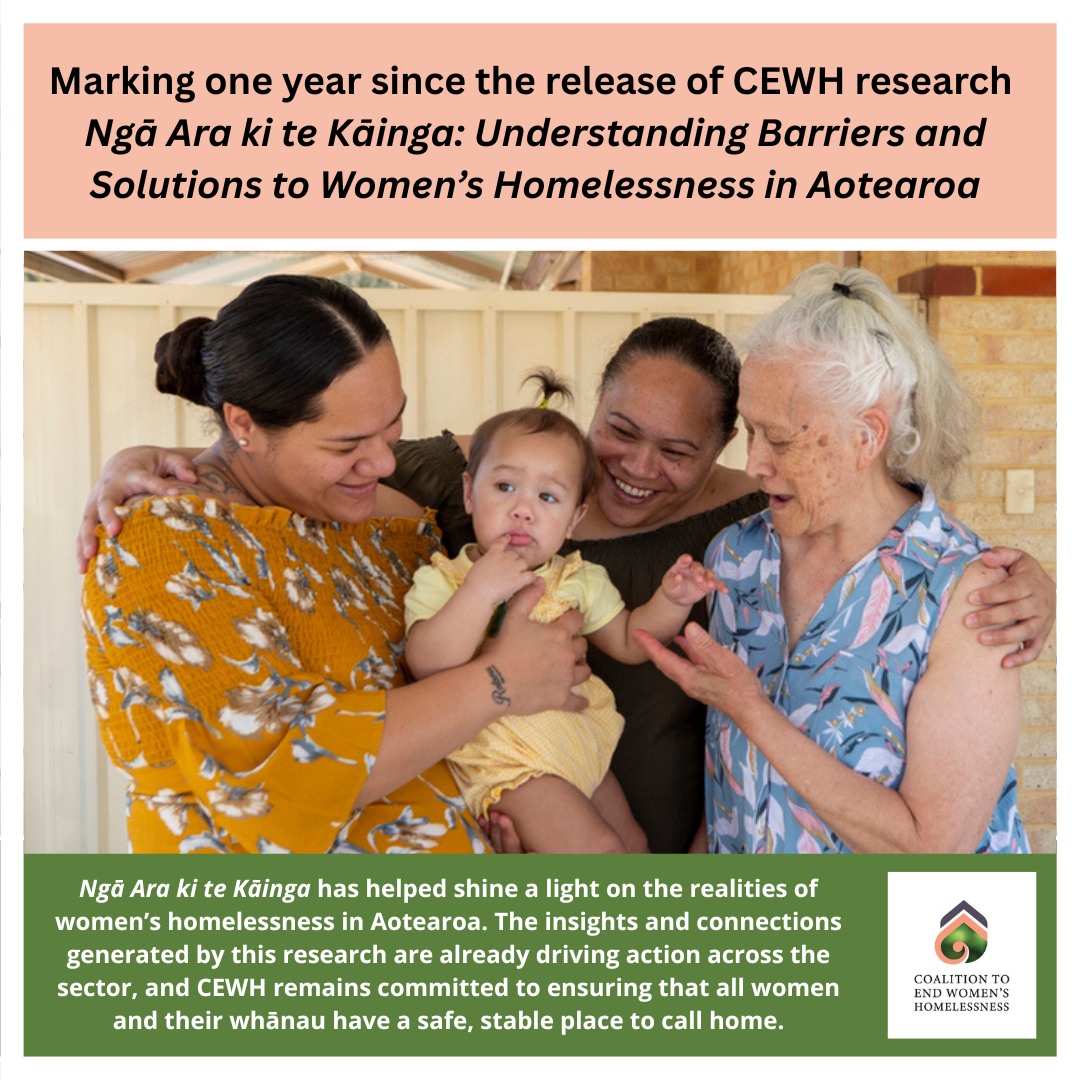
Marking one year since the release of Ngā Ara ki te Kāinga: Understanding Barriers and Solutions to Women’s Homelessness in Aotearoa
Over the past year, our research Ngā Ara ki te Kāinga - together with the advocacy of many across the motu - has helped shine a light on the challenges faced by women living in homelessness, and sparked meaningful change.
The December 2024 release was a major milestone for the Coalition, strengthening relationships, energising our advocacy, and opening important conversations across the sector.
Read our blog to see how Ngā Ara ki te Kāinga is sparking action for women and their whānau in Aotearoa, here
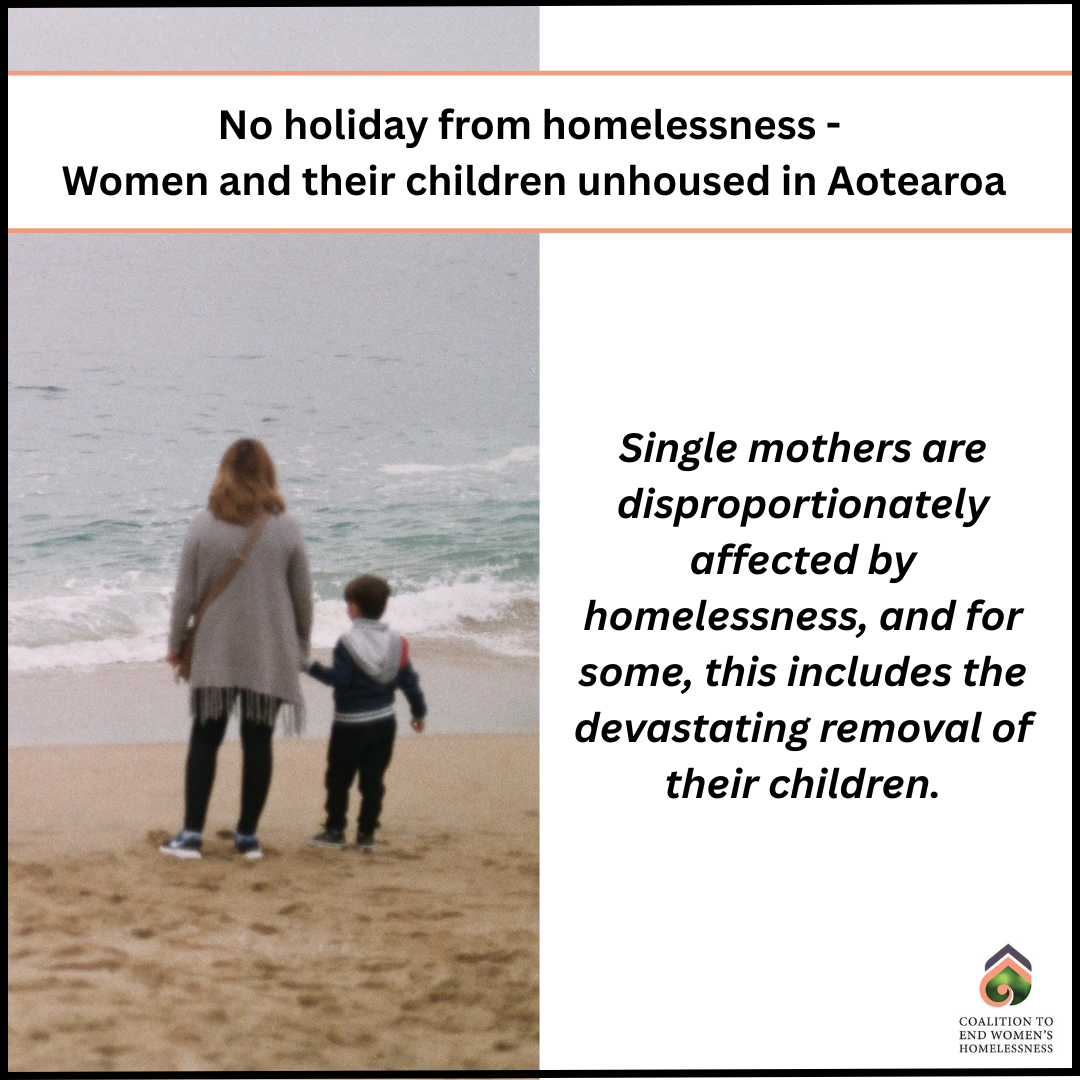
No holiday from homelessness - women and their children unhoused in Aotearoa
This summer, we’re highlighting the urgent reality that for many women and their children - there is no holiday from homelessness in Aotearoa.
Single mothers, particularly Māori and Pacific women, face systemic discrimination, financial hardship, and barriers to safe housing, leaving many women and their children without a home. The removal of children, unsafe emergency housing, and the intersecting impacts of poverty, mental health challenges, and domestic violence all deepen the crisis.
Our mini-campaign highlights these often-hidden struggles and calls for urgent action to ensure women and their children have safe, stable homes.
Follow our mini campaign on LinkedIn.
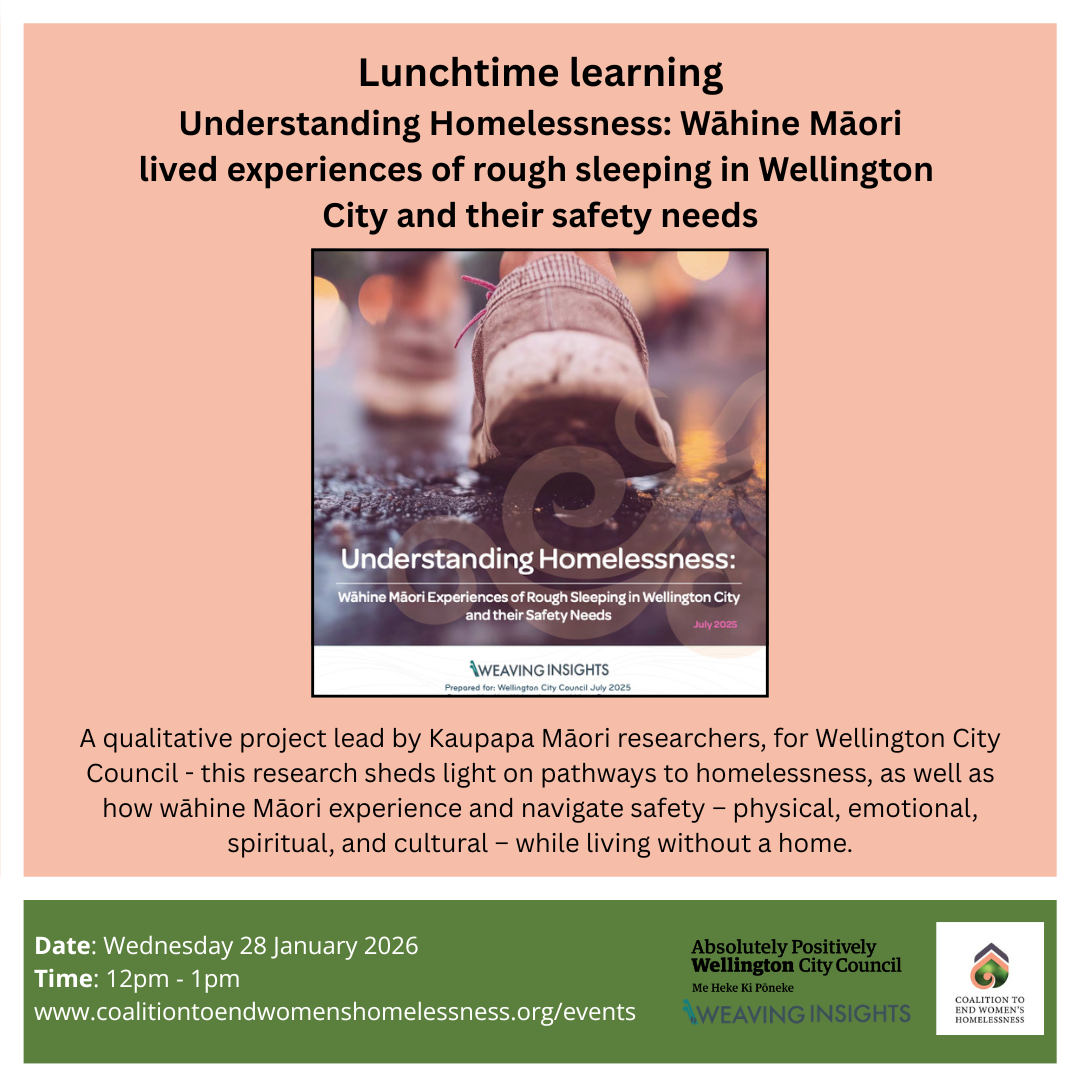
You’re invited to our next Lunchtime Learning webinar
He aha te mea nui o te ao? He tāngata, he tāngata, he tāngata.
What is the most important thing in the world? It is people, it is people, it is people
Join us to explore Understanding Homelessness: Wāhine Māori lived experiences of rough sleeping in Wellington City and their safety needs - a qualitative project led by Kaupapa Māori researchers, for Wellington City Council.
We’re pleased to have Millie Lambess, Harm Prevention Team Lead at Wellington City Council, and Nan Wehipeihana (Ngāti Tukorehe, Ngāti Porou) from Weaving Insights presenting their research.
Date: Wednesday 28 January 2026
Time: 12–1pm
Location: Online | Free
Register: here
The research sheds light on pathways to homelessness, as well as how wāhine Māori experience and navigate safety – physical, emotional, spiritual, and cultural – while living without a home.
Find out more about the report here. We hope you can join us in January.
Climate change and the impact on women’s homelessness
As world leaders gathered at COP30 in Belém, Brazil, the link between climate change and homelessness became even clearer. Climate-driven disasters are displacing millions globally, intensifying the inequalities already experienced by women and children.
CEWH’s research shows that for women on low incomes – especially wāhine Māori in rural communities – sudden weather events can force them into overcrowded, unsafe housing or into homelessness altogether.
As climate impacts escalate, community-led housing solutions and meaningful government action are urgently needed.
Read our blog here.
Image for illustrative purposes only - does not depict the home of the woman quoted.

National Day of Reflection for Survivors of Abuse in Care
On National Day of Reflection on November 12th, CEWH acknowledged the deep, ongoing impacts of abuse and neglect in the state care system in Aotearoa.
Our research, Ngā Ara ki te Kāinga, highlights how abuse and neglect in care can shape women’s pathways into homelessness:
Young women leaving care can face complex challenges, including mental health issues, trauma, and lack of support during transitions.
State Care abuse, along with colonisation, loss of culture and whenua, poverty, and negative differential treatment, contributes to intergenerational pathways that place wāhine Māori at greater risk of homelessness and overrepresentation in New Zealand prisons.
Frontline kaimahi play a vital role in supporting women’s aspirations for safety and wellbeing.
Read our research here
"Kia hora te Marino,
Kia whakapapa pounamu te Moana,
Hei huarahi mā tātau I te rangi nei, Aroha atu, aroha mai,
Tātau I a tātau katoa,
Hui e! Taiki e!
May peace be widespread,
May the seabed like greenstone,
A pathway for us all this day,
Let us show respect for each other,
For one another,
Bind us all together".
Building a Community of Practice - The Papatūānuku Paradigm
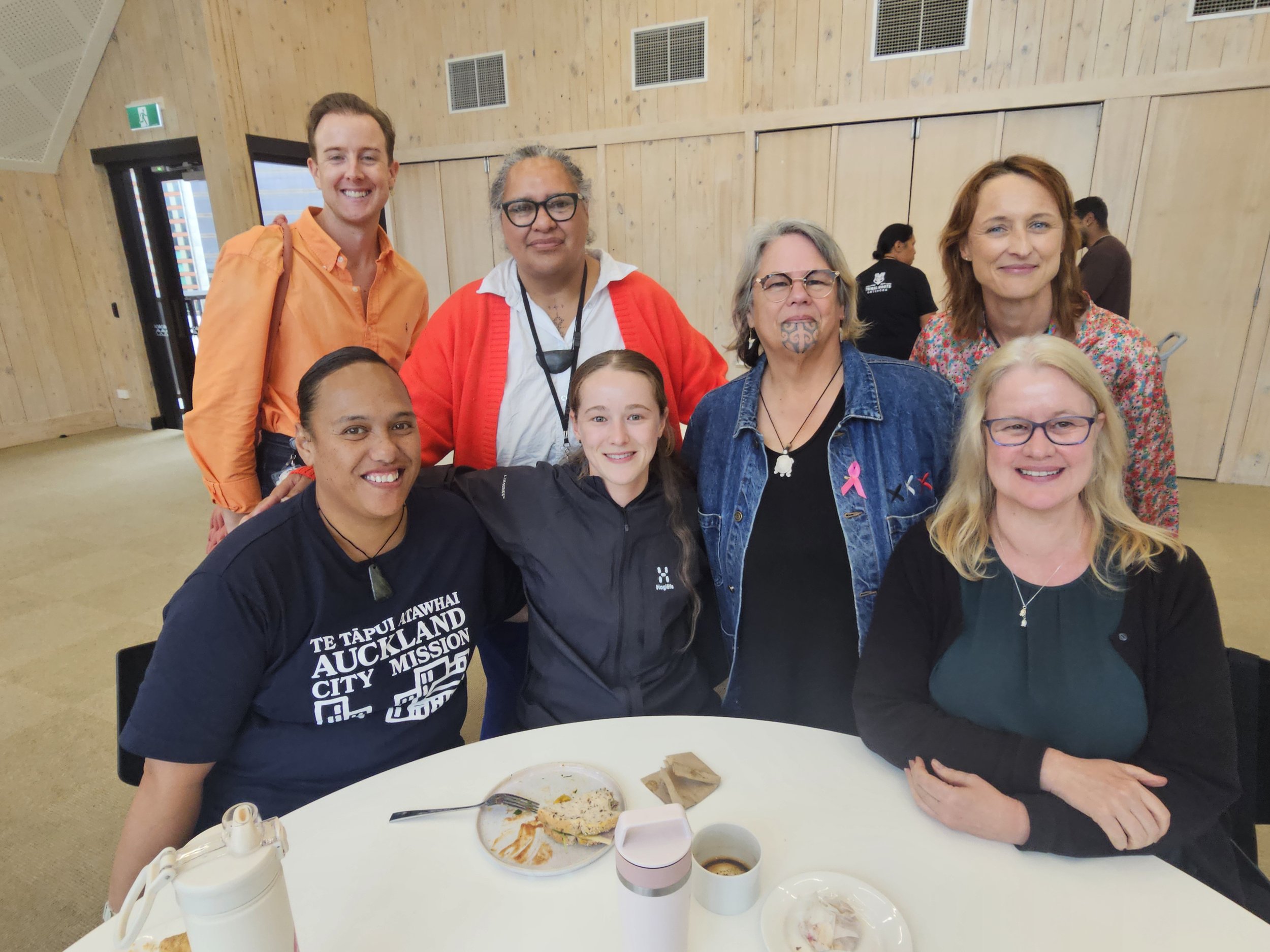
Last month, CEWH’s Kaihautū Dr Kathie Irwin and Collective Impact Lead Amanda Kelly worked with kaimahi at Auckland City Mission – Te Tāpui Atawhai on our first Community of Practice (CoP). The CoP was focused on the Papatūānuku Paradigm - CEWH Gender Analysis Toolkit from a Te Ao Māori lens.
The CoP seeks to build collective capability to apply the Papatūānuku Paradigm to real-world contexts, while fostering a culture of reflection and learning. The aim is to start building a CoP where practitioners can share learning, apply the tool in real-world contexts, and strengthen gender-informed decision-making within services and systems.
The CoP brought together staff from Auckland City Mission – Te Tāpui Atawhai, Ministry of Social Development, Auckland Council and representatives from Te Miringa Trust.
Ngā mihi mahana to those who joined us, for sharing your manaakitanga, time, insights, and expertise.
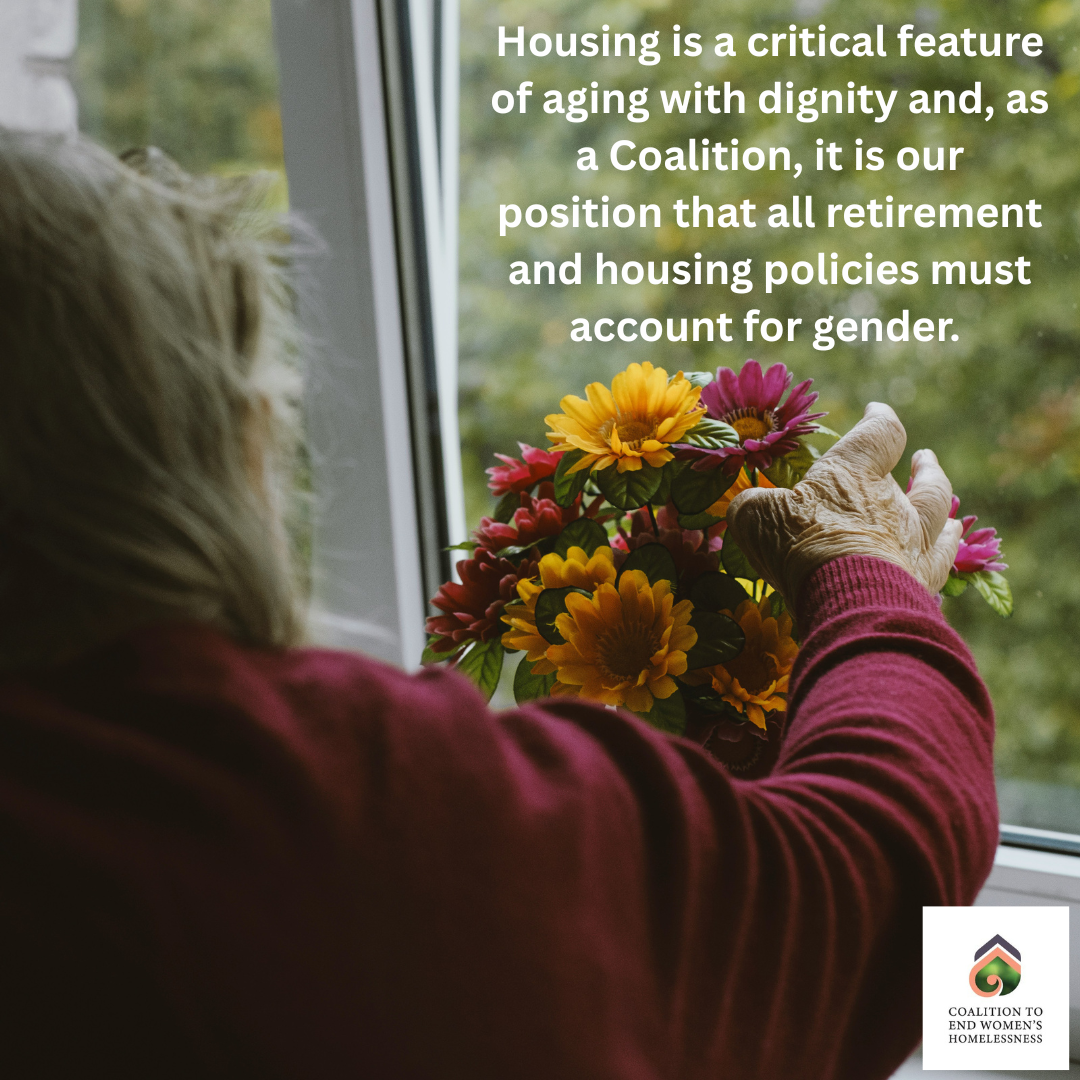
When a lifetime of inequity shapes women’s retirement
The Retirement Commission’s 2025 review shows that many women reach retirement with lower KiwiSaver balances, putting their financial security at risk.
At the Coalition to End Women’s Homelessness, we see how lifelong gender and ethnic pay gaps - especially for Māori and Pasifika women - lead directly to rising housing insecurity for older women. The pay gap becomes the housing-security gap.
Lower lifetime earnings, part-time work, unpaid caregiving, and persistent pay disparities, combined with a lack of affordable housing, mean more women are entering retirement without secure accommodation - sometimes relying on whānau, services, or even vehicles for shelter.
Read our latest blog here.
AROUND THE SECTOR
Youth Homelessness Collective launches More Than a Home report at Parliament
Last week, Manaaki Rangatahi presented the report, More Than a Home, in the Grand Hall at Parliament, demanding urgent action on youth homelessness. The launch was supported by a strong contingent of rangatahi, including those who travelled from Auckland for the event.
More Than a Home was commissioned by Mā Te Huruhuru and developed by the Manaaki Rangatahi Collective with Making Everything Achievable, and captures what rangatahi have said they want: they want homes that are safe, grounded in culture, and connected to whānau and whenua. They want belonging, healing, and opportunity.
Manaaki Rangatahi is Aotearoa's only youth housing and homelessness collective - a movement of organisations, community leaders, and rangatahi working in kotahitanga.
CEWH Kaihautū Dr Kathie Irwin attended the presentation and reflected on the impact of what she heard:
“Three of the speakers at the launch were rangatahi with lived experience of homelessness. My heart ached hearing their stories. The new pathways, hope and optimism they spoke of, thanks to the support of Mā Te Huruhuru, was inspirational,” Kathie said.
Read More Than a Home here
Public consultation on the proposed data collection approach and content for the census
Stats NZ is seeking feedback on the information to be collected for the next census. The consultation on the proposed data collection approach and content for the census is now live on the Stats NZ website where there is a range of information including:
a summary consultation document
Frequently Asked Questions
a summary material in a range of languages and alternate formats.
It’s important to hear about the information that matters to you and your communities. Submissions close at 5:00pm on Friday 19 December 2025.
Share your feedback here
Researchers link Māori housing inequities to 180 years of restrictive building laws
A recent RNZ story highlights how historical policies have shaped housing inequities for Māori.
Researchers Professor Deidre Brown (Ngāpuhi, Ngāti Kahu) and architectural designer Savannah Brown (Ngāti Whātua, Ngāti Hine, Ngāti Wai, Ngāpuhi) explain that colonial laws - like the 1842 Raupō Houses Ordinance - disrupted traditional Māori building practices, leading to decades of lost autonomy, overcrowding, and low home ownership.
In the 2023 census, Māori home ownership had fallen to 27.5%, and, according to the Ministry of Housing and Urban Development's latest insights report for June 2025, more than 60 % of those experiencing homelessness identify as Māori.
The researchers say solutions lie in Māori-led housing initiatives, such as papakāinga, which integrate cultural practices, community, and sustainable design.
Read the full RNZ story here
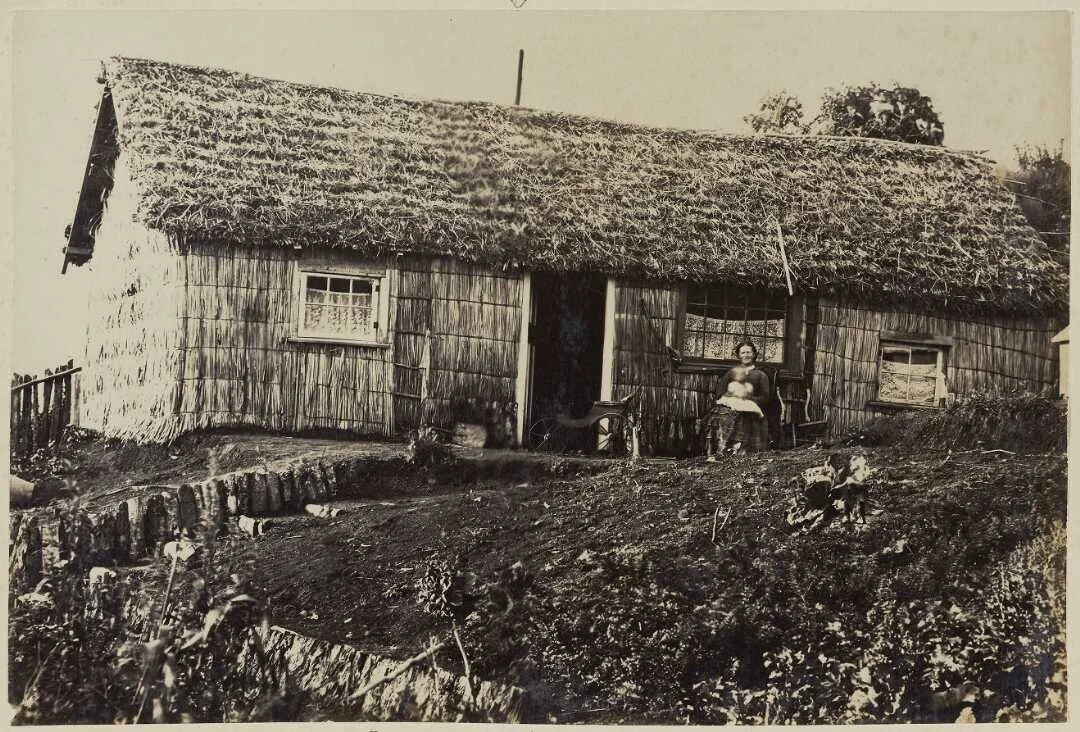
Raupo whare, Taranaki. Parihaka album 1. Ref: PA1-q-183-25-2. Alexander Turnbull Library, Wellington, New Zealand. /records/22876402
Spotlight on housing in Wellington: Dwell and Downtown Community Ministry (DCM) partner for change
Dwell Housing Trust and DCM are at the frontline of Wellington’s housing crisis. Dwell works closely with individuals, whānau, and communities to provide secure, affordable, healthy homes and DCM provides wraparound support services to those experiencing homelessness who often have complex needs.
Wellington's housing crisis continues to worsen
Homelessness has risen by 40% since mid-2023.
126 people were sleeping rough between July and September 2025.
621 households are on the social housing waitlist, including 585 at immediate risk due to severe or persistent housing needs.
Market rents average $588 per week, higher than the national average, while affordable housing options remain limited.
Despite these challenges - collaboration and local leadership offer hope.
Dwell and DCM are working together
Dwell and DCM have joined forces to tackle homelessness head-on through Housing First. This proven approach prioritises getting people into stable homes first, then wrapping support around them to address health, wellbeing, and social needs.
Through this partnership, 40 people will be supported into secure homes and DCM will provide intensive, person-centred support and Dwell will provide secure, quality housing.
Private landlords can also make a real difference. By leasing properties to Housing First tenants, they’ll receive guaranteed rent and professional property management - and the chance to help transform lives in their community. If you have a property available or know someone who does, get in touch with the team: info@dwell.org.nz or 04 384 4854
Fran’s story: finding security and stability in Queenstown
After 25 years of moving between caravans, rentals, and living with her daughters, Fran O’Connor, 73, has found stability at QLCHT’s Toru Apartments, where Fran’s rent is just 25% of her superannuation, giving her the security seniors need on a fixed income.
“Fran represents Queenstown's overlooked housing crisis – seniors who built careers here but never built equity. Her story shows why secure, affordable housing for long-term locals matters,” says QLCHT.
Watch Fran tell her story in this CHA video here
Helping people to leave the streets and find a home in Christchurch
Homelessness in Canterbury has been increasing at an alarming rate, in part due to tighter eligibility criteria for emergency housing. To respond, Christchurch Methodist Mission is partnering with other agencies to develop a short-term service for people who have been homeless for less than 12 months. This Rapid Response Initiative aims to intervene early so that homelessness is rare, brief, and non-recurring. Each participant will have a dedicated caseworker guiding them toward permanent housing.
Find out more about CMM here
Take part in the next Entry Point Survey - help build a national picture of housing distress
The National Homelessness Data Project (NHDP) is preparing for the next phase of the Entry Point Survey, running from February to April 2026. They’re inviting homelessness and housing support providers across Aotearoa to participate.
This sector-led survey is one of the NHDP’s core workstreams. It was established to track housing distress following the tightening of emergency housing settings in 2024. Survey data includes a breakdown of gender, age and ethnicity.
With two successful phases already completed, this next phase will help them build a clearer, coordinated view of what’s happening for people and whānau seeking support.
By joining the survey, providers help to:
evidence need and track changes in homelessness levels and drivers
monitor experiences of people and whānau accessing support
maintain public and political attention on emerging trends
strengthen our collective advocacy with robust, sector-owned data
All data is independently analysed by Dr Nevil Pierse (University of Otago). The first report is publicly available, with the second due for release shortly. This work is supported by the Housing First Auckland Backbone and guided by a national taskforce of sector leaders, researchers, and Community Housing Aotearoa.
Your participation is vital in building national visibility, shaping future policy, and resourcing decisions.
If your organisation is interested, or if you'd like to learn more, please get in touch with Rami Alrudaini at rami.alrudaini@housingfirst.co.nz.
Help make Christmas special at Auckland City Mission - Te Tāpui Atawhai
This Christmas, the team at Auckland City Mission - Te Tāpui Atawhai wants to bring a little extra warmth and joy to spaces like HomeGround and other support services.
You can help make this festive season extra special by donating:
Artificial Christmas trees
Decorations and festive supplies
Gift wrapping paper
If your workplace, team, or community group can help, get in touch with Auckland City Mission at Fundraising@aucklandcitymission.org.nz
POLICY AND POLITICAL INSIGHTS
Move on orders
We tautoko Auckland City Mission – Te Tāpui Atawhai in their response to the Government’s proposed move on orders for Auckland’s CBD. Opposition parties and housing advocates have raised serious concerns that an effective ban on homeless people in city centres will only displace the issue, further marginalise those most affected, and ultimately cause more harm.
In their statement, Auckland City Mission – Te Tāpui Atawhai says:
“We’re deeply concerned about the rise in rough sleeping. More people are being pushed onto the streets – and it doesn't have to be this way.
The best way to end homelessness? Housing + support
We need: more Housing First places, more immediate access to shelter, a rapid scale-up of mental health and addiction services.
What doesn't work: policies that “move people on” or focus only on enforcement.
Without housing and support, these responses just push people further to the margins. Real solutions come from working together.”
We recognise the enormous amount of knowledge, leadership, and hard work shown across the sector in response to the proposed move-on legislation. The pace and pressure has been intense for many, yet people and organisations have stepped up with clarity, compassion, and evidence. Your advocacy, analysis, and commitment to the dignity and safety of those most affected are deeply valued.
Still Minding the Gap launches
Still Minding the Gap launched in November, calling for urgent government action to close gender and ethnic pay gaps. The launch coincided with the 'International Day for the Elimination of Violence Against Women'. Aotearoa New Zealand is a signatory to CEDAW, the United Nations Convention on the Elimination of all forms of Discrimination Against Women, which we signed in 1985.
Dr Jo Cribb, spokesperson for Still Minding the Gap and CEWH Steering Committee member, says New Zealand’s gender pay gap was 5.2 percent in 2025, but was much worse for some ethnic groups - 12 percent for wāhine Māori, almost 16 percent for Pacific women and about 10 percent for Asian women.
“There is clear overseas evidence that when businesses are required to report their pay gaps publicly it drives meaningful action and has seen national gender pay gaps drop by 20-40 percent,” Jo says.
CEWH 2024 research Ngā Ara ki te Kāinga highlights the connection between economic and housing precarity, particularly for wāhine Māori and for older women.
“Some benefit from compound interest on their investments, while others are crippled, across generations, by the compound impact of structural racism and exclusion,” Kathie says.
Wāhine Māori are over one third of all women experiencing homelessness – a disproportionate compound impact that affects them at either end of life, as young mums and as they come into retirement. In 2023, New Zealand ranked 9th equal among OECD countries for women experiencing intimate partner violence in their lifetime, with 49% of wāhine Māori affected.
“We stand internationally with others to eliminate all forms of violence against women,” Kathie says.
Our CEDAW shadow report shows how inequities – economic, social, and structural – are deeply interconnected, and how action on pay gaps, housing, and violence against women must happen together.
Support the Still Minding the Gap campaign here
Read CEWH’s CEDAW shadow report here
Read CEWH’s research here
Rotorua’s enduring homelessness crisis
The closure of Rotorua’s last emergency housing motel has raised urgent questions about what comes next, especially for single adults and those with complex needs.
In a recent Stuff article, Billie-Jo Rata shares the human impact of unstable housing, addiction, trauma, and unsafe temporary accommodations. Living in a backpackers - a place unsuitable for children - her three kids live an hour away with their father.
“They got a better life than what we have here… I’m actually surprised my life has turned out like this, to be honest,” she said.
Read the Stuff article here
He iti te mokoroa, nāna i kati te kahikatea
The grub may be small, but it cuts through the kahikatea
Vic, Kathie, Amanda, Ellie, Helen, Jo, Caroline, and Jill
