
CEWH oral submission: Summary Offences (Move On Orders) Amendment Bill
In July 2026, the Coalition to End Women’s Homelessness made an oral submission on the Summary Offences (Move On Orders) Amendment Bill.
CEWH Project Director Vic Crockford told the Select Committee that people experiencing homelessness need responses that uphold their dignity and mana, not measures that further displace them.
“We are here because we believe that we as New Zealanders must look to our best and strongest instincts for care and manaakitanga in order to end homelessness and it is our firm belief that the move on orders as they are proposed represent anything but that best instinct.”
CEWH Collective Impact Lead Amanda Kelly said that from a gendered perspective CEWH is extremely concerned about how this proposed bill will impact women experiencing homelessness, in particular wāhine Māori who make up around one third of the 57,000 women who are experiencing homelessness across this country.
“We are also deeply concerned about the impact that this will have on their children,” she said.
“Move on orders risk making women’s homelessness even more invisible by pushing women to the margins rather than bringing women closer to the support and safety they may need,” Amanda said.
Amanda referred to the heartbreaking story of Caitlin McDonald who died after experiencing homelessness for two years in Christchurch.
“Caitlin’s experience of homelessness reminds us that housing is the foundation of health, wellbeing, safety and connection and of the devastating consequences when systems that are meant to be in place to support people, fail the people that they’re there to support,” she said.
Our Select Committee submission is framed using questions from the Papatūānuku Paradigm - a toolkit designed by Dr Kathie Irwin to support and strengthen the work of CEWH and the wider sector in addressing the complex issue of women’s homelessness.
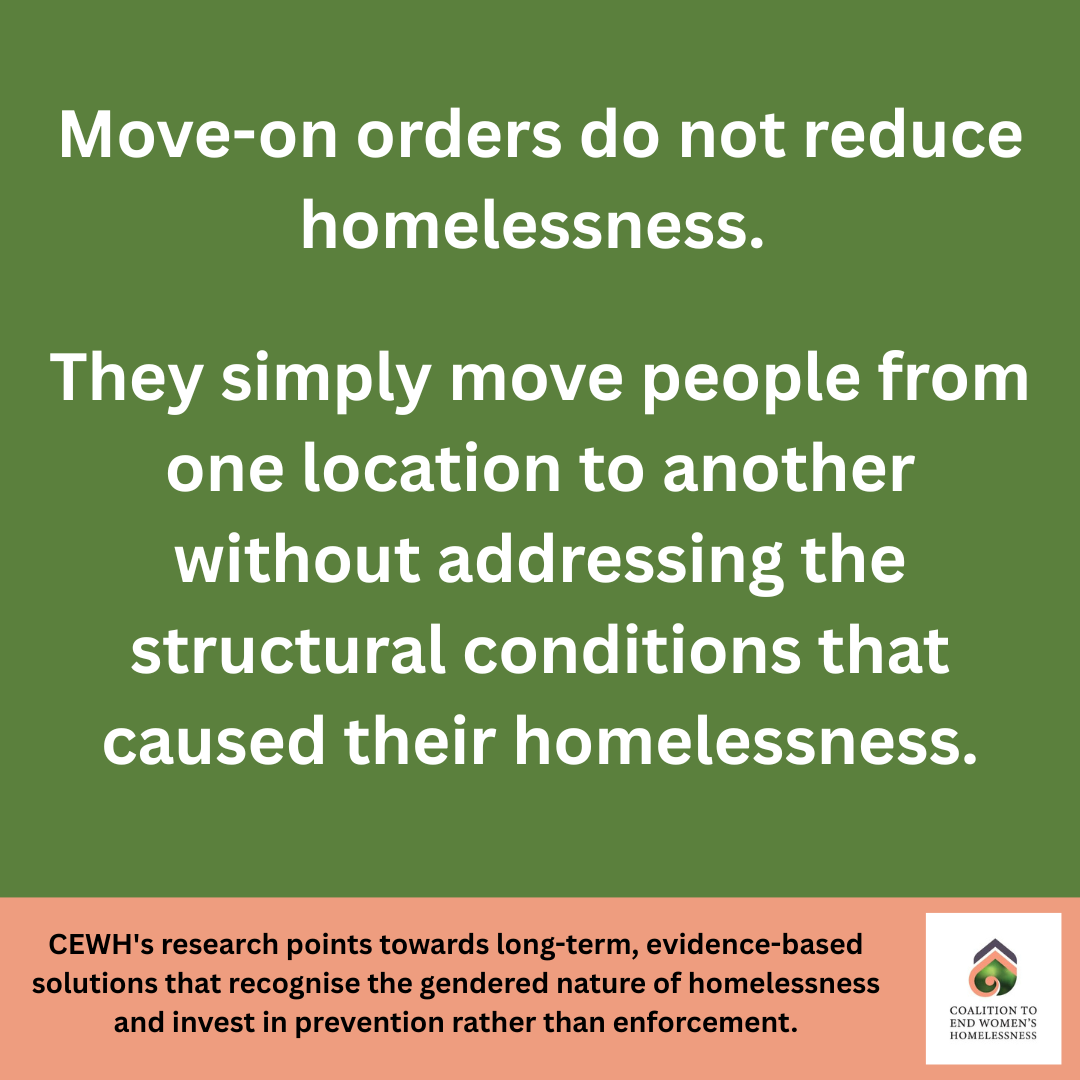
When viewed through this lens, the proposed Bill falls short. Rather than addressing the structural causes of homelessness, it criminalises those living with the consequences of systemic housing failure. It prioritises enforcement over care, displacement over housing, and punishment over prevention.
CEWH urges the government to focus on long term solutions that will end women’s homelessness.
See our written submission here
