
Research Symposium: Te Whatu Raranga | Weaving the threads together
In te ao Māori, raranga | the art of weaving brings together what would otherwise remain separate, creating strength through individual strands.
Earlier this year, alongside the University of Otago – Ōtākou Whakaihu Waka, we held a research symposium exploring severe housing deprivation among women. Six presentations brought together different strands of knowledge, experience and insight.
Together, they revealed a pattern: women experiencing severe housing deprivation deserve not just to be counted, but to be heard, believed, housed and supported to lead solutions for themselves, their tamariki and generations to come.
Thread 1: From Whare Tangata to Kāinga Kore
CEWH Kaihautū Dr Kathie Irwin, MNZM, Pūkenga Rangatira, MInstD posed a foundational question during the Symposium: how do we go from Whare Tangata | the womb, the first home, the sacred origin to Kāinga Kore | homelessness?
The answer is not individual failure, but systemic displacement, shaped through policy, legislation and regulation.
Each speaker pulled on this thread:
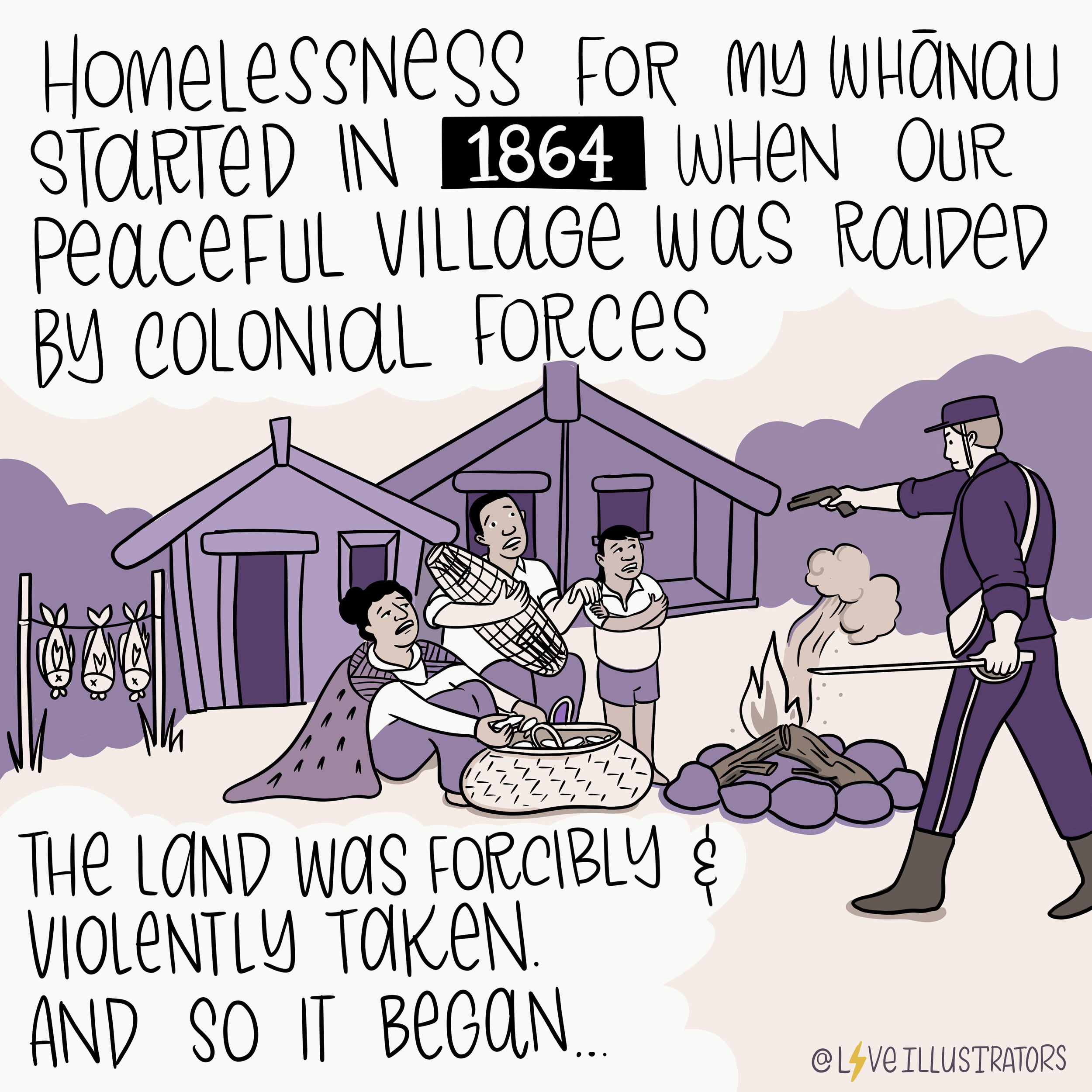
The history of homelessness was traced to the 1864 raid on Rangiaowhia, the burning of a village and confiscation of land.
Housing policy was described as “exclusion by design” or an “absence of design”.
IDI data challenged the “hard to reach” narrative, showing people were reaching out for help but systems were failing to connect them with support.
Mapping revealed how wāhine navigate Wellington’s geography to find fragments of safety.
Manaaki Rangatahi documented a care-to-homelessness pipeline.
The National Homelessness Data Project found system gaps across every ministry surveyed.
If policy, legislation and regulation have helped create homelessness, they can also help create housing justice.
With thanks to League of Live Illustrators for their illustration.
🌿 Follow along on LinkedIn and here on our website as we explore the next thread in the series.
